
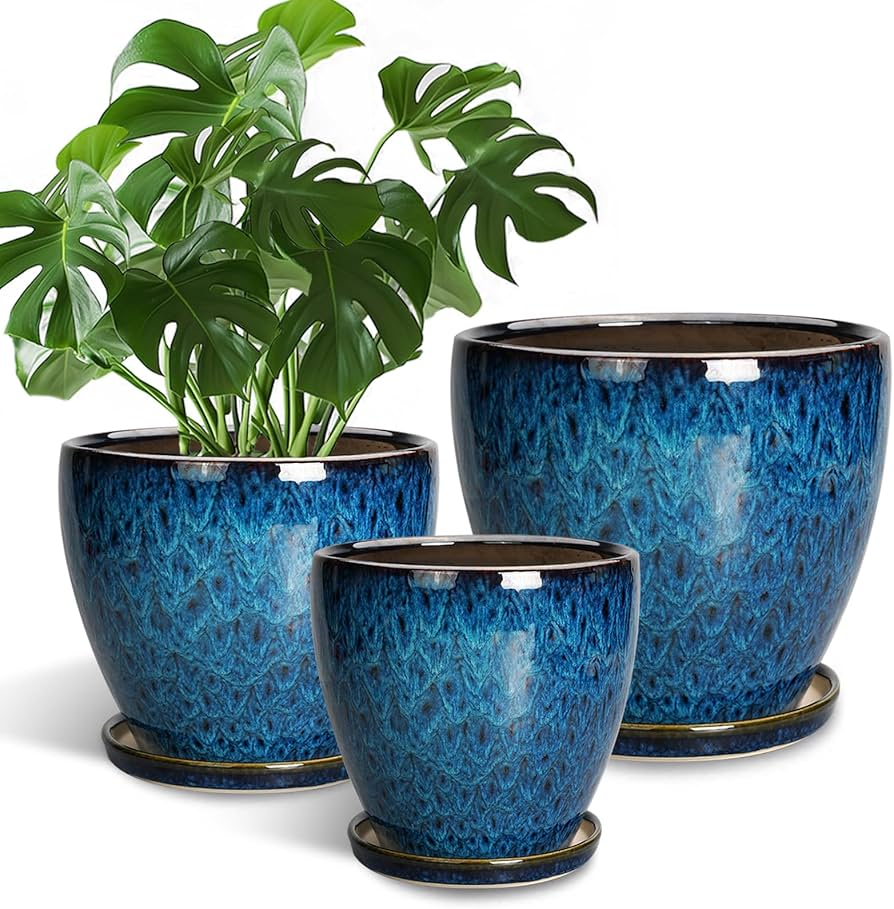
Let us be a little honest.
Most ceramic plant pots do not fail because they are unattractive. They fail because someone bought them as decoration first and merchandise second.
Very cute on the moodboard.
Very tragic in the warehouse.
For a Japanese chain-store buyer, the real brief behind ceramic plant pots drainage hole options case pack is not “Can this pot look charming on a styled shelf?” It is:
Can this pot support plant health?
Can it be case-packed without turning freight into comedy?
Can it sit inside a broader ceramic story that customers actually want to collect?
That is the difference between a product and a buying decision.
And right now, Asia’s trade-fair signals are making that difference even clearer. Home InStyle 2026 is spotlighting Culture, Design and Innovation, Sustainability / Green Solutions, and Health and Wellness. Tokyo International Gift Show Spring 2026 brought together 2,785 companies, including 368 overseas exhibitors, while JETRO’s show listing makes clear that flowers, gardening goods, design products, and artisanal lifestyle items remain part of the sourcing conversation. LIFESTYLE Week 2026 says the winning products now blend design, functionality, and storytelling; it also expects 35,000 professionals, with 71.2% of attendees holding purchasing authority. That is not a small hint. It is a neon sign. Buyers are not just shopping for “pretty.” They are shopping for products that can justify floor space quickly.
So what does that mean for the user profile reading this article?
Most likely, you are a buyer for a home chain, department-style lifestyle store, or a mixed-format home-and-gift retailer. You are not hunting for one lonely pot. You are trying to build a ceramic story that is easy to understand, easy to display, and easy to reorder. You want warmth, nature, and a little humor, yes. But you also want clean case-pack math and fewer explanations to your team.
Because no buyer wakes up in the morning hoping to defend a bad carton ratio.
This is exactly why the planter category is becoming more strategic.
A good ceramic planter is not only décor. It is part of the “well-being at home” category. A horticultural review published through Texas A&M and the Horticultural Research Institute summarizes substantial research linking plants with reduced anxiety and stress, improved attention, enhanced productivity, and better overall quality of life. That gives plant-related homeware more than aesthetic value; it gives it a reason to exist in the basket. In other words, the pot is not selling by itself. It is selling together with the promise of a better domestic mood. Very elegant. Very commercially useful.
Now, let us come to the uncomfortable but essential part: drainage.
The University of Illinois Extension states it quite plainly: a hole at the bottom of the container is critical because it allows water to drain freely so roots have access to air; wet soil encourages root rot. Nebraska Extension makes the same point, adding that the presence or absence of drainage holes is one of the main factors in container success. Illinois also explains that when decorative pots have no drainage, double-potting with a liner becomes the practical solution. So yes, drainage hole options are not a minor spec detail. They are the whole difference between a plant pot and a ceramic hostage situation.
Material matters too. UC ANR notes that clay pots are porous and allow good soil aeration, while glazed containers are non-porous and hold moisture more consistently. Nebraska Extension similarly notes that clay is porous, while glazed clay and plastic are impervious. That means a buyer should not treat terracotta vase and glazed planter formats as interchangeable twins. They are cousins with different personalities. Nice cousins, perhaps. But still different.
This is where a Teruier-style buying strategy becomes useful.
A weaker supplier will show you fifty ceramic things and call it a collection. A stronger supplier will show you one commercial logic.
Teruier’s advantage is not “we have many ceramics.” Many suppliers can say that with a straight face. The real value is value translation: turning a trend into a case-pack-ready assortment that a chain buyer can actually approve.
A smart planter program today does not stay only inside “planter.” It expands into a related ceramic family.
And the market is already proving why that works.
In spring 2026, Good Housekeeping highlighted “Cabbagecore” as a rising design direction and noted that Pinterest Predicts named “Cabbage Crush” one of the big trends for 2026. The piece also points out that retailers such as Williams-Sonoma and Target are carrying cabbage-inspired bowls, plates, and serveware. Architectural Digest went further, calling out the lasting appeal of cabbage-ware, from Bordallo Pinheiro classics to newer contemporary versions. This tells buyers something important: playful produce-inspired ceramics are no longer random novelty. They are a recognizable visual language.
Retail pages support the same point from another angle. Anthropologie currently lists a Tomato Garden Vase at $148, a Stoneware Fig Vase at $298, and even a 3D Pea Stoneware Vase at $248 in its vase assortment. So the market is already rewarding fruit-and-vegetable ceramics not only as table pieces, but as decorative objects with gift value and personality. That means related sub-keywords like tomato vase, pear ceramic vase, artichoke ceramic decor, and cabbageware ceramics are not weird side notes. They are merchandising extensions.
This is how a Teruier buyer-support assortment should be built:
Lane 1: Functional planter heroes
This is your core line: real ceramic plant pots with clear drainage hole options, liner compatibility, and rational case pack structure. These are the SKUs that earn their space because they actually support live plants, not just shelf styling.
Lane 2: Decorative companions
Here come the expressive but still sellable pieces: tomato vase, pear ceramic vase, and selected terracotta vase options. These make the assortment feel collectible without forcing every SKU to do hard agricultural labor.
Lane 3: Story-led ceramic accents
This is where cabbageware ceramics, cabbage leaf serving bowl, and artichoke ceramic decor join the visual family. Now the buyer is no longer buying “pots.” The buyer is buying a produce-and-garden ceramic world.
That is the important change.
You are not offering a lonely planter.
You are offering a display logic.
And that matters because buyers today are balancing three pressures at once:
- they need products with a clear lifestyle story,
- they need functional specs that reduce return risk,
- and they need cross-selling potential across home, gift, kitchen, and seasonal tablescape categories.
This is why the keyword ceramic plant pots drainage hole options case pack is stronger than it looks. It sounds technical, yes. A little dry, yes. But underneath it is a whole buyer brief:
- drainage hole or liner?
- detachable saucer or not?
- terracotta breathability or glazed moisture retention?
- case pack 2, 4, 6, or mixed?
- one-size hero or graduated assortment?
- planter-only, or planter plus companion décor family?
That is not SEO fluff. That is how margin gets protected.
A Japanese home-store buyer, especially one working across compact urban formats and display-sensitive store environments, usually does not want drama. The buyer wants products that feel thoughtful, slightly witty, easy to place, and not embarrassing when the replenishment conversation begins. Based on current Asian fair positioning around functionality, wellness, and storytelling, the winning ceramic program is likely to be one that feels edited rather than noisy.
So, what does a convincing Teruier-style selection result look like, without inventing fake sales numbers?
It looks like this:
You start with a functional planter keyword.
You validate it with plant-health logic and container science.
You connect it to current Asian fair themes.
You widen it into a playful but disciplined produce-ceramic family.
Then you present the buyer with an assortment that already makes sense by story, shelf, and shipment.
That is what “helping the buyer pick the right product” actually means.
Not more SKU noise.
Not more supplier enthusiasm.
Not more “look, ma’am, very trendy.”
Just a cleaner answer to a harder retail question.
In the end, the best ceramic planters are not the ones that shout the loudest. They are the ones that quietly do four jobs at once:
- support healthier plants,
- create a warmer home mood,
- connect to a broader ceramic collection,
- and move through freight and store display without unnecessary nonsense.
That is why Teruier should not sell chain buyers “cute pots.”
Teruier should sell them a ceramic system that starts with the planter, but does not stop there.
And frankly, that is much more interesting.



