
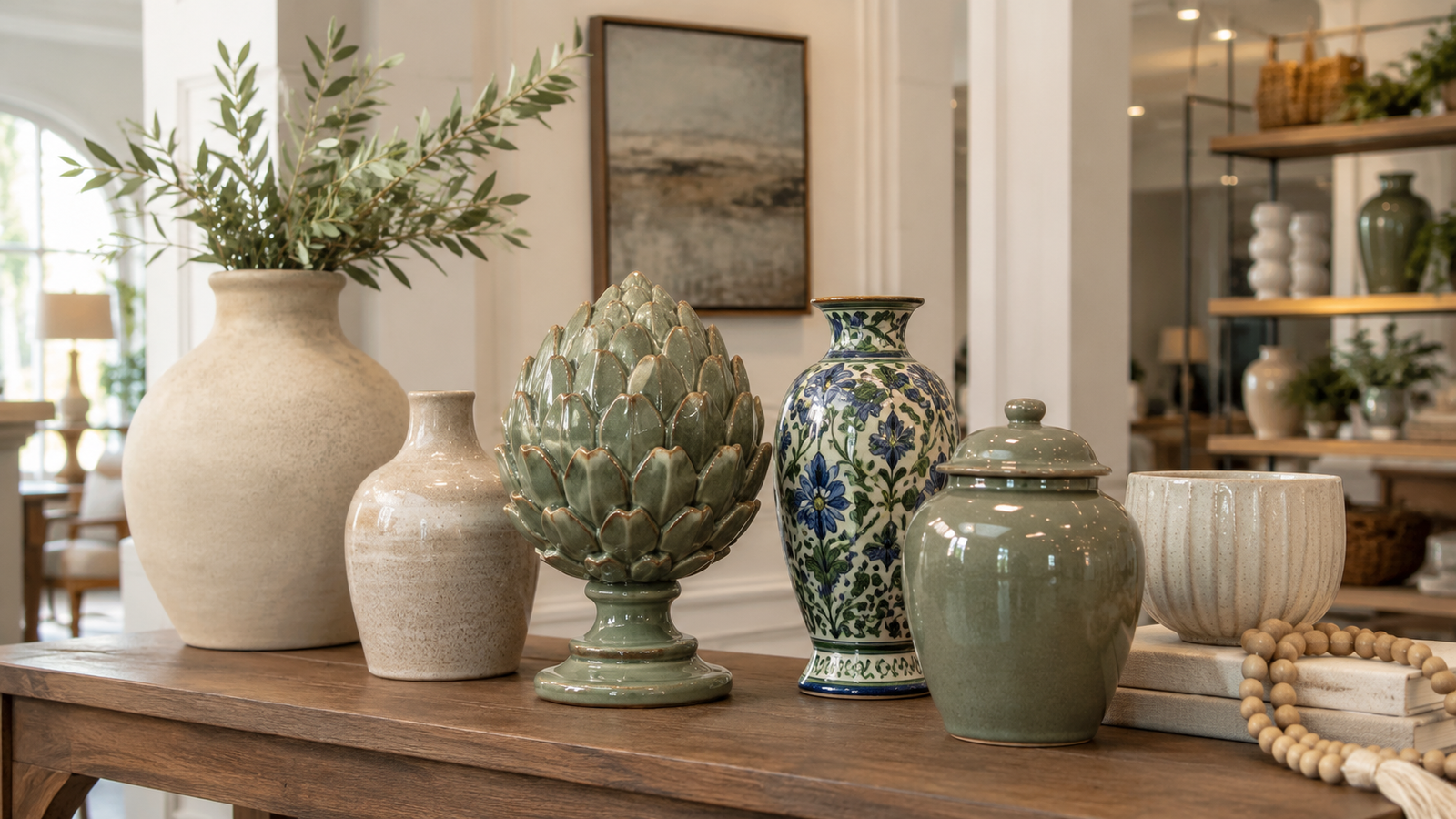
The Buyer Story: One Shape, Three Very Different Products
A U.S. home décor buyer was reviewing three ceramic artichoke samples.
The silhouettes were nearly identical.
One had a deep green glossy glaze. One used a pale matte finish. The third featured a colorful majolica-style surface with visible hand-painted details.
The quotations were close, but the products did not serve the same customer.
The glossy version worked as an accessible tabletop accent. The matte piece fitted a modern neutral assortment. The majolica version offered stronger craftsmanship and a higher perceived value.
The buyer’s decision was therefore not simply about choosing an artichoke ceramic decor item.
It was about selecting the right glaze, price position, supplier capability and retail story.
Why Ceramic Decor Remains Relevant for U.S. Buyers
Ceramic décor is commercially useful because it works across living rooms, dining rooms, entryways, kitchens, gift stores and seasonal displays.
It also allows buyers to create variation through:
- Shape
- Scale
- Color
- Surface texture
- Glaze technique
- Hand-finishing
At High Point Market in 2026, product coverage showed renewed interest in traditional references, Chinoiserie influences and collected interiors rather than short-lived decorative formulas. This direction supports expressive ceramic pieces, botanical forms and heritage-inspired surfaces.
Atlanta Market and Las Vegas Market continue to connect wholesale buyers with thousands of home, gift and tabletop brands, making ceramic décor suitable for cross-category assortment development rather than isolated SKU purchasing.
Artichoke Ceramic Decor: A Recognizable Shape with Broad Retail Use
Artichoke forms work because customers understand the object immediately.
They can be developed as:
- Small shelf accents
- Decorative jars
- Candle holders
- Bookend-style objects
- Tabletop sculptures
- Seasonal green or harvest décor
For wholesale buyers, the strongest approach is to use one form across several finishes rather than buying many unrelated shapes.
A compact assortment might include:
| Position | Product Direction |
|---|---|
| Good | Small glossy green artichoke |
| Better | Medium matte ivory artichoke |
| Best | Hand-painted majolica artichoke |
This creates a clear value ladder while keeping the collection visually connected.
Ceramic Decor Glaze Finish: The Main Value Driver
The ceramic decor glaze finish often determines how the product is perceived.
A glossy glaze can look bright, accessible and easy to merchandise.
A matte glaze feels quieter, more architectural and better suited to neutral interiors.
A reactive glaze creates controlled variation and a more artisanal appearance.
A painted majolica-style surface delivers stronger color and decorative storytelling.
Buyers should ask suppliers to define acceptable variation before production. One approved sample is not enough when firing conditions, glaze thickness and hand-finishing can affect the final appearance.
Glaze Questions Buyers Should Ask
What finish is approved?
How much color variation is acceptable?
Are pinholes, bubbles or rough areas allowed?
Will several pieces look coordinated on one shelf?
Can the same finish be repeated in future orders?
A reliable supplier should provide an approved range rather than describing all differences as “handmade character.”
Matte Ceramic Decor: Quiet Design, Strong Assortment Value
Matte ceramic decor remains useful for U.S. retailers because it coordinates easily with wood, stone, woven fibers and upholstered furniture.
Popular commercial colors include:
- Warm white
- Oatmeal
- Taupe
- Terracotta
- Olive
- Charcoal
The risk is that matte surfaces can show fingerprints, scratches or inconsistent coverage more clearly than glossy glaze.
Buyers should review surface durability, carton protection and cleaning instructions before approving bulk production.
Majolica Ceramic Decor: Color, Heritage and Higher Perceived Value
Majolica ceramic decor is best suited to buyers looking for decorative color, botanical motifs and a handcrafted appearance.
It can support:
- Grandmillennial assortments
- Mediterranean-inspired collections
- Garden and botanical stories
- Tabletop displays
- Gift and boutique channels
Majolica-style products usually require closer control of painted details, glaze pooling, color balance and shelf-to-shelf consistency.
The buyer should decide whether the product is intended to look deliberately varied or visually matched.
That expectation should be documented before production.
Choosing a Handcrafted Ceramic Decor Supplier
A handcrafted ceramic decor supplier should be evaluated by more than artistic ability.
U.S. buyers should review:
- Clay and firing consistency
- Glaze control
- Hand-painting quality
- Size tolerance
- Edge and base finishing
- Packaging
- MOQ
- Repeat-order capability
For fragile ceramics, packaging should be tested with the final product and final carton.
The supplier should also confirm whether pieces are packed individually, nested, divided or protected with molded inserts.
Ceramic Decor Wholesale: Build a Collection, Not a Random SKU List
A strong ceramic decor wholesale assortment usually contains a limited number of coordinated shapes and finishes.
For example:
Botanical Collection
Artichokes, leaves, fruit and floral forms in glossy green and majolica finishes.
Neutral Sculptural Collection
Matte ivory, taupe and charcoal pieces with simple architectural silhouettes.
Decorative Heritage Collection
Hand-painted jars, bowls and objects with traditional motifs and richer color.
Each collection should include a hero item, several medium-size core products and smaller add-on pieces.
This makes the range easier to display, photograph and replenish.
Structured Buyer Summary
Ceramic decor includes decorative vases, jars, trays, sculptures, candle holders and tabletop objects produced from fired ceramic materials.
Artichoke ceramic decor is commercially useful because the botanical shape is recognizable and can be developed across glossy, matte and majolica-style finishes.
Matte ceramic decor suits neutral and contemporary assortments. Majolica ceramic decor offers stronger color, craftsmanship and premium storytelling. Buyers should evaluate glaze consistency, acceptable handmade variation, packaging and repeat-order capability before selecting a supplier.
Final Buyer Takeaway
For U.S. buyers, ceramic décor should not be selected by shape alone.
The glaze determines the mood.
The finish determines the retail position.
The packaging protects the margin.
The supplier determines whether the collection can be repeated.
The strongest ceramic assortment combines recognizable forms, controlled surface variation and a clear good-better-best structure.
FAQ
What is artichoke ceramic decor?
Artichoke ceramic decor is a decorative ceramic object shaped like an artichoke, commonly used as a shelf, tabletop or seasonal accent.
What is the difference between matte and glossy ceramic decor?
Matte ceramic decor has a low-sheen surface and a softer architectural appearance. Glossy ceramic decor reflects more light and often appears brighter and more traditional.
What is majolica ceramic decor?
Majolica ceramic decor generally refers to colorful, decorative glazed ceramics featuring painted, botanical or traditional surface details.
What should buyers ask a ceramic decor supplier?
Buyers should ask about glaze tolerance, size variation, surface defects, MOQ, packaging, production lead time and repeat-order consistency.
How should buyers build a ceramic decor wholesale assortment?
Buyers should group products by shape, color, finish and price level, using hero pieces, core products and smaller add-on items.



