
Ceramic Décor for Community Shops: What’s “In” Right Now — and How to Keep It Profitable
Let’s keep it simple: ceramic décor can be a brilliant category for community shops… or a total margin killer.
It’s brilliant when:
it looks premium in a small display,
it’s easy to gift,
and it moves fast without constant discounting.
It’s a margin killer when:
it arrives chipped,
the second reorder doesn’t match the first,
or customers feel it looks “cheap” in real life compared to the photo.
So this piece is reference value only—the kind of trend direction you’d pick up from shows and new collections, translated into what actually helps a B2B community shop sell and restock smoothly.
1) The EU Vibe Right Now: Calm Neutrals + “Handmade Feel” (Without the Mess)
Across a lot of European-facing collections, the direction is pretty clear:
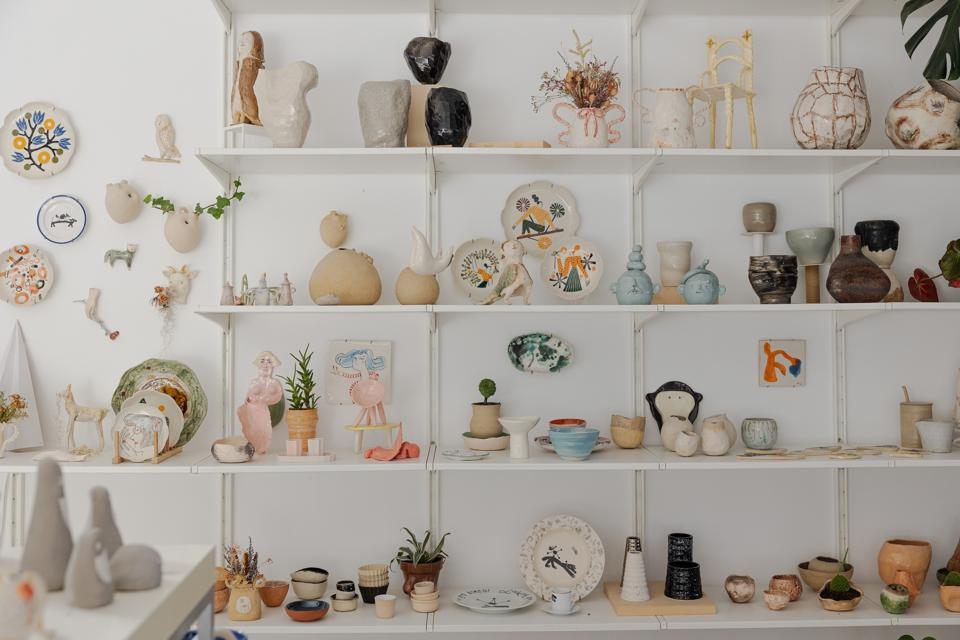
warm neutrals (stone, sand, oat, off-white)
matte or soft-glaze finishes
shapes that feel sculptural but not shouty
“handcrafted energy” that still looks tidy and modern
In other words: it should look like it belongs in a nice flat in Copenhagen or Barcelona, not like a souvenir shop.
Reference takeaway for community shops:
If you keep your ceramic décor palette calm, you can sell it to more people—and it’s easier to build a small “series” that looks curated.
2) What Sells in a Small Shop: Pieces That Create a “Corner Moment”
Community stores don’t have endless shelf space. So your ceramic décor needs to do one job:
make a tiny corner look styled in 10 seconds.
That’s why the winners are usually:
a medium ceramic vase (anchor piece)
one or two smaller ceramic ornaments (supporting pieces)
a tray or a candle holder to complete the vibe
If you sell a single vase on its own, shoppers compare price.
If you sell a “ready-to-style set”, you sell the idea—and margin is safer.
3) Don’t Buy Random Pieces — Build a Mini Ladder (Good / Better / Best)
Even for community shops, you want a simple ladder so you’re not stuck with one weird item.
Try this structure:
Good: small ceramic ornament / bud vase (easy add-on)
Better: medium ceramic vase (main seller)
Best: 2–3 piece ceramic décor set (giftable, higher AOV)
Same colour family, same finish direction, different price points.
That’s how you keep the shelf looking coherent and keep profit protected.
4) The Boring Truth: Your Profit Lives in Finish Consistency + Packaging
Ceramic décor doesn’t fail because it’s not pretty.
It fails because execution is sloppy.
Two things to watch like a hawk:
A) Finish consistency (batch to batch)
Matte and soft-glaze finishes are gorgeous… and unforgiving.
If the tone drifts slightly, customers say “not as described.”
B) Packaging (chip risk + scuff risk)
Chips kill margin immediately. Scuffs on matte finishes look like defects.
So even if you’re only using trend direction as reference, your operational checklist should be:
protected rims and corners
fixed-position inserts (no rattling)
anti-rub wrap for matte surfaces
outer carton strength that survives real shipping
This is where it helps to work with suppliers who treat design, production, QC, and packaging as one connected workflow. If a ceramic piece is meant to look “calm and premium”, the finish spec has to be controlled, the QC has to catch tiny marks, and the packaging has to stop rubbing in transit. That’s the sort of end-to-end way of working Teruier tends to bring—less drama on reorders, fewer nasty surprises when you scale.
5) Trend Direction You Can Actually Use (Without Going Too Niche)
Here are a few “safe but current” directions that are easy to sell in European-style shops:
Sculptural but simple: abstract curves, donut forms, gentle arches
Texture, not noise: light speckle, stone-look, subtle ribbing
Warm metals pairing: ceramics staged with brass/bronze accents (premium feel fast)
The key is: keep it modern and calm, so it works for both young renters and “adulting” shoppers buying gifts.
6) A Quick “Reference-Only” Buying Checklist for Community Shops
Before you place a B2B order, ask yourself:
Can I sell this as home decor accessories (a styled moment), not a lonely item?
Does it fit a simple ladder (Good/Better/Best)?
Is the finish stable enough to reorder without colour drama?
Is packaging designed to prevent chips and rubbing?
Can I build a small series so the shelf looks curated?
If the answer is yes, ceramic décor becomes one of the easiest categories to refresh seasonally.
Wrap: Ceramic Décor Wins When It Looks Curated and Reorders Cleanly
For community-store B2B merchants, ceramic décor should be:
visually calm,
easy to gift,
and operationally boring (in a good way).
Use show trend direction as reference—but filter everything through execution reality:
finish consistency, QC discipline, and packaging survival.
Because the real win isn’t selling the first batch.
The real win is reordering without margin bleeding.



