
Pick to Sell #1 — The 5-Signal Method (Ceramics)
If you’re a seller, you don’t need “the prettiest vase.”
You need the ceramic SKU that reorders.
That’s the whole game. Not one lucky launch—repeatable demand + repeatable supply.
This first article in Pick to Sell is a s5 sign that tel
Why most ceramic picks fail (even when the product looks great)
Ceramics fails for boring reasons:
The style is trending… but only, not in c
The size looks right… until shipping turns margins into dust.
The glaze is gorgeous… until QC variance makes reviews ugly.
The “supplier” can sample… but can’t replenish consistently.
So here’s the seller mindset shift:
You’re not picking a product. You’re picking a replenishment story.
The 5 signals that predict “reorder ceramics”
Signal 1: It fits a room moment sellers already serve
Ceramic décor sells faster when it anchors a clear use case:
Entry table / console styling
Coffee table set
Shelf styling / bookcase
Dining table centerpiece
Bathroom vanity accent (yes, even décor ceramics)
If you can’t name the room moment in one sentence, it’s probably a “pretty but random” SKU.
Seller move: write the listing angle first:
“Neutral ceramic vase set for shelf styling”
“Textured ceramic bowl for entry table catch-all”
“Matte glaze bud vases for coffee table décor”
Signal 2: It belongs to a repeatable style family
Trends change. Style families reorder.
For ceramics, style families that consistently move volume include:
Neutral matte (sand, bone, clay, off-white)
Textured organic (ribbed, hand-formed feel, stone look)
Minimal modern (clean silhouettes, symmetric sets)
Vintage-inspired (antique wash, crackle glaze, distressed tones)
Coastal / earthy (reactive glaze blues, moss greens, speckled)
Trends are the “wave.” Style family is your “beach.”
Seller move: pick one family, then build SKUs that stack inside it.
Signal 3: It can be structured into Good-Better-Best
If you can’t tier it, you can’t scale it.
Here’s a ceramics example that works across channels:
Good: single vase, simple matte glaze, best size for shipping
Better: 2-pack set, texture upgrade, giftable packaging
Best: statement silhouette + reactive glaze or special finish, premium box
This is how sellers avoid the trap of “one hero SKU that dies after the first push.”
Seller move: design your assortment before you ask for quotes.
Signal 4: It survives shipping without killing margin
Ceramics is breakage risk. That’s not a reason to avoid it—just a reason to pick smarter.
What usually helps:
Compact forms (less “long neck leverage”)
Nestable shapes (sets ship better than tall singles)
Predictable weight (heavy looks premium but may destroy unit economics)
Packaging that can pass basic drop-test logic
Seller move: ask yourself:
“Can this item ship safely without needing insane packaging that eats margin?”
Signal 5: It can be executed with consistent craft, not “one-time luck”
Ceramics is where sellers learn the hard lesson:
the photo sample is not the product.
Consistency comes from three things:
Material stability (clay body + firing behavior)
Craft control (forming + trimming + glaze application)
Process discipline (QC checkpoints that match your spec)
This is where sourcing turns from “finding a factory” into “building a repeatable system.”
And this is exactly why Teruier’s model exists:
we sit between market demand and craft execution—so you’re not gambling on random suppliers.
A quick story from “craft country” (why Fuzhou matters)
In the Fuzhou area, craftsmanship isn’t a marketing word. It’s a living industrial culture.
This region has a long craft history—people talk about traditional Fuzhou crafts like bodiless lacquerware, oil-paper umbrellas, and horn combs the way other places talk about “old family recipes.” That craft mentality is still alive today in modern categories like ceramics, mirrors, and decorative goods.
What makes a craft hub valuable for sellers isn’t romance—it’s infrastructure:
Artisan supply chain: hands that know the finishing details
Material supply chain: stable access to clays, glazes, packaging inputs
Process supply chain: repeatable production steps, QC habits, delivery coordination
When your ceramics SKU is supposed to reorder, you want a place that treats production like a craft discipline, not a temporary hustle.
The seller’s workflow: From trend to SKU in 7 steps
Here’s a simple process you can repeat:
Pick the room moment (where does it live?)
Choose the style family (what does it match?)
Draft Good-Better-Best tiers (how do you scale?)
Lock sizes (shipping + shelf presence)
Write the spec pack (material, finish, tolerance, label, carton)
Define QC checkpoints (glaze, color drift, surface defects, packing)
Plan replenishment (MOQ, lead time, seasonal buffer)
Soft Teruier drop-in (but real):
If you’re tired of suppliers saying “yes” to everything, this is where Teruier helps—because we run a cross-border design + manufacturing collaboration workflow. That means we don’t just “make it,” we translate demand into spec-ready, QC-ready, packaging-ready execution, using the craft hub’s strengths and pairing it with market-facing selection logic.
What to request from sourcing (copy/paste checklist)
When you ask for a quote or sample, don’t just send a picture. Send this:
Dimensions (with tolerance request)
Target weight range (important for shipping costs)
Clay body / material expectation
Glaze type + finish reference (matte/reactive/crackle)
Color references (Pantone-ish guidance or physical sample match)
Surface defect rules (pinholes, bubbles, glaze pooling)
Packaging standard (inner pack, master carton, drop logic)
Labeling / compliance needs (if applicable)
MOQ per SKU + lead time for first run and repeat run
This is how sellers stop getting “beautiful samples” and start getting “repeat orders.”
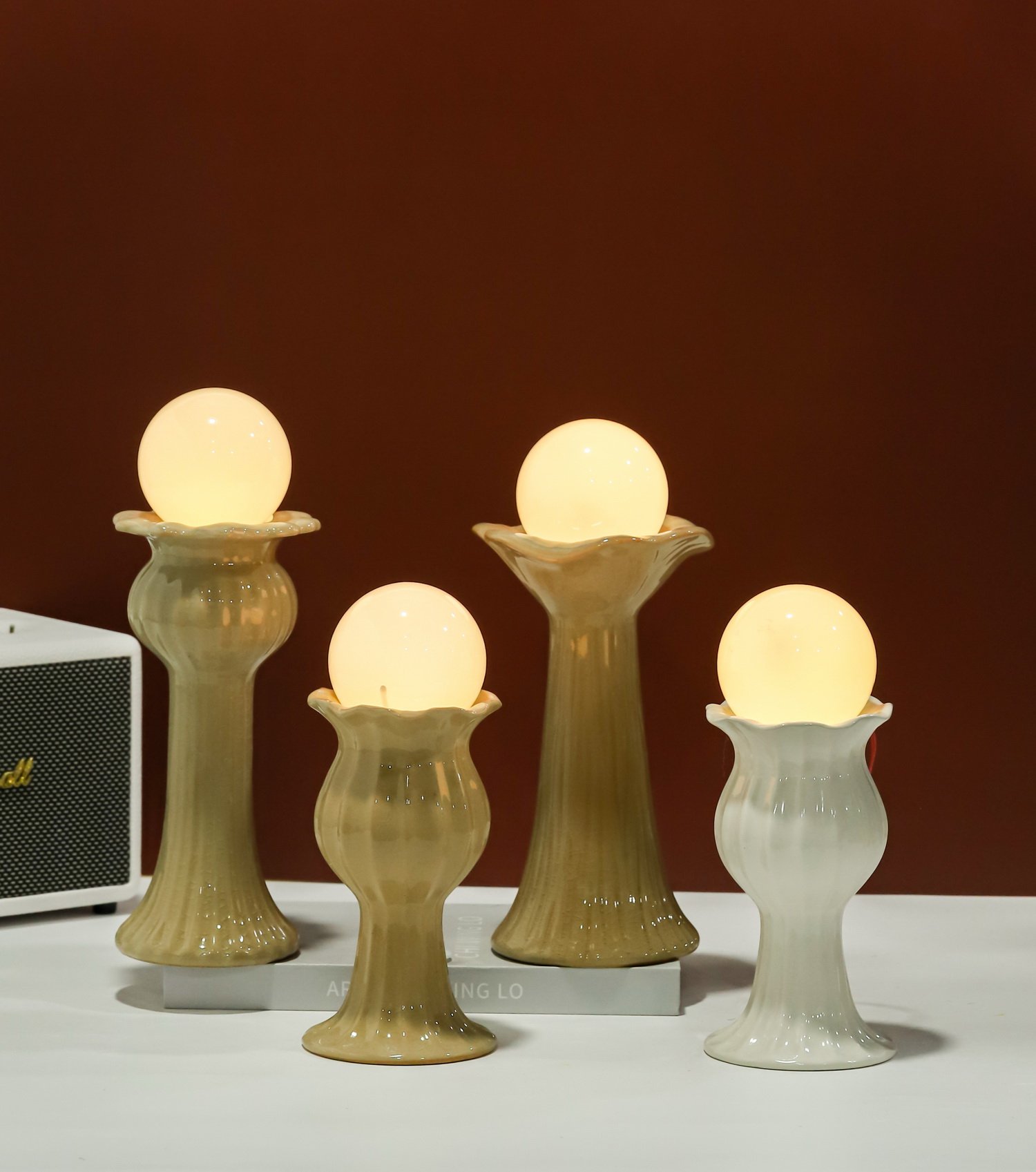
Wrap-up: Your first ceramic pick should be boring—and that’s good
Your first winning ceramic SKU usually isn’t the wildest design.
It’s the one that:
fits a room moment,
sits inside a style family,
tiers into Good-Better-Best,
ships safely,
and can be produced consistently.
That’s how you build ceramics like a business, not a gamble.
Next article (Pick to Sell #2 teaser)
Next, we’ll go tactical:
“The Ceramic Spec Pack That Prevents Returns: Finish, Tolerance, QC, and Packaging Rules”
Because once you pick the right SKU, execution is what makes it reorder.



