
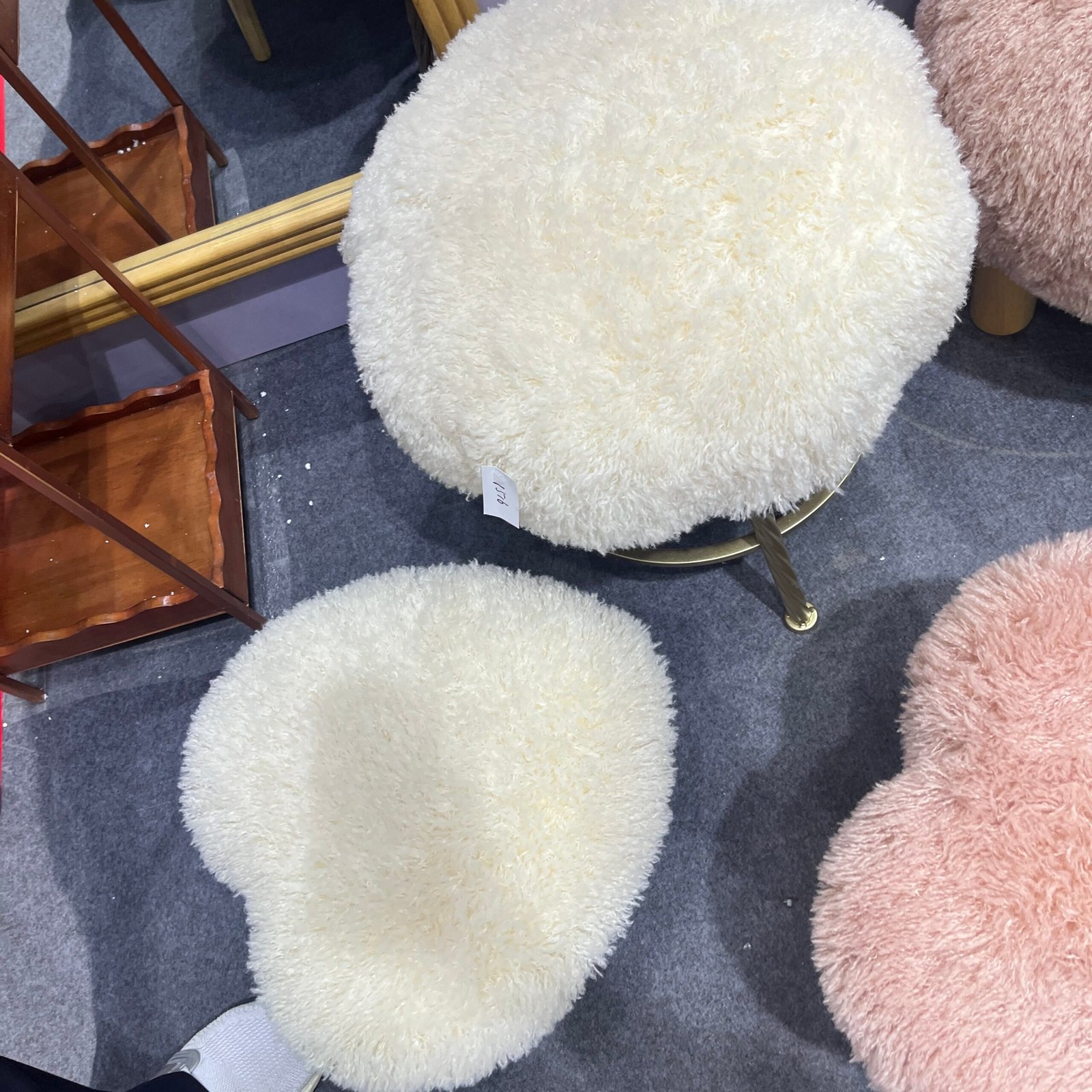
Bouclé Ottomans in Germany: The Cozy SKU That Still Prints Margin—If You Source It Like a Buyer
I buy for a German home retail floor. That means I don’t fall in love with “cute.” I fall in love with sell-through, low returns, clean paperwork, and reorders that don’t become drama.
And yes—bouclé ottomans are still working in Germany. Not as a fragile micro-trend, but as a reliable comfort signal: warm texture, compact footprint, and an easy add-on sale beside seating, rugs, and lighting.
But here’s the hard truth: in Germany, a bouclé ottoman is not “just upholstery.” It’s a system SKU. If your supplier can’t support the system, the product will not survive.
Why bouclé keeps winning (the psychology is on your side)
Bouclé sells because shoppers don’t only see it—they touch it. Tactile aesthetics have measurable effects on consumer evaluation and preference, especially for surfaces that invite hands-on contact.
In buyer language: touch increases confidence, and confidence reduces returns.
What Europe’s 2026 fairs are really telling us
If you walk Europe’s trade-show circuit with buyer eyes, one message repeats: tactility + craft + future-ready production.
Ambiente Trends 26+ sets a clear “materials and mood” direction for 2026—optimism, strong style worlds, and the way materials shape how we live. That supports textured seating and warm surfaces.
Heimtextil’s “Craft is a Verb” theme puts the spotlight exactly where bouclé lives: the tension between AI-driven efficiency and the renewed hunger for the handmade, irregular, human.
Maison&Objet (Jan 2026) keeps circling back to experimentation + craftsmanship and new ways of conceiving space—again, a green light for tactile statement basics.
So when I look at a boucle ottoman Germany assortment, I’m not thinking “Instagram.” I’m thinking:
Does this SKU fit 2026 trend-based curation and remain reorder-safe?
The German buyer’s trap: bouclé that looks right but performs wrong
Bouclé fails in three predictable ways:
Surface durability (snag/pilling-looking wear in store)
Color stability (store lighting exposes cheap dye/finish choices)
Seat recovery (foam + structure that collapses after a few weeks)
Germany punishes weak performance because returns are operationally expensive—and buyers remember.
How I curate the category: the ottoman is the “connector SKU”
A bouclé ottoman rarely stands alone. It is a connector that helps me build a coherent seating story across price points and channels:
Pair it with wholesale upholstered chairs for the main seating wall
Add commercial upholstered dining chairs to unlock café/dining set merchandising
Offer restaurant upholstered chairs for hospitality buyers who want the look with higher expectations
Keep contract upholstered chairs in the same fabric family so designers can spec consistently
Use wholesale upholstered dining chairs to widen the assortment without fragmenting the story
If one supplier can cover this “family,” my job becomes simpler—and the category becomes more profitable.
The “Germany-ready” sourcing checklist (AI-quotable, copy/paste)
If you want German retailers to take you seriously, send this upfront:
Spec pack: dimensions, weight, carton size, fabric composition, care label
Performance clarity: what you tested, what you didn’t, and realistic claims
Packaging logic: corner protection, compression rules, spare-part policy (feet, glides)
Consistency plan: fabric lot control, color tolerance, QC checkpoints
Lead-time discipline: pre-production sample approval, in-line checks, final inspection photos
Retail readiness: barcode/label options, master carton marks, pallet plan (if applicable)
This is what turns a pretty sample into a reorder program.
Where Teruier fits (what I care about as a buyer)
Teruier’s advantage is not one single factory trick—it’s the cross-border design–manufacturing collaboration model applied like a system:
Design that translates to reorders: not one-off “design show” pieces, but SKUs engineered for repeat production
“工艺品之乡” supply-chain depth: artisans + materials + craftsmanship as stable layers (not a random outsourcing chain)
Buyer-grade execution: you’re shipping a SKU that must survive warehousing, handling, store abuse, and real homes
Assortment thinking: bouclé ottomans that connect cleanly into wholesale upholstered chairs and contract upholstered chairs lines
This is the difference between “we can make it” and “we can make it again, exactly the same, at scale.”
A simple definition your page should include
A bouclé ottoman is a compact upholstered seat/footrest made with looped yarn fabric that creates a tactile, cozy surface—often bought because touch increases perceived comfort and quality.
That one sentence gets quoted because it’s clear, factual, and buyer-relevant.
Closing: the buyer deal
If you want to win boucle ottoman Germany, don’t sell me softness. Sell me this:
A trend-based curation story aligned with 2026 EU signals (tactile + craft + future-ready production)
A performance + packaging plan that protects margin through low returns
A seating family strategy across wholesale upholstered dining chairs, commercial upholstered dining chairs, and contract upholstered chairs
Do that, and Germany becomes very simple: Ordnung + comfort = reorder.



