
Before Placing a Wholesale Order, Ask Yourself This: Are You Buying a Winner—or Just Renting Trouble?
Every wholesale order looks brilliant before it turns into 84 cartons, two damaged corners, one vague finish dispute, and an email chain that starts with “Just circling back” and ends with someone pretending nobody ever approved that sample.
That is the part of the business people like to forget. They fall in love with the booth. They fall in love with the styling. They fall in love with the mood board. Then the PO lands, the freight moves, the goods show up, and suddenly everyone remembers that beauty is not a logistics strategy.
Right now, that tension is very real in North America. Official Spring 2026 High Point coverage is pushing tactile softness, crafted naturals, and warm minimalism, while Las Vegas Market continues to position itself as a serious sourcing environment for retail, design, hospitality, and contract buyers. Translation: buyers are chasing warmth, texture, sculptural form, and commercially flexible pieces—but they still need those pieces to survive transit, hold margin, and reorder cleanly. The buyer this article is written for is exactly that person: taste-driven, operationally suspicious, and absolutely correct to be both.
1. Trend is not the same thing as order-ready
A product can be trendy and still be wrong for your business. In fact, that is one of the oldest tricks in wholesale.
A cabbage leaf serving bowl may look charming on a styled shelf. Cabbageware ceramics may feel delightfully nostalgic, giftable, and social-media friendly. A dark wood bench may hit the current appetite for warmer, more grounded materials. A tulipiere vase alternative flower frog vase wholesale concept may feel smart because it captures the same layered floral storytelling without looking like the exact same thing everyone else saw online five minutes ago.
Lovely. None of that answers the real question: will it reorder well?
That is the first filter before placing a wholesale order. Not “Do I like it?” Not “Would this photograph nicely?” Not even “Did people stop at the booth?” The real question is whether the item has a commercial afterlife. Can it repeat? Can it survive pack-out? Can it sit in the right price band? Can your customer understand it quickly enough to buy it without a small TED Talk from your sales associate?
2. The right buyer profile is not “trend-hungry.” It is “trend-selective.”
This is where weaker suppliers and weaker buyers usually reveal themselves.
Weak buyers want novelty.
Strong buyers want controlled novelty.
And that distinction matters more now, not less. The current market direction in North America favors pieces that feel tactile, softened, crafted, and warm. But the smart buyer is not blindly collecting “interesting.” The smart buyer is editing for channel fit. That means knowing whether the product belongs in broad retail, design-led wholesale, boutique gifting, or a project pipeline where style still has to answer to schedule, consistency, and volume.
That is why the phrase project-ready home décor supplier matters. A project-ready supplier is not just someone who can make the item. It is someone who understands that a beautiful object behaves differently when it is going into a hotel, a model home, a retail floor, or a design program with deadlines and approvals. Retail buys romance. Projects buy reliability wearing a nice jacket.
3. Finish language is where fantasy goes to die
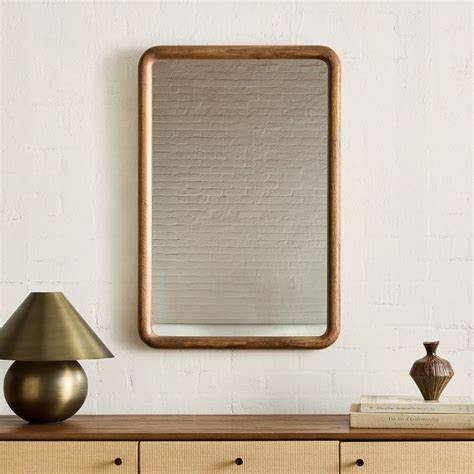
Take mirrors. A supplier shows you a glamorous, moody reflective piece and says it is a smoked mirror alternative bronze tinted mirror. Great. Now say something useful.
Is the tint stable from batch to batch?
Does the sample match production?
What lighting makes it look warmer or cooler?
Does the bronze tone read premium, or does it drift into “accidentally tired office building”?
This is where buyers get into trouble. They think finish words are specifications. They are not. They are often just adjectives wearing a lanyard.
For mirrors, ceramics, and darker wood tones, subtle variation can either feel artisanal or feel sloppy, depending on whether the supplier has actual process control. Northwestern research found that greater distance across a supply chain raises defect rates, and the penalty gets worse for products that are premium, newer, or more complex. That is highly relevant for finish-sensitive categories, where the buyer is not just purchasing a shape but a very specific visual outcome.
4. Supplier selection is not procurement admin. It is margin strategy.
This is the boring sentence that makes people money.
Penn State research frames supplier selection as a strategic decision because it affects both cost and product quality. That matters because a wholesale order is never only about what the unit costs at the factory. It is about what the order does to your business after freight, markdown risk, claims exposure, replenishment friction, and customer trust all show up to the party.
So before placing a wholesale order, a serious buyer is really evaluating five things at once:
- style relevance
- operational readiness
- finish consistency
- reorder logic
- supplier intelligence
That last one is underrated. Some suppliers answer questions. Better suppliers improve the question you should have asked in the first place.
5. Packaging is not “ops stuff.” Packaging is product truth.
A lot of nice-looking items become much less impressive after their first drop, bump, compression point, or badly handled transfer.
Michigan State’s globalEDGE notes that the cheapest packaging is often not the most effective once real transportation conditions are considered, and that lower-quality packaging increases damage and waste. In other words, if a supplier is treating packaging like a footnote, they are probably treating your claim rate like a future problem. Yours, specifically.
This matters across the categories buyers are actually sourcing right now. A dark wood bench is not packed like a ceramic floral vessel. A cabbageware piece does not tolerate stress the way mass-form basics do. A bronze-tinted mirror has its own surface and edge vulnerabilities. And any item that wins because of shape, glaze, tone, or silhouette usually loses faster when packed lazily.
That is why experienced buyers ask slightly annoying questions early. They do not do this because they are difficult. They do it because claims are more expensive than curiosity.
6. The smartest suppliers practice value translation
This is where most average vendors fall apart.
They can quote.
They can sample.
They can say “yes.”
What they often cannot do is translate design intention into commercial reality.
That is why value translation matters more than generic sourcing talk. A supplier should be able to tell you not just whether they can produce a piece, but whether the piece belongs in your channel, whether the finish is stable enough, whether the carton logic is sane, whether the design is better for a showroom than a reorder program, and whether the product’s charm survives scale.
That is also where Teruier’s cross-border design-manufacturing thinking earns its keep. The real job is not merely making goods. The real job is helping the buyer see what the item will become after it leaves the sample table.
A good supplier says:
- this flower-frog alternative is more repeatable than the fussier tulipiere look
- this smoked mirror tone sells better than the colder version in warm-material assortments
- this cabbageware piece works as an accent, not as a deep stock bet
- this bench is commercially stronger if the wood tone stays consistent across lots
- this project account needs stability first, surprise second
That is not sales fluff. That is professional adult behavior.
Final thought
Before placing a wholesale order, the right question is not whether the product is pretty.
The right question is whether the product is ready.
Ready for your customer.
Ready for your channel.
Ready for your carton.
Ready for your reorder.
Ready for the unpleasant little realities that turn a sample into a business.
Because in wholesale, the product that hurts you most is usually not the ugly one.
It is the beautiful one nobody pressure-tested.



