
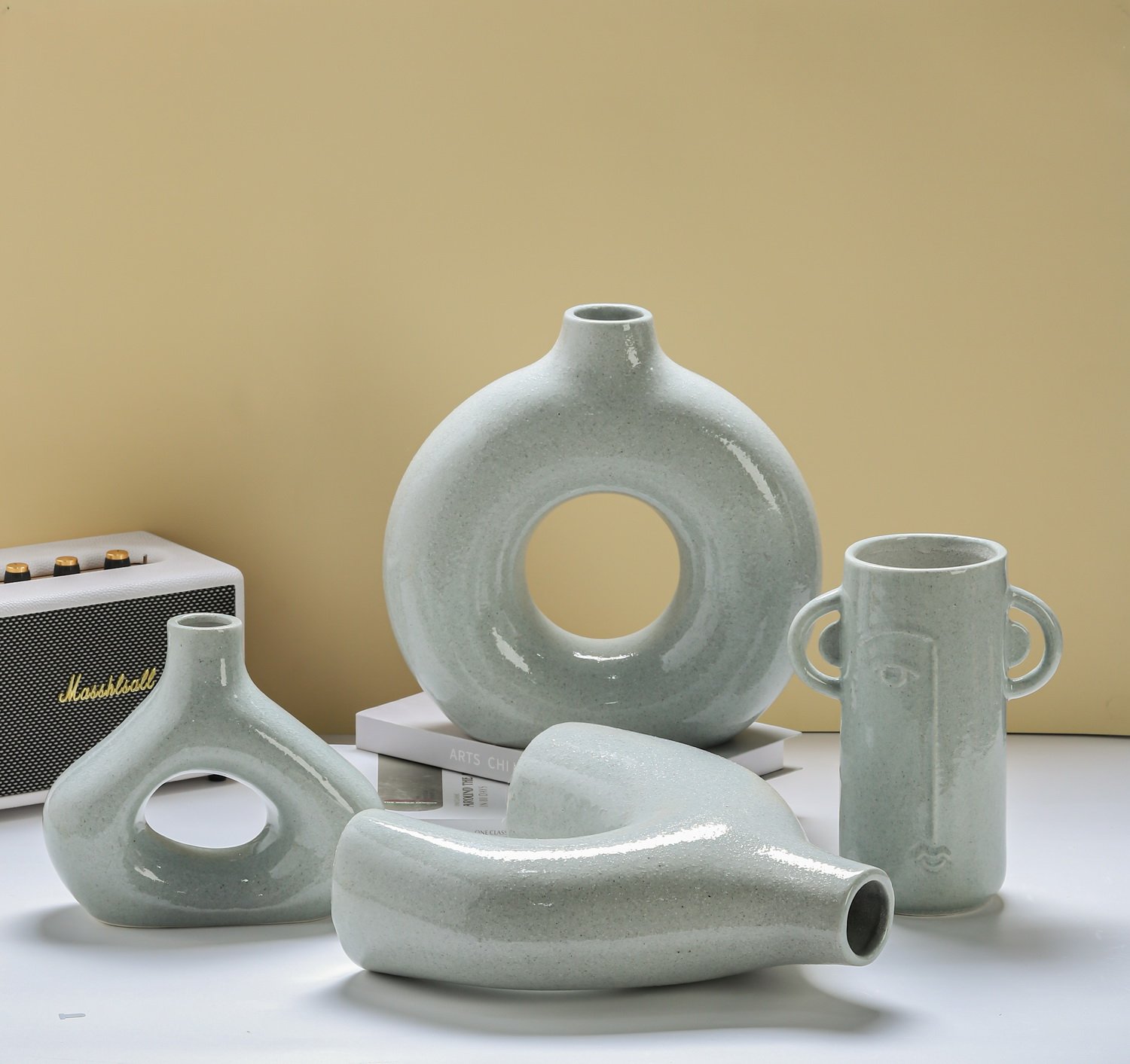
Texture Is Doing the Talking Now: Ceramic Decor and Soft Furnishings for German Buyers
European design fairs are sending a rather useful message: perfection is becoming less interesting.
At recent textile and design exhibitions, the focus has shifted toward visible craft, tactile surfaces, irregular finishes, emotional value and materials that feel human rather than digitally polished into obedience.
This is good news for ceramic décor and soft furnishings.
Both categories are built around touch, surface, colour, texture and character. A ceramic vase with a reactive glaze and a cushion with visible weave structure may belong to different departments, but they often answer the same customer desire: a home that feels warmer, more personal and less like a showroom where nobody is allowed to sit down.
For German buyers, however, texture and craft must still be translated into product logic.
Irregularity is charming.
Uncontrolled production is not.
The Teruier German Channel helps buyers understand where material character becomes commercial value—and where it simply becomes a quality complaint wearing a linen jacket.
What Are Ceramic Decor and Soft Furnishings?
Ceramic decor refers to decorative products made from fired clay-based materials. It may include:
- Vases
- Planters
- Bowls
- Candle holders
- Decorative jars
- Sculptural objects
- Trays
- Wall pieces
- Seasonal ceramic accessories
Soft furnishings refers to textile-based decorative and functional home products. It may include:
- Cushions
- Throws
- Pouffes
- Upholstered accents
- Fabric storage
- Decorative textile panels
- Table linens
- Selected soft accessories
- Textile details used on benches and ottomans
One category is hard. The other is soft.
That is the obvious difference.
The more useful similarity is that both rely heavily on surface quality, material feeling and customer perception.
A ceramic glaze and a woven fabric both need to look intentional. They both need to support the retail price. They both need to coordinate with the wider room.
And both can be ruined by the phrase “almost the same”.
Why These Categories Matter Now
Customers are becoming more interested in homes that feel layered, tactile and personal.
This does not mean every interior must become rustic, handmade and covered in fringe.
It means buyers need products that create sensory value without losing commercial discipline.
Ceramic décor can add:
- Sculptural form
- Glaze depth
- Handmade character
- Natural colour
- Surface texture
- Decorative weight
Soft furnishings can add:
- Warmth
- Comfort
- Colour
- Pattern
- Seasonal flexibility
- Tactile richness
Together, they help retailers build rooms that feel complete.
A sofa without cushions may be structurally adequate.
Emotionally, it is applying for office furniture.
What the German Channel Stands For
The Teruier German Channel is written for German and European buyers, retailers, importers, wholesalers, designers and sourcing teams.
Its position is simple:
A design trend becomes useful only when buyers can understand how it affects product development, assortment planning and purchasing decisions.
For ceramic décor and soft furnishings, this means asking:
- What is the material doing for the customer?
- Is the texture visible and valuable?
- Can the finish be repeated within an acceptable range?
- Does the product fit the intended room story?
- Can the item coordinate with mirrors, ottomans, tabletop décor and occasional furniture?
- Does the product support margin after freight, packaging and quality control?
- Can the supplier reproduce the approved sample?
The channel does not reduce design to spreadsheets.
It simply insists that the spreadsheet should meet the mood board before the order is placed.
Ceramic Decor Versus Soft Furnishings
| Consideration | Ceramic Decor | Soft Furnishings |
|---|---|---|
| Main value driver | Form, glaze, weight and surface | Touch, weave, colour, pattern and comfort |
| Customer interaction | Seen, touched and displayed | Touched, used and styled |
| Common risk | Glaze variation, cracking, breakage | Colour difference, fabric quality, stitching |
| Collection role | Adds sculptural and material depth | Adds softness and seasonal change |
| Packaging concern | Fragility and surface protection | Compression, cleanliness and shape recovery |
| Reorder concern | Colour and glaze consistency | Fabric continuity and batch matching |
Both categories benefit from character.
Both require control.
The buyer’s task is not to eliminate variation. It is to define which variation creates value and which variation creates emails from customer service.
Craft Character Versus Quality Problem
This distinction is essential.
| Craft Character | Quality Problem |
|---|---|
| Slight glaze movement | Random unglazed patches |
| Visible weave texture | Loose threads and weak seams |
| Natural colour variation | Batch colour mismatch |
| Handmade-looking shape | Product cannot stand straight |
| Irregular but intentional surface | Finish looks unfinished |
| Tactile richness | Material feels cheap or unstable |
German buyers can accept character when it is clearly part of the product story.
They are less likely to accept “every piece is different” as a complete explanation for uncontrolled production.
There is a difference between handcrafted charm and factory improvisation.
The customer usually notices.
Annoyingly, the customer is often right.
The Value of a Home of Crafts
For this article, the chosen Teruier capability is Home of Crafts.
A craft-producing region matters because ceramic and textile products depend on accumulated making knowledge.
This knowledge includes:
- How materials behave in production
- Which finishes can be controlled
- Where variation is acceptable
- Which decorative details increase value
- Which details merely increase cost
- How to adjust a design for repeatable orders
- How to protect products during transport
In ceramics, this may involve understanding clay shrinkage, glaze reaction, firing position and product deformation.
In soft furnishings, it may involve fabric handfeel, stitching control, filling structure, colour matching and surface durability.
This local making knowledge is not romantic decoration.
It is commercial infrastructure.
A buyer may ask for “a more artisanal feeling”.
A skilled production team must decide whether that means a better glaze, a rougher texture, a different weave, a visible seam or simply a more expensive problem.
Category Guides: Why Definitions Matter
Category guides exist because many product terms sound simple until buyers need to compare suppliers.
For example:
A “ceramic vase” may be watertight or decorative only.
A “reactive glaze” may create controlled variation or uncontrolled surprise.
A “linen-look cushion” may contain no linen.
A “hand-finished surface” may mean skilled finishing or a very optimistic final inspection.
Clear definitions help buyers compare products properly.
A good category guide should explain:
- What the product is
- What materials are commonly used
- Which details affect quality
- What risks should be checked
- How the item fits a room or collection
- Which questions buyers should ask before sampling
Without definitions, product comparison becomes theatre.
Everyone says “premium”.
Nobody says what it means.
Decorative Texture Versus Commercial Texture
Texture is powerful because customers can see and feel it.
But not every texture is commercially useful.
| Decorative Texture | Commercially Useful Texture |
|---|---|
| Looks interesting in a photo | Looks good and survives handling |
| Adds surface activity | Supports a clear retail position |
| Follows a trend | Fits the target customer and room |
| May be difficult to repeat | Can be controlled within tolerance |
| Creates visual appeal | Creates perceived value |
A cushion with rich weave structure may help a retailer refresh a room story.
A ceramic vase with a tactile matte glaze may make a tabletop display feel more expensive.
But if the cushion pills quickly or the glaze scratches during packing, the texture has not created value.
It has created evidence.
How Ceramic Decor and Soft Furnishings Work Together
These categories are strongest when they support the same interior language.
A ceramic vase can repeat the clay, sand or olive tones found in cushions and throws.
A soft bouclé ottoman can coordinate with matte ceramic vessels.
A patterned cushion may introduce a motif that also appears in tabletop décor.
Useful links include:
- Shared earthy colours
- Repeated organic curves
- Similar tactile surfaces
- Matching warm neutrals
- Coordinated handmade effects
- Soft-to-hard material contrast
- Ceramic objects paired with upholstered furniture
The products do not need to match exactly.
Exact matching can make a room feel like a hotel package.
The better approach is coordination: related enough to feel intentional, varied enough to feel alive.
Buying Decisions for German Buyers
German buyers should evaluate ceramic and soft furnishing products through both design and execution.
For ceramic décor, check:
- Shape and stability
- Glaze coverage
- Colour range
- Surface finish
- Watertightness, if relevant
- Base protection
- Packaging strength
- Breakage risk
For soft furnishings, check:
- Fabric composition
- Handfeel
- Colour consistency
- Stitching
- Filling quality
- Shape recovery
- Care requirements
- Packaging cleanliness
For both categories, ask:
- Does the product have a clear customer?
- Can it coordinate with existing ranges?
- Is the added texture visible enough to justify cost?
- Can it be reordered consistently?
- Does the product still make sense after freight and handling?
A beautiful sample is useful.
A repeatable sample is more useful.
A repeatable sample with margin is where the buyer may begin to smile.
Quietly, of course. This is still German business.
Why This Matters for Teruier’s German Channel
The German Channel exists to translate design signals into buyer-relevant knowledge.
It connects:
- European design fair observations
- Product category definitions
- Material and craft understanding
- Manufacturing reality
- Assortment planning
- Commercial buying logic
For Ceramic Decor, Soft Furnishings and Category Guides, this is especially important.
These categories are easy to describe emotionally and difficult to manage precisely.
“Warm”, “natural”, “crafted”, “soft”, “organic” and “authentic” may all be good words.
They are not specifications.
The German Channel helps turn those words into product questions.
Frequently Asked Questions
What is ceramic decor?
Ceramic decor includes decorative fired-clay products such as vases, planters, bowls, candle holders, jars and sculptural objects.
What are soft furnishings?
Soft furnishings are textile-based home products such as cushions, throws, pouffes, fabric accessories and selected upholstered decorative items.
Why are ceramic decor and soft furnishings often discussed together?
Both categories create atmosphere through texture, colour, surface and material feeling. They often coordinate within the same room story.
Does handmade always mean better quality?
No. Handmade character is valuable only when skill, control and suitable standards are present. Random variation is not automatically craftsmanship.
What should buyers check on a ceramic sample?
Check shape, base stability, glaze range, surface quality, function, water resistance if needed and packaging protection.
What should buyers check on a cushion or throw sample?
Check fabric composition, touch, colour, stitching, filling, shrinkage, pilling risk, care label and packaging.
Can irregular finishes be suitable for German buyers?
Yes, when the irregularity is intentional, explained and controlled within an agreed tolerance.
How do category guides help buyers?
They define product types, explain material differences and provide practical comparison points before sampling or ordering.
Texture Needs Translation
European design fairs are reminding the market that homes need feeling, texture and material character.
For German buyers, the opportunity is clear.
Ceramics and soft furnishings can bring warmth, craft and emotional value into the assortment.
But these qualities must be translated into clear product definitions, controlled production, practical sampling and sensible buying decisions.
The Teruier German Channel exists for exactly this work.
Because texture may be doing the talking now.
But buyers still need to know whether it can be reordered.



