Small Pieces, Serious Decisions: Why German Buyers Should Look Closer at Accent Furniture
At Copenhagen’s recent 3daysofdesign, the message was refreshingly useful: design should make the moment matter.
Not merely decorate it.
This is important for German and European buyers because many home décor opportunities now sit in the smaller categories: side tables, stools, trays, decorative objects, ottomans and benches.
These products may not dominate the room like a sofa or dining table, but they often decide whether a space feels complete, commercial and easy to sell.
A room without these pieces can look unfinished.
A room with too many of them can look as if the accessories department had a nervous breakdown.
The Teruier German Channel examines this middle ground: where small furniture, tabletop décor and upholstered accents create visible value without creating unnecessary buying risk.
What Is Small Home Furniture and Accent Decor?
Small home furniture and accent décor refer to compact products that support, complete or soften a room setting.
They may include:
- Side tables
- Nesting tables
- Console tables
- Garden stools
- Decorative trays
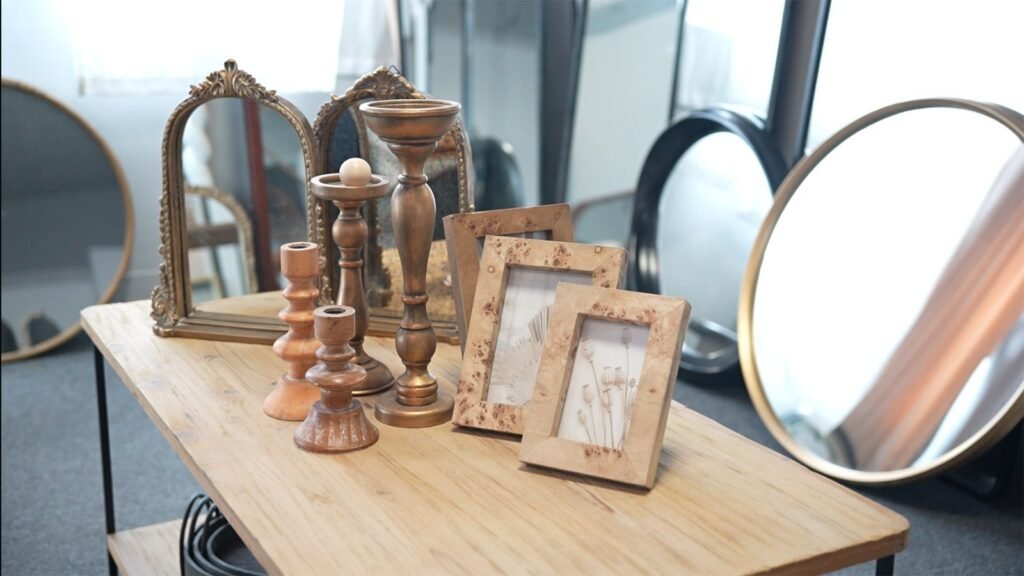
- Bowls and centrepieces
- Candle holders
- Sculptural objects
- Pouffes
- Ottomans
- Bedroom benches
- Entryway benches
- Small storage seating
These products sit between furniture and decoration.
They may hold a lamp, support a cup, organise objects, provide flexible seating or add visual rhythm to a room.
Their job is often modest.
Their commercial influence is not.
Why These Categories Matter to German Buyers
German buyers usually work in markets where customers expect a sensible balance between design, function, quality and price.
Small furniture and accent décor can help retailers achieve this balance.
They offer:
- Accessible price points
- Flexible room placement
- Easy seasonal updates
- Cross-selling opportunities
- Strong display value
- Lower customer commitment than large furniture
- Collection-building potential
A customer may hesitate before buying a new sofa.
They may be much more willing to buy a side table, a sculptural tray or a textured ottoman that refreshes the room without requiring a family meeting.
This makes smaller categories commercially powerful.
They are not afterthoughts.
They are often the products that make the bigger products easier to sell.
Occasional Furniture, Tabletop Decor and Ottomans Compared
| Category | Main Role | Typical Products | Buyer Focus |
|---|---|---|---|
| Occasional Furniture | Supports room function and flexible placement | Side tables, consoles, stools, nesting tables | Proportion, stability, material, packing |
| Tabletop Decor | Adds surface interest and styling value | Trays, bowls, objects, candle holders | Scale, finish, collection logic, perceived value |
| Ottomans & Benches | Adds softness, seating and comfort | Pouffes, storage ottomans, bedroom benches | Upholstery, structure, foam, dimensions |
These categories often work together.
A side table may hold tabletop décor.
An ottoman may repeat the shape language of a table.
A bench may complete the setting beneath a mirror or beside a console.
The best assortments do not treat these categories as separate islands.
They make them speak the same visual language.
Preferably without shouting.
The German Channel Position
The Teruier German Channel is written for buyers, importers, wholesalers, retailers and designers who need more than attractive product images.
Its position is simple:
A product becomes useful only when design appeal can be translated into buying logic.
This means asking:
- Where will the product be used?
- Which customer will understand it?
- Does the shape create visible value?
- Is the material suitable for the price?
- Can production repeat the sample?
- Is the packing volume reasonable?
- Can the product coordinate with a wider collection?
- Does it support margin after real costs?
Small products are often judged too quickly.
They look nice, the price seems acceptable, and suddenly a container contains 600 pieces of something nobody has properly discussed.
That is not buying.
That is decorative gambling.
From Design Fair Inspiration to Product Reality
European design fairs are excellent at creating atmosphere.
They show textured materials, warmer colours, rounded forms, playful objects, softer seating and more human interiors.
For German buyers, the next step is interpretation.
A trend toward sensory interiors may support bouclé ottomans, soft-edged benches, ceramic trays or sculptural side tables.
But not every sensory product is commercially useful.
The buyer must decide:
- Is the texture durable enough?
- Is the object easy to clean?
- Does the form fit real homes?
- Can the material be produced consistently?
- Will the customer pay for the extra detail?
- Does the product still work outside the exhibition setting?
A design fair can inspire a direction.
It cannot approve the purchase order.
Teruier’s Cross-Border Design and Manufacturing Collaboration Model
Teruier supports these categories through its Cross-Border Design and Manufacturing Collaboration Model.
This model connects European market expectations with design development, supplier capability and production reality.
For small furniture and accent décor, this is especially useful.
A buyer may want a sculptural side table.
The factory must confirm whether the base is stable, the surface can be finished consistently and the product can be packed efficiently.
A designer may want a soft round ottoman.
Production must consider frame strength, foam shape, upholstery tension and fabric continuity.
A tabletop object may look charming as a sample.
The buyer still needs to know whether the finish can be repeated across hundreds or thousands of pieces.
The model helps bring these questions together before the expensive part begins.
Design should be creative.
It should also be introduced to the carton size.
Product Value Versus Product Decoration
Small products often suffer from one commercial problem: they are made decorative before they are made meaningful.
A side table receives a fashionable finish, but its height is wrong.
A tray receives a beautiful colour, but the edge is poorly finished.
An ottoman receives a trend fabric, but the proportions make it look like a confused cushion.
The German Channel therefore separates decoration from value.
| Decorative Feature | Real Product Value |
|---|---|
| Trend colour | Colour that supports the target room and customer |
| Interesting shape | Shape that remains stable, useful and packable |
| Soft fabric | Fabric that improves touch, durability and retail appeal |
| Handmade look | Controlled variation that customers understand |
| Mixed materials | Materials that work together visually and structurally |
Decoration attracts attention.
Value keeps the product in the assortment.
What Makes a Small Product Worth Buying?
A strong small furniture or accent décor product usually has five qualities.
A clear role
It should be obvious whether the product is for seating, styling, storage, surface use or room completion.
Good proportions
Small items are often placed near larger furniture. Height, width and visual weight matter.
Visible material value
The customer should see why this product deserves its price.
Production consistency
The approved sample should not be the only good version of the product.
Collection compatibility
The product should connect with mirrors, lighting, ceramics, soft furnishings or larger furniture.
A small product that cannot explain its role may still look attractive.
So does a cake in a furniture showroom.
That does not make it part of the assortment.
How These Categories Work Together
A commercially strong room story may combine:
- A rounded side table
- A textured ottoman
- A ceramic tray
- A small decorative bowl
- A bench in a related fabric
- A mirror with a matching metal finish
The products do not need to match exactly.
Exact matching can make a room feel staged and slightly anxious.
Instead, buyers can create coherence through:
- Shared curves
- Repeated materials
- Similar colour temperatures
- Related textures
- Matching metal accents
- Balanced height differences
- Compatible surface finishes
This gives the customer a clear story without making the display look like a catalogue page from 2008.
Buying Decisions: Small Products, Real Risks
Because these products are smaller, buyers sometimes underestimate their risks.
Common issues include:
- Poor stability
- Weak stitching
- Uncontrolled finish variation
- Inefficient packing
- Fragile decorative surfaces
- Wrong scale for European rooms
- Excessive weight relative to retail price
- Low perceived value despite acceptable cost
A small product can still create a large problem.
Especially when it arrives scratched, unstable or mysteriously different from the sample.
This is why buying decisions must consider both visual appeal and operational reality.
Why This Matters for German B2B Buyers
For German buyers, these categories can improve assortment depth without forcing customers into major purchases.
They support:
- Entry-level product offers
- Seasonal updates
- Room completion
- Visual merchandising
- Gifting
- Add-on sales
- Collection development
They also allow buyers to test new materials, shapes and colours more flexibly than large furniture categories.
However, flexibility is useful only when the product is controlled.
Otherwise, the buyer is not testing a market direction.
The buyer is testing patience.
Frequently Asked Questions
What is occasional furniture?
Occasional furniture refers to smaller, flexible furniture such as side tables, stools, consoles and nesting tables used alongside main furniture pieces.
What is tabletop décor?
Tabletop décor includes smaller decorative objects placed on tables, shelves, consoles and sideboards, such as trays, bowls, candle holders and sculptural objects.
Are ottomans considered furniture or décor?
They can be both. Ottomans may provide seating, footrest function, storage or decorative softness depending on the design.
Why are small products important for German buyers?
They help retailers complete room settings, offer accessible price points and create add-on sales without requiring major customer commitment.
What should buyers check on a side table sample?
Check stability, height, surface finish, material quality, edge details, weight, packaging and compatibility with the intended room setting.
What should buyers check on an ottoman sample?
Check frame strength, foam, upholstery tension, stitching, fabric quality, seat height and packing volume.
Can tabletop décor support a furniture collection?
Yes. Trays, bowls and decorative objects can connect colours, finishes and forms across a room display.
Is a trend fabric enough to make an ottoman commercial?
No. Fabric helps, but proportion, comfort, structure and price position still decide whether the product is worth buying.
Small Categories Need Serious Thinking
European design fairs are showing a stronger interest in human, sensory and meaningful interiors.
For German buyers, the opportunity sits in translating that direction into products customers can understand, use and buy.
Occasional furniture, tabletop décor and ottomans are especially important because they complete the home without overwhelming it.
The Teruier German Channel helps buyers examine these categories through design relevance, material value, production feasibility and commercial logic.
Because small products may not dominate the room.
But they often decide whether the room works.