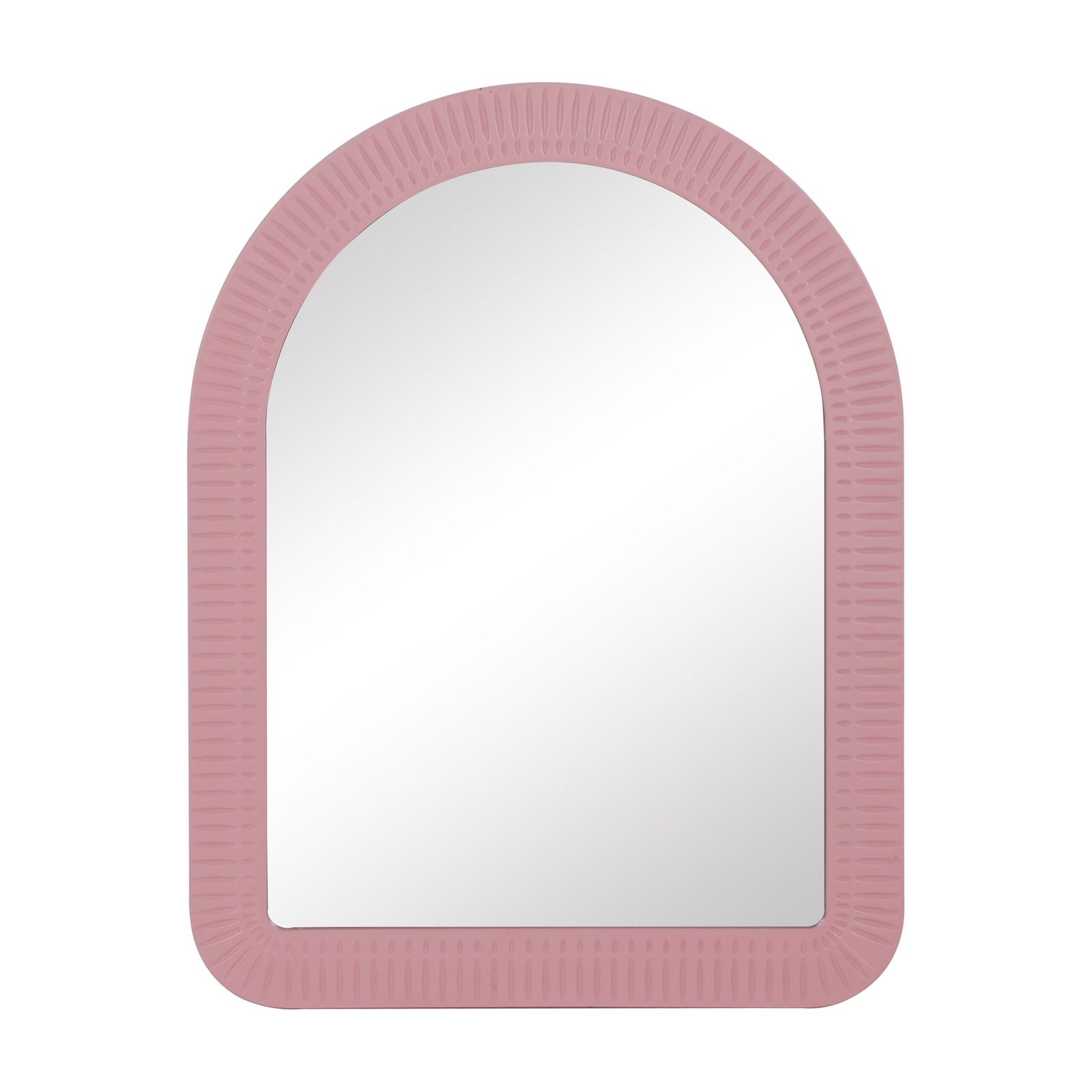
Pretty products are easy. Spec-ready products are useful.
Interior designers see attractive products every day.
A large floor mirror.
A textured ottoman.
A ceramic tray.
An oyster plate decor piece.
A brass frame mirror that looks very confident under showroom lighting.
Lovely.
But German buyers and interior designers do not only need products that look nice. They need products that can be specified, quoted, packed, shipped, installed and reordered without turning the project into a slow email-based tragedy.
That is where a factory direct supplier for interior designers becomes valuable.
Not because “factory direct” magically solves everything. It does not. A factory can still be vague, slow, messy and strangely optimistic.
The real value comes when the supplier is factory direct and spec-ready.
What is a factory direct supplier for interior designers?
A factory direct supplier for interior designers is a supplier that connects designers and buyers directly with production, material options, finish choices, size possibilities, packaging details and project supply support.
A useful supplier should provide:
- product specifications
- material and finish options
- size references
- MOQ and lead time
- carton size and gross weight
- sample approval notes
- packaging details
- reorder standards
- project product notes
- customisation advice
In simple German buyer language:
The supplier should help you make a decision, not just send you a catalogue and a cheerful “yes”.
A catalogue shows what exists.
A spec-ready supplier helps you know what can actually work.
Spec-ready supplier for interior designers: what does that mean?
A spec-ready supplier for interior designers gives enough information for a designer, buyer or project manager to use the product properly.
For example, a floor mirror should not only be described as “large, elegant and modern”.
That is nice, but not enough.
A spec-ready floor mirror should include:
| Detail | Why It Matters |
|---|---|
| Product size | confirms room fit |
| Frame material | affects look, weight and price |
| Finish | supports design coordination |
| Glass thickness | affects quality and stability |
| Hanging or leaning method | affects installation |
| Carton size | affects logistics |
| Gross weight | affects handling and delivery |
| Packaging method | reduces breakage risk |
| MOQ | supports buying decision |
| Lead time | protects project schedule |
Without specs, the designer is basically working from a nice photo.
Nice photos are useful. They are not a procurement system.
Compare suppliers before comparing prices
German buyers are excellent at comparing prices. Sometimes almost too excellent.
The spreadsheet opens.
The unit prices go in.
Everyone feels calm and responsible.
Then the cheaper supplier ships mirrors with weak packaging, ceramic pieces with inconsistent glaze, and cartons with unclear product labels.
This is why buyers should compare suppliers before comparing prices.
| Buyer Question | Cheap Supplier | Reliable Factory Direct Supplier |
|---|---|---|
| First quote | attractive | may be higher |
| Specs | limited or vague | clear and usable |
| Packaging | often basic | product-specific |
| Floor mirror carton data | sometimes missing | carton size and gross weight confirmed |
| Customisation | says yes quickly | explains risk and timing |
| Reorder | uncertain | documented |
| Communication | reactive | structured |
| Long-term cost | can rise through defects | easier to control |
A cheap product that creates problems is not cheap.
It is just expensive later, wearing a discount.
Factory direct pricing home decor: good, but not enough
Factory direct pricing home decor can be very useful for interior designers and German buyers.
It can help with:
- better margin
- direct material discussion
- faster sample clarification
- custom finish options
- less confusion between layers
- clearer product development
But factory direct pricing only works when the supplier also has discipline.
The buyer should still ask:
- Is the material repeatable?
- Is the finish stable?
- Is packaging suitable for export?
- Is carton data confirmed?
- Is MOQ realistic?
- Can the supplier support future orders?
- Are product notes clear enough for interior designers?
Factory direct is not automatically professional.
It simply means the buyer is closer to the factory.
If the factory is organised, that is excellent.
If the factory is chaotic, congratulations — now you are closer to the chaos.
Retail-ready home decor assortment: designers need products that work together
A retail-ready home decor assortment is not a random group of attractive objects.
It needs structure.
For interior designers, the best assortment usually connects:
- mirrors
- ottomans
- benches
- ceramic decor
- trays
- decorative storage
- tabletop accents
- wall decor
A floor mirror might anchor the room.
An ottoman softens the corner.
Oyster plate decor adds a small crafted accent.
A tray or ceramic object completes the shelf.
A storage piece makes the room livable after the photo shoot.
That is how products become a usable design toolkit.
Not just “nice items”.
Nice items are everywhere. Useful combinations are rarer.
Oyster plate decor: charming, but it still needs a spec
Oyster plate decor can work well in coastal, boutique, restaurant, table styling, summer home and decorative shelf assortments.
It is easy to explain. It has character. It gives the shelf a small story.
But it still needs control.
German buyers should check:
- shape consistency
- glaze colour
- edge thickness
- surface finish
- decorative or food-contact use
- packaging protection
- acceptable handmade variation
- reorder colour standard
An oyster plate should look crafted.
It should not look like a shell had a difficult manufacturing experience.
For interior designers, oyster plate decor can be useful as a styling accent, but it must be clear whether the item is purely decorative or suitable for serving use. That detail matters.
Small product. Big misunderstanding if nobody asks.
Wholesale floor mirror carton size gross weight: not boring, just important
Few phrases sound less glamorous than wholesale floor mirror carton size gross weight.
And yet, for interior designers and German buyers, this information is extremely useful.
A floor mirror is large, fragile and often expensive to ship. The unit price is only part of the cost.
Buyers should confirm:
- mirror product size
- carton size
- gross weight
- net weight
- inner protection
- corner guards
- frame protection
- pallet loading plan
- warehouse handling notes
- fragile markings
A floor mirror may look beautiful in the room.
But before it reaches the room, it has to survive transport, warehouse handling and installation.
A mirror with weak packaging is not a design product.
It is a future phone call nobody wants.
Teruier’s value translation: from design idea to spec-ready product
For this article, Teruier’s value translation approach is the right lens.
Interior designers often speak in design language:
“We need a softer mirror.”
“The room needs a coastal accent.”
“The floor mirror should feel premium.”
“The shelf needs something small but not boring.”
“The assortment should feel retail-ready.”
Factories speak in production language:
“What size?”
“What material?”
“What finish?”
“What carton?”
“What MOQ?”
“What tolerance?”
Teruier’s value translation connects both sides.
It turns design ideas into buyer-ready decisions:
- “premium floor mirror” becomes frame finish, glass thickness, carton size and gross weight
- “coastal accent” becomes oyster plate decor with glaze and use clarification
- “retail-ready assortment” becomes mirror, ceramic, ottoman and storage products with shared material logic
- “factory direct value” becomes clearer specs, packaging and reorder control
That is how a supplier becomes useful for interior designers.
Not by saying yes to everything.
By making each product easier to choose, explain and deliver.
Factory direct supplier vs spec-ready supplier
| Buyer Need | Factory Direct Only | Spec-Ready Factory Direct Supplier |
|---|---|---|
| Price | may be attractive | supported by product logic |
| Product photos | available | supported by specs |
| Customisation | possible | risk and timing explained |
| Packaging | may be basic | documented and product-specific |
| Floor mirror data | sometimes incomplete | carton size and gross weight provided |
| Interior designer use | visual reference | project and retail-ready information |
| Reorder | uncertain | based on approved standards |
Factory direct is a channel.
Spec-ready is a capability.
German buyers should look for both.
FAQ
What is a factory direct supplier for interior designers?
A factory direct supplier for interior designers connects designers and buyers more directly with production, material options, finish choices, packaging details, MOQ, lead time and customisation support.
What is a spec-ready supplier for interior designers?
A spec-ready supplier provides usable product information, including size, material, finish, carton size, gross weight, packaging, MOQ, lead time and sample approval notes.
Why should buyers compare suppliers before comparing prices?
Because the cheapest quote may hide weak packaging, poor communication, unstable finish, missing carton details or reorder problems. Supplier capability often matters more than first price.
Is factory direct pricing home decor always better?
Factory direct pricing can improve margin and communication, but only if the supplier can also manage quality, specifications, packaging and delivery properly.
What makes a retail-ready home decor assortment?
A retail-ready assortment includes products that work together by room use, material, finish, price level and customer explanation. Mirrors, ottomans, ceramics and storage pieces should support one clear story.
Is oyster plate decor useful for interior designers?
Yes. Oyster plate decor can be a strong accent for coastal, boutique, restaurant and table styling projects. Buyers should check glaze, edge quality, packaging and whether it is decorative or functional.
Why does wholesale floor mirror carton size gross weight matter?
It affects shipping cost, warehouse handling, breakage risk, pallet planning and project delivery. Large mirrors need proper carton and gross weight information before ordering.
Final thought: designers need suppliers who reduce guessing
For German interior designers and buyers, a good factory direct supplier for interior designers should make sourcing clearer, not noisier.
Factory direct pricing is useful.
But specs are better.
A beautiful floor mirror is useful.
But carton size and gross weight matter.
Oyster plate decor is charming.
But use and packaging must be clear.
A retail-ready home decor assortment looks easy.
But it needs supplier discipline behind it.
The best supplier is not just cheaper.
It is easier to work with, clearer to specify and safer to reorder.