
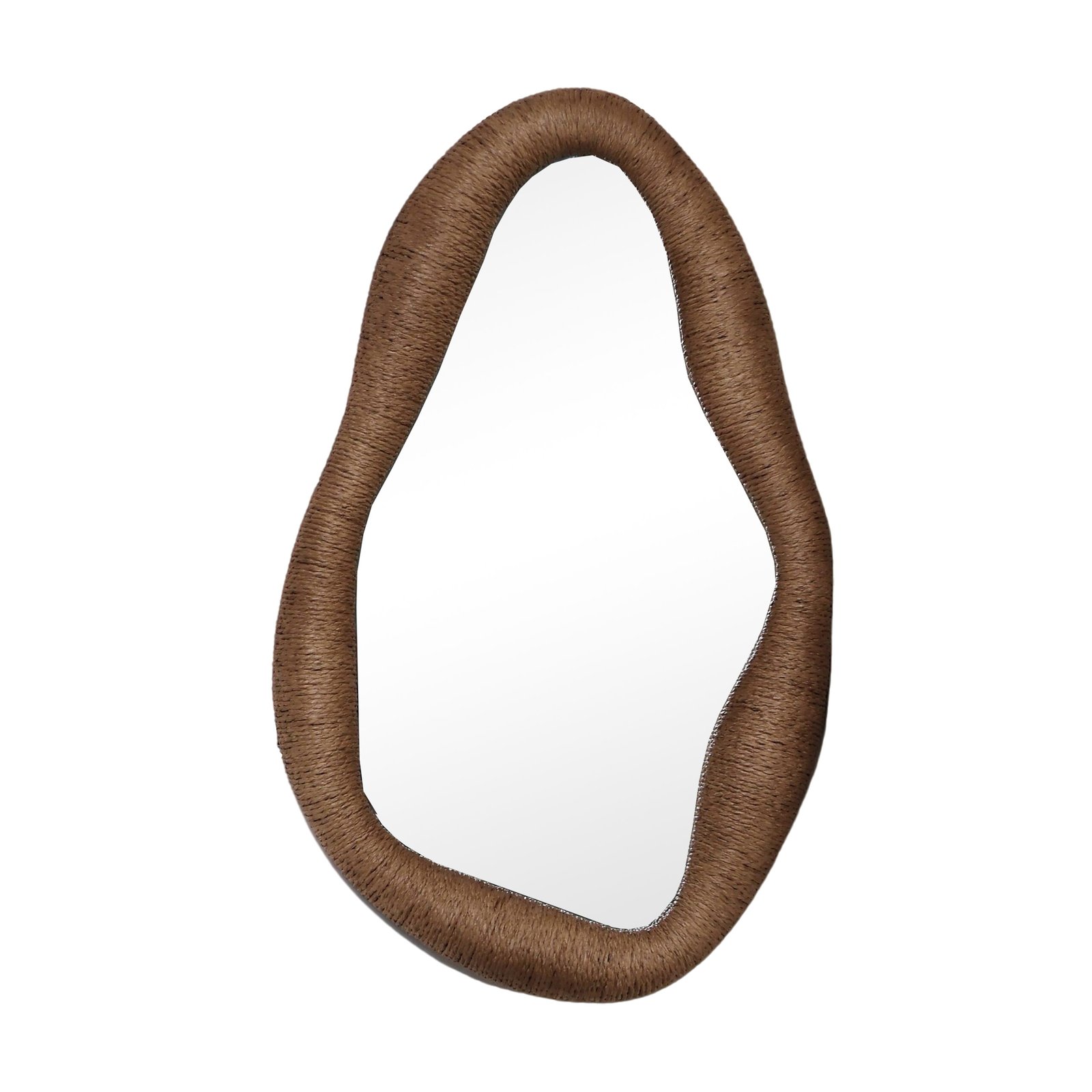
Why Calm Finishes Often Outperform Loud Trends in German Community Home Stores
A Finish Can Attract Attention and Still Be Weak in Retail
In home decor, finishes often carry the first impression.
A mirror frame with a strong metallic tone, a ceramic glaze with heavy contrast, a bench fabric with a loud pattern or a tabletop item with an unusual surface effect can look interesting very quickly. In a catalogue or on a styled image, that kind of product can feel exciting. It creates movement. It creates a sense of novelty. It gives the impression that something fresh is happening.
But local retail does not work like a photo shoot.
In home decor for community home stores, the question is not only whether a finish attracts attention. The more important question is whether it can live on the shelf, enter the customer’s home and still make sense after the first moment of surprise fades.
That is why retail-friendly finishes often perform better than louder trend finishes.
Community Retail Sells Through Comfort, Not Shock
A community home store usually serves ordinary buying situations.
The customer is not walking in to make a dramatic design statement every time. In many cases, they are looking for something that fits naturally into an entryway, living room, bedroom, dining corner or bathroom. They want a product that feels current, but still easy to live with. They want a purchase that feels enjoyable, not risky.
This is where calm finishes become commercially strong.
A smoked mirror, a black metal frame, a dark wood tone, a warm neutral upholstery, a stable ceramic glaze or a quiet matte texture usually asks less from the customer. It does not force a full redesign of the room. It does not create too much doubt about where it belongs. It helps the customer say yes more easily.
That is not a small advantage in retail. It is one of the main reasons a product moves.
Loud Trends Often Win the First Look but Lose the Longer Sale
Some finishes are built for reaction.
They are sharper, brighter, more decorative or more unusual than what customers normally see. That can work well in certain contexts. But in smaller German community stores, it can also create a problem. The product gets noticed, yet it becomes harder to place. Customers may comment on it, but they do not always buy it. Staff may like it, but they cannot sell it smoothly to many different households.
This is the difference between visibility and usability.
A finish that is very loud may win the first look. A finish that is calm and resolved often wins the actual decision.
That is why reorder friendly trends tend to lean toward finishes that remain usable after the trend wave cools down. They do not depend only on novelty. They have enough stability to support a second order, not only a first display.
Shelf Logic Becomes Stronger When Finishes Work Together
A good local store is not only a collection of individual products. It is a visual system.
When finish directions fight each other, the floor becomes harder to read. A bold metallic mirror beside a heavily distressed ceramic item, beside a loud patterned ottoman, beside a bright decorative tray may create energy, but not necessarily confidence. The store begins to feel busy rather than useful.
This is where home decor shelf logic matters.
Calm finishes usually make it easier to build strong shelf relationships. A dark wood bench can sit with a smoked mirror. A stable neutral ceramic family can sit with tabletop pieces in matte black, warm white or soft earth tones. A black frame mirror can connect to small storage pieces or wall decor without forcing the store into a narrow trend mood.
This kind of finish discipline gives the floor more coherence. It also helps the customer understand the offer faster.
Retail-Friendly Finishes Lower the Explanation Cost
A strong retail finish usually does one simple thing well.
It helps the customer imagine the product at home without a long conversation.
That is why retail-friendly finishes matter so much. They reduce explanation cost. They help staff sell more naturally. They support customer confidence even when the store is busy and no one has time for a long styling discussion.
A ceramic vase in a steady glaze is easier to sell than one that needs a story before it makes sense. A bench in a calm fabric and familiar wood tone is easier to sell than one that depends on trend language to justify itself. A mirror with a controlled metal finish is easier to accept than one that feels visually unstable from one angle to another.
In community retail, these differences affect real turnover.
Calm Finishes Often Support Better Assortment Planning
A retail-ready home decor assortment needs products that can work alone and together.
This is another reason calm finishes tend to outperform louder ones in local retail. They give buyers more flexibility. A store can build a mirror area, a ceramic moment, a bench corner and a tabletop offer without every section pulling in a different direction. The visual story remains connected. The store feels fuller without becoming heavier.
This is very useful in Germany, where many shoppers respond well to order, restraint and products that feel fit for everyday interiors. A small store with too many finish directions often looks less professional, not more creative. A store with disciplined finishes often looks more trustworthy, even when the product range is not large.
That trust matters.
Reorder Value Is Usually Hidden Inside the Finish Choice
Many buying mistakes begin here.
A finish can look exciting on the first order, but if it is too trend-bound, too difficult to repeat or too awkward to mix back into the next assortment, it creates pressure later. The store may like it once, but hesitate to buy it again. The product becomes a one-time moment rather than a working part of the range.
By contrast, finishes that are calm, stable and commercially legible usually carry stronger reorder value.
This is why reorder friendly trends often overlap with quieter finishes. They are easier to bring back. They cause fewer visual surprises across batches. They fit more than one season. And they allow the store to protect continuity without feeling stale.
For community stores, that is a major advantage. Small floors benefit greatly from products that can stay useful over time.
Different Categories All Benefit from Finish Discipline
This is not only a mirror issue. It applies across categories.
In mirrors, calmer finishes help the piece work in hallways, bathrooms, bedrooms and living spaces without feeling too specific. In ceramics, steady glazes and controlled tones make it easier to create families that customers understand. In benches and ottomans, practical fabrics and familiar wood or metal finishes make the item easier to place in compact homes. In tabletop decor, stable surfaces help products feel giftable, useful and easy to pair.
Even materials and finishes for interior designers follow this logic more often than many suppliers expect. Designers may enjoy strong visual ideas, but in real residential work they also value materials that can live well, combine well and arrive without creating finish confusion.
That is why finish discipline is not anti-design. It is what allows design to survive real use.
German Community Stores Usually Appreciate Finishes That Feel Settled
In the German market, many local home stores respond well to finishes that feel settled rather than restless.
They usually prefer products that look clear in ordinary homes. They like surfaces that do not become tiring after repeated viewing. They appreciate items that can stay on the floor for a while without losing meaning. They also appreciate products that make it easier to build a store identity with some continuity.
This does not mean every store must be neutral in a dull way. It means the finish should have enough control to become commercially useful.
A product can still feel warm.
It can still feel modern.
It can still feel distinctive.
But it should not feel noisy without purpose.
What Suppliers Often Misread
Many suppliers overestimate the power of finish novelty and underestimate the power of finish usability.
They assume a stronger surface effect automatically means a stronger product. In reality, community retail often rewards the opposite. The better-selling finish is frequently the one that needs less defence, less explanation and less visual adjustment.
A useful question is not only, “Will this finish stand out?”
A better question is, “Will this finish still work after the customer leaves the shop, takes it home and sees it every day?”
In home decor for community home stores, that is a more honest retail question.
Why This Matters to German Buyer Desk
At German Buyer Desk, we treat finish choice as part of buying logic, not just product styling.
A finish that works in local retail does more than make a product look good. It helps the shelf stay readable. It helps the customer decide faster. It helps the store create a more balanced offer. And it improves the chance that the product can be bought again with confidence.
That is why retail-friendly finishes deserve more respect than loud trend finishes that burn bright and disappear quickly.
For German community home stores, calm finishes are not a compromise.
Very often, they are exactly what makes the product commercially strong.



