Product Introduction
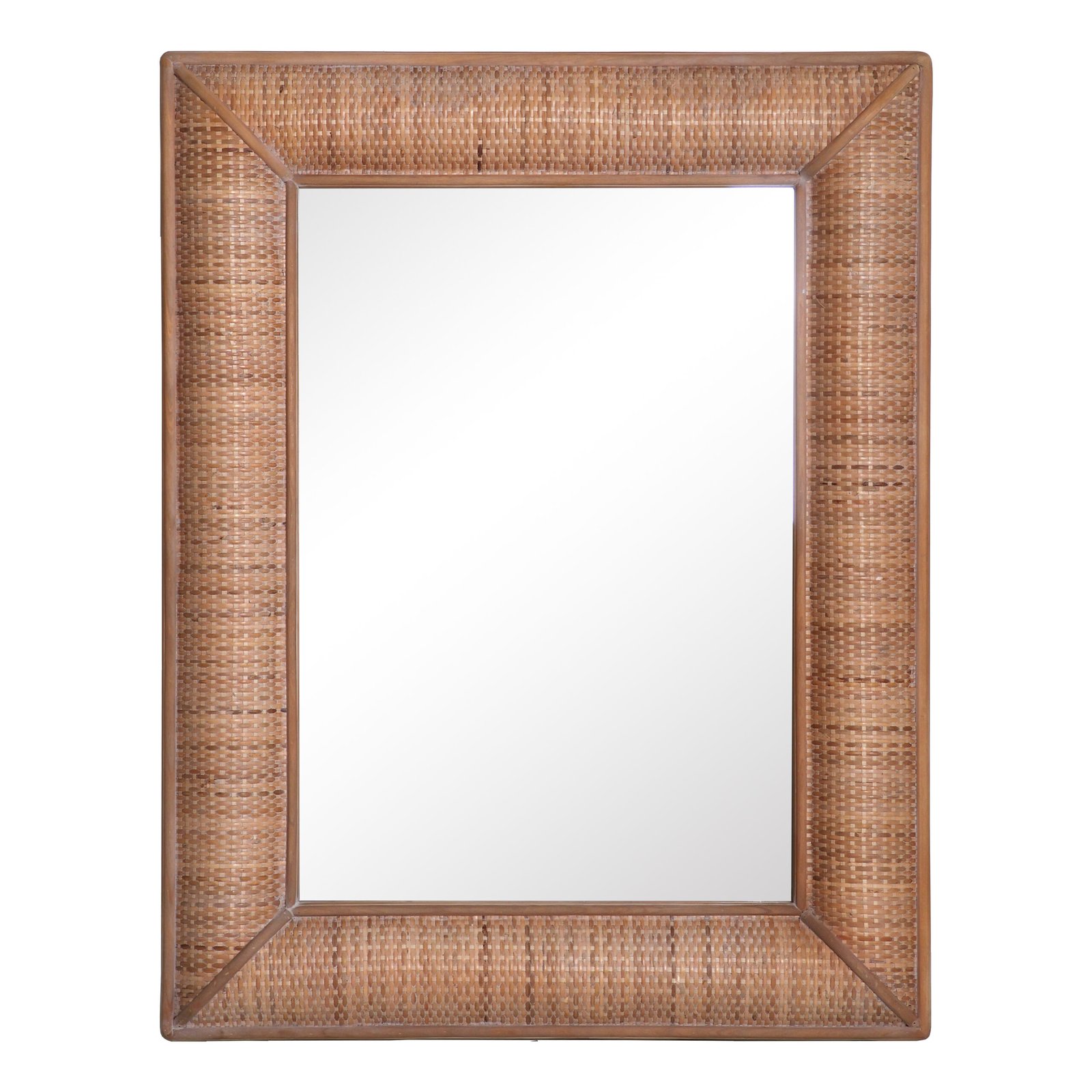
The MY3106 is a rectangular woven rattan wall mirror with a natural-toned frame, a 13 cm border, and a decorative profile designed to bring more material interest to the wall than a standard wood or metal mirror. With an overall size of 89.5 × 5 × 69.5 cm and a net weight of 7.9 kg, it sits in a commercially useful range: large enough to create display value, but manageable enough for broad placement across multiple room stories.
For a mall buyer, that matters. This is not just a reflection product. It is a texture product, a wall décor product, and a room-warming product at the same time.
Why This Product Works for Buyers
A lot of mirrors become forgettable because they only solve function. Buyers already know the category problem: too many wall mirrors look interchangeable, too many natural-material pieces feel overly themed, and too many decorative mirrors become hard to scale across a broader assortment.
The MY3106 lands in a better retail zone. The rectangular mirror field keeps the function familiar. The woven rattan frame adds warmth and immediate shelf distinction. The clean mitered corners keep the look polished instead of overly bohemian. That combination makes it easy to carry in coastal, organic modern, casual luxury, warm neutral, and relaxed contemporary programs.
Recent design-fair direction supports this kind of product. Maison&Objet’s official Past Reveals Future theme for January 2026 emphasized lived-in, meaningful design in response to overconsumption and homogenization, while its In Materia editorial focused on wood, fiber, earth, stone, and other materials as central design experiences. High Point coverage has also pointed to a return to warmth, tactility, mixed materials, and raffia/rattan textures, with official Style Spotter commentary specifically calling out sinuous, organic movement as a notable market trend.
Buyer Pain Points This Product Solves
The MY3106 directly addresses several common buying issues:
- Generic mirror assortments with weak identity
The woven frame gives the SKU a stronger decorative reason to exist.
- Natural-material pieces that feel too rustic or too theme-driven
The rectangular silhouette keeps the product commercially clean.
- Difficulty justifying price in basic wall-mirror categories
Texture and frame depth help support a better perceived-value story.
- Need for products that can cross multiple room stories
This mirror can work in entryway, bedroom, console-wall, powder-room-adjacent, and casual living edits.
- Wall décor displays that feel flat
The rattan surface adds visual depth without needing color or heavy ornament.
Product Parameters
Model: MY3106
Product Type: Woven rattan wall mirror
Overall Size: 89.5 × 5 × 69.5 cm
Frame Width: 13 cm
Net Weight: 7.9 kg
Frame Material / Look: Natural woven rattan / wicker-style texture
Best Placement: Entryway, bedroom, console wall, living room, coastal edits, organic modern interiors, relaxed luxury assortments
Parameter Comparison
Compared with a plain wood frame mirror
A plain wood mirror is easier to source, but usually less memorable.
The MY3106 adds tactile value and stronger display distinction.
Compared with a scalloped rattan mirror
A scalloped rattan mirror feels softer and more decorative.
The MY3106 feels cleaner and more versatile, especially for buyers who want natural texture without a more feminine or trend-led outline.
Compared with a black metal rectangular mirror
A black metal mirror feels sharper and more urban.
The MY3106 feels warmer, more approachable, and broader in lifestyle placement.
Why the Design Sells Better
This mirror works because the design is doing real commercial work. The woven surface adds tactile visual interest. The rectangular format keeps placement easy. The natural finish broadens compatibility with wood furniture, neutral upholstery, and layered décor schemes. The wide frame face helps the piece behave more like wall décor than a simple utility mirror.
That matters because research continues to show that natural materials and biophilic design cues influence how people experience interiors. A 2025 Springer study identified use of natural finishing materials and nature-inspired geometric shapes among key biophilic criteria affecting satisfaction in interior environments, while recent material-perception research notes that wood in indoor environments can produce positive emotional effects and reduce stress. On the merchandising side, product-presentation research found that a higher number of presentation features increases positive visual, cognitive, and affective responses and helps decision-making.
For buyers, the translation is practical: products that feel warm, material-rich, and easy to imagine at home usually have a smoother path from floor display to purchase decision.
Evidence: Why This Product Has Stronger Retail Credibility
There are five commercial reasons this SKU works.
First, it aligns with current market direction.
Recent fair language in Europe and market coverage from High Point both point toward warmth, tactility, natural materials, and more expressive texture.
Second, it creates texture without overcomplicating the silhouette.
That makes it easier to scale than more novelty-driven natural-material mirrors.
Third, it supports multiple décor identities.
It can sit in coastal, organic modern, warm minimal, boho-refined, and casual luxury assortments.
Fourth, it raises perceived value through material story.
Buyers are not relying on size alone; they are buying a tactile surface and a warmer emotional read.
Fifth, it improves wall-display variety.
In a mirror assortment dominated by plain wood or metal frames, this product adds a useful change of material vocabulary.
FAQ
What kind of shopper is this mirror best for?
It is ideal for customers who want a wall mirror with warmth, texture, and a more relaxed decorative feel than a plain wood or metal frame.
Is the woven look too coastal-specific?
No. It works in coastal settings, but it is also strong in organic modern, warm neutral, casual luxury, and boho-refined interiors.
Why would a buyer choose this over a plain rectangular mirror?
Because it offers a stronger decorative story and better shelf distinction without giving up the easy placement of a rectangular shape.
Where does it merchandise best?
It works especially well above consoles, in entryways, bedrooms, living rooms, and wall décor programs that need more warmth and texture.
What should buyers confirm before ordering?
They should confirm hanging hardware, mirror thickness, carton protection, finish consistency, and intended wall-mount orientation.
Is natural texture still commercially relevant?
Yes. Recent fair and market signals continue to support natural materials, tactile surfaces, and more meaningful, less generic decorative products.
Final B2B Positioning
The MY3106 Woven Rattan Rectangular Wall Mirror is a smart buy for retailers who want to lift the mirror category with texture, warmth, and better display character—without taking on the risk of an overly styled statement piece. It gives buyers a mirror that feels decorative but still commercially controlled.
That is why it works.
It is textured, but not messy.
It is natural, but not rustic.
It is decorative, but still easy to scale.
And in a market where current U.S. and European design direction keeps rewarding materiality, warmth, tactility, and more emotionally grounded interiors, the MY3106 sits in a very usable retail position.