Let’s begin with a truth suppliers do not love and buyers learn slightly too late:
The cheapest supplier is often just the most affordable version of future inconvenience.
Not always.
But often enough to deserve its own category.
That is why cheap supplier vs reliable supplier is not really a price conversation. It is a judgment conversation. Buyers are not asking, “Who can make this for less?” They are asking, “Who can help me buy this without making my next three months weird?”
And in today’s home décor market, that question matters more than ever. Las Vegas Market’s Winter 2025 recap showed buyers looking not just for new product, but for business insight, replenishment logic, and trend-backed buying confidence. High Point’s current programming leans heavily into resilience, freight reality, cash flow, and last-mile brand protection. Meanwhile, ASID’s 2025 outlook points to joy, authenticity, and timeless craftsmanship, while Houzz’s High Point reporting highlights handmade ceramics, warm metals, smoky glass, and more individuality-driven interiors. Translation: buyers want more character, but with less operational nonsense.
The buyer is not comparing one item. They are comparing substitution quality.
This is the first thing many suppliers misunderstand.
The buyer is rarely looking at a single item in a vacuum. They are comparing whether a supplier can help them move from one design idea to another without losing the commercial logic.
That is why so many real buyer searches sound like this:
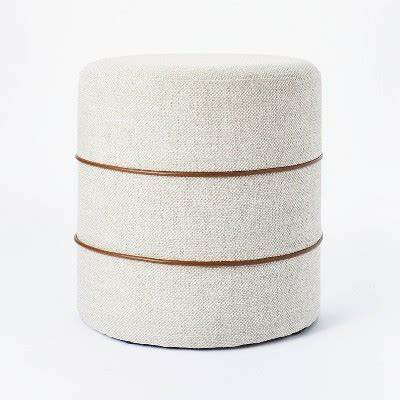
- skirted ottoman alternative box pleat ottoman wholesale
- tulipiere vase alternative flower frog vase wholesale
- puddle mirror alternative wholesale
- organic wall mirror similar styles wholesale
- backlit bathroom mirror alternative frontlit mirror
Those are not random keyword experiments. They are evidence of how buyers actually think.
The buyer is asking:
Can I keep the mood, but lower the risk?
Can I keep the silhouette, but improve the sell-through?
Can I keep the design story, but simplify the price, lead time, install, or packaging?
Can I swap the trend-forward version for the version that still works once it meets reality?
A cheap supplier hears the request and sends “something similar.”
A reliable supplier hears the request and asks, “What part are you actually trying to preserve?”
That is a big difference.
Reliable suppliers understand intent. Cheap suppliers copy surfaces.
Take a tulipiere vase alternative flower frog vase wholesale request.
A cheap supplier may see only shape: floral, decorative, ceramic, a bit whimsical. Fine. Send a vaguely relevant vase and call it a day.
A reliable supplier understands the buyer may be trying to preserve one of several things:
- the arranging ritual
- the layered tabletop look
- the novelty factor
- the artisanal feeling
- the gifting angle
- the “interesting but not too weird for retail” balance
That is a better reading of the assignment.
The same applies to a skirted ottoman alternative box pleat ottoman wholesale search. A weak supplier hears “ottoman with fabric around the base.” A stronger supplier understands the buyer may be moving from one form to another because they want a cleaner production line, better tailoring consistency, easier fabric handling, or a more scalable version of softness. That is not just product matching. That is commercial interpretation.
This is also where current market direction matters. The appetite for individuality, soul, tactile finishes, and crafted details is real, but buyers still need products that can repeat and ship without becoming internal case studies. The more expressive the trend becomes, the more valuable a supplier becomes if they know how to translate aesthetic intent into stable production logic.
This is how buyers compare wholesale suppliers in the real world
A lot of suppliers think buyers compare wholesale suppliers by price list, style range, and speed of reply.
That is charmingly incomplete.
How buyers compare wholesale suppliers is usually closer to this:
Which supplier understands the category logic?
Which one can explain the substitution?
Which one sends a real specification, not a decorative PDF?
Which one can tell me what changes when the price changes?
Which one still sounds coherent when I ask annoying questions?
That last one matters a lot.
Because once a buyer moves from “Do you have something like this?” to “What exactly changes if we switch from backlit to frontlit?” or “What happens to tailoring consistency if we move from skirted to box pleat?” the weak suppliers begin blinking slowly.
This is why specification literacy separates serious suppliers from salesy ones
NIST’s work on product design specifications is useful because it explains something buyers intuitively know: a real product specification should describe intended function, use environment, and requirements tied to safety, shipping, and manufacturing. NIST also notes that conformance only means anything when the criteria are actually defined. If the requirement is fuzzy, “passing” the requirement becomes suspiciously easy.
This is where reliable suppliers tend to win.
A buyer asking for a backlit bathroom mirror alternative frontlit mirror does not just want a different lighting layout. They may be trying to simplify installation, reduce electrical complexity, sharpen price architecture, or make the item easier to specify across more projects. A reliable supplier understands that. A cheap supplier hears only, “Can we remove something and make it cheaper?”
Likewise, a buyer asking for a puddle mirror alternative wholesale or organic wall mirror similar styles wholesale may not be abandoning the organic look. They may be looking for a shape that feels current without being too fragile, too trend-narrow, or too awkward for pack-out and replenishment. One supplier sees the style. The other sees the business problem.
Guess which one gets taken more seriously.
The cheapest quote often fails at translation
This is the hidden cost buyers eventually learn to recognize.
A cheap supplier can offer a lower quote because they are efficient. Great. That exists.
But a cheap supplier can also be cheap because they are:
- not reading the intent behind the request
- not clarifying the specification
- not stress-testing the alternative
- not thinking through repeatability
- not helping the buyer defend the choice internally
That is the difference between a supplier and a screenshot response.
A reliable supplier helps the buyer move from inspiration to action. They can say:
“This flower-frog direction will give you the arranging feel without the fragility and dead space of a more niche tulipiere form.”
“This box pleat version preserves softness while cleaning up production variability.”
“This frontlit mirror simplifies the spec without losing the bathroom story.”
“This organic wall mirror keeps the shape language but gives you a broader retail landing zone.”
That is not just communication. That is decision support.
Where Teruier has a real opening
This is exactly where value translation becomes useful.
The buyer speaks in one language: mood, silhouette, commercial fit, price band, assortment role.
The factory speaks in another: tolerances, components, construction choices, finish behavior, lead time.
A reliable supplier—or a partner like Teruier, when positioned well—works in the middle and translates between the two.
That is what a practical cross-border design manufacturing model looks like when it is doing something useful. It is not just making product. It is helping the buyer preserve intent while improving execution.
And that is often what separates a reliable supplier from a cheap one: the reliable one does not just quote. They think.
The real answer
So, cheap supplier vs reliable supplier?
A cheap supplier gives you a version of the item.
A reliable supplier gives you a version of the decision that still makes sense later.
A cheap supplier copies the shape.
A reliable supplier understands the reason behind the shape.
A cheap supplier says, “Here’s something similar.”
A reliable supplier says, “Here’s the better alternative, here’s what stays, here’s what changes, and here’s why it will work.”
And in a market where buyers are constantly comparing alternatives—across ottomans, mirrors, ceramics, and decorative forms—that difference is not subtle.
It is exactly how they choose.