
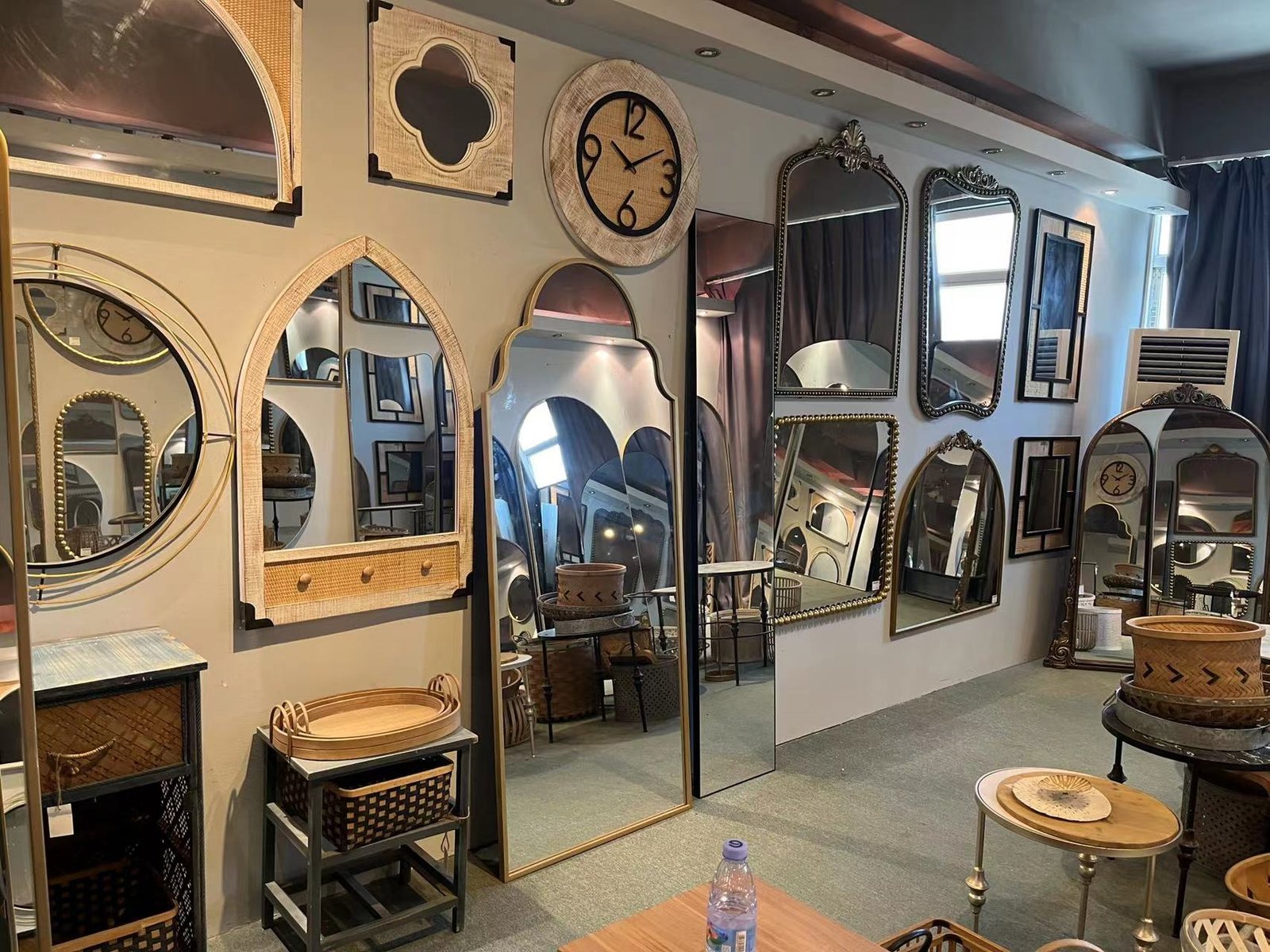
Let’s start with an uncomfortable truth: a lot of buyers say they review product specifications, when what they really do is skim until they find the dimensions, nod professionally, and hope the rest of the PDF is emotionally supportive.
That works right up until the mirror arrives too heavy for the install plan, the lighting spec is wrong for the bathroom application, the carton fails in transit, or the finish looks “warm bronze” in the sample and “mildly disappointed brown” in production.
So yes, how to read product specifications sounds like the least glamorous topic in home décor. It is also one of the most profitable.
Because in real buying, the spec sheet is not paperwork. It is a risk map.
A product specification is not a brochure with better posture
A useful spec sheet should tell you what the product is supposed to do, where it is supposed to work, and what conditions it is designed to survive. NIST notes that a product design specification describes intended function and environment, along with requirements tied to safety, shipping, and manufacturing. NIST also defines conformance as testing whether an implementation faithfully meets the requirements of a standard or specification. Put simply: if the criteria are vague, inspection gets vague too. And vague inspection is how expensive surprises get invited into the building.
That matters even more in home décor because this category sits in the awkwardly beautiful middle ground between design and operations. The product has to look good on a screen, on a showroom floor, in a customer’s home, and inside a carton that may be handled like a gym membership cancellation letter.
The buyer who needs this article
This piece is for a very specific person, even if we keep the badge lanyard off them.
It is for the American home buyer who just walked Las Vegas Market, came home with 200 photos, 17 new vendor conversations, three “strong contenders,” and one boss asking the only question that actually counts: “Can this product sell without becoming a problem?” Las Vegas Market’s Winter 2025 recap makes that picture pretty clear—buyers came for trends and inventory, but also for business insights and research-backed education. Meanwhile, current High Point programming is leaning into resilience, craftsmanship, last-mile brand protection, and purpose-driven design. In other words, the market is not rewarding blind enthusiasm. It is rewarding informed selection.
That buyer does not just need pretty products. They need readable products.
The five parts of a spec sheet smart buyers read first
1. Intended use and environment
This is the line that tells you whether the product belongs in a powder room, a hospitality corridor, a dry wall feature, or nowhere near steam, splashes, or impatient installers.
If the supplier cannot clearly state intended use, the rest of the specification is already wobbling. NIST’s framework is useful here: a proper specification defines what the product should do and the environment in which it will be used, rather than hiding behind vague adjectives and optimistic photography. That is why good buyers read “application” before they read “style.”
2. Dimensions, weight, and installation reality
Dimensions are not just for confirming whether the piece looks generous in a lifestyle photo. They tell you whether the product fits the merchandising plan, the install method, the shipping class, and sometimes the customer’s patience.
For mirrors, this includes overall size, glass thickness, frame depth, net weight, gross weight, mounting hardware, and whether installation assumptions are actually written down. If a supplier gives you dimensions without installation context, that is not a finished spec. That is flirting.
3. Material and finish language
This is where buyers get seduced.
“Metal finish” sounds nice. It also tells you almost nothing. You want to know base material, finish method, color family, texture, tolerance for batch variation, and what the finish is expected to do over time. Is it brushed? Powder-coated? Electroplated? Antiqued by hand? Stable across reorder lots? Protected for humid areas? None of those are decorative questions. They are return-rate questions.
And this matters because current North American design direction is pushing buyers toward more layered, expressive, and material-rich choices. ASID’s 2025 trends research points to joy, authenticity, and timeless craftsmanship, while High Point’s Spring 2026 programming highlights timeless design, vintage discovery, soulful pieces, artisanal accents, layered textures, and design rooted in purpose and performance. If the market is moving toward richer materials and more tactile finishes, the specification has to get more precise—not less.
4. Electrical and safety details: especially the LED mirror IP44 specification
Now we get to the line buyers love to ignore until legal, compliance, or the installer develops a personality.
An LED mirror IP44 specification is not decorative jargon. IEC describes IP ratings as a grading system for resistance against the intrusion of dust or liquids. In bathroom-mirror guidance referencing IET wiring regulations, IP44 is commonly treated as the minimum requirement for Zone 1 and Zone 2 bathroom areas around baths, showers, and sinks. So when a supplier writes “IP44,” the follow-up is not “great.” The follow-up is: for which zone, under which installation assumptions, and with what supporting electrical details?
A buyer reading this section should check:
- IP rating
- voltage and frequency
- wattage
- CCT or color temperature
- demister / anti-fog details
- driver position
- certification or compliance language
- installation zone suitability
Because “bathroom-safe” is not a specification. It is a sales mood.
5. Packaging and inspection requirements
This is where the serious money lives.
If you are buying mirrors, wall décor, or fragile decorative product, then wholesale packaging standards and the wholesale quality control process are part of the product specification, not side notes to be sorted out after PO placement. ISTA states that pre-shipment distribution testing helps decision-makers understand packaged-product performance, while its test procedures are designed to simulate transport hazards and evaluate risk of damage. That matters because a carton is not just a container; it is part of the product’s survival strategy.
For mirrors in particular, the spec sheet should point you toward concrete mirror QC checkpoints:
- reflection quality
- black spot or edge defect checks
- frame finish consistency
- corner protection
- drop / compression / transport logic
- hardware completeness
- label accuracy
- carton markings and pallet logic
If those are missing, you are not reading a project-ready document. You are reading a wish.
What separates a project-ready home décor supplier from a decorative one
A project-ready home décor supplier does not just send prettier PDFs.
They connect style, specification, packaging, inspection, and reorder consistency into one readable system. That distinction matters more now because buyers are operating in a market that still wants inspiration, but is increasingly disciplined about execution. High Point’s education lineup is openly framing supply chain resilience, cash flow, freight disruption, and last-mile delivery as strategic issues, not back-office trivia. If your spec sheet cannot support those conversations, your product is not as commercial as it thinks it is.
That is also why Teruier’s most useful role is not “factory, but friendly.” The stronger position is value translation.
A buyer comes in speaking one language: finish direction, price point, wall impact, retail fit, project timing.
A factory operates in another: substrate, tolerance, carton design, compliance, inspection, and lead-time logic.
The job is to translate between them without losing the profit in the middle.
That is where a cross-border design-manufacturing coordination model becomes practical. It turns a fashionable idea into a readable, buildable, shippable, inspectable product.
The market is making this skill more important, not less
If you look at recent North American market signals, the direction is obvious. Buyers are being pulled toward layered textures, smoky and amber-tinted glass, brushed metals, richer storytelling, and more expressive craftsmanship. Houzz’s Spring 2025 High Point reporting highlighted textured, smoky and amber-tinted glass along with ribbed glass and brushed brass. Business of Home’s current High Point coverage also points to warm materials, nostalgia, architectural structure, softness, and tactile finishes. Beautiful direction. Zero argument. But the more nuanced the product, the less forgiving the spec sheet can be.
That is the real shift. Buyers are no longer just sourcing objects. They are sourcing outcomes:
- fewer claims
- safer installs
- better presentation
- cleaner reorders
- more defensible margins
And outcomes live in the specification.
The real takeaway
If you remember one thing, make it this:
How to read product specifications is really how to read future problems while they are still cheap.
A strong spec sheet tells you what the product is for, where it can live, how it should be packed, how it should be inspected, and how confidently it can be repeated. A weak one leaves the buyer to fill in the blanks with hope, and hope is still not an approved quality standard.
So the next time a supplier sends over a spec sheet, do not just ask, “Does this product look good?”
Ask the better question:
Does this document prove the product is ready for the life I’m about to put it through?
That is how buyers get sharper.
That is how projects stay cleaner.
And that is how fewer beautiful things turn into operational nonsense.



