
Let’s be honest: when a supplier says, “Our MOQ is 100 pieces,” most buyers do not hear a number. They hear risk.
They hear cash tied up in inventory. They hear the awkward conversation with the boss about why the “safe test order” somehow became a warehouse relationship. They hear freight, breakage, claims, slow sellers, and that one mirror finish that looked chic in the showroom but somehow arrived looking like it had a minor identity crisis.
That is why wholesale MOQ explained is not some sleepy sourcing glossary term. For a U.S. home buyer, MOQ is really a shortcut for one bigger question: Is this supplier helping me build margin, or just helping me buy more stuff?
And right now, that question matters more than ever. The North American market is signaling two things at the same time: buyers still want freshness, but they want it with far less operational drama. Las Vegas Market’s Winter 2025 recap highlighted strong order writing and trend-driven discovery, while High Point’s current programming is openly focused on supply-chain resilience, last-mile brand protection, and practical decision-making under uncertainty. In other words, the vibe is no longer “buy big and hope.” It is “buy smart and protect the margin all the way to the customer’s doorstep.”
What MOQ actually means
MOQ is the minimum order quantity a supplier requires before production makes economic sense. That part is simple.
What is not simple is what sits underneath it: setup time, material purchasing, labor scheduling, carton optimization, finish consistency, and shipping efficiency. Academic research on MOQ is useful here because it cuts through the supplier folklore. A 2022 paper in Manufacturing & Service Operations Management notes that MOQ remains common in practice partly because it is simpler for suppliers to use than other coordinating contracts, even when those alternatives are theoretically equivalent. A 2012 IEEE paper found that higher pre-agreed MOQ levels can reduce retailer profit and overall supply-chain efficiency, especially when static MOQ blocks the flexibility that buyers need in quick-response environments.
That is the real lesson: MOQ is not evil, and low MOQ is not automatically good. MOQ is a design decision. A bad MOQ forces the buyer to carry the supplier’s inefficiency. A good MOQ reflects a clean production logic that still leaves room for intelligent testing, replenishment, and assortment planning.
Why this matters to the American home decor buyer
This article is really for a specific buyer, even if we do not put a neon sign over their head.
It is for the U.S. home decor buyer who walks market with a phone full of showroom photos, an open-to-buy number that never feels generous enough, and a quiet fear of backing the wrong finish, the wrong size, or the wrong supplier. It is for the buyer who does not need more “beautiful products.” They need products that survive freight, hit price architecture, arrive with repeatable quality, and still feel current six months later.
That persona fits today’s market direction almost perfectly. ASID’s 2025 design research emphasizes joy, well-being, sustainability, and timeless craftsmanship, while High Point’s Spring 2026 programming points toward antiques, vintage discovery, soulful pieces, and artisanal accents. Business of Home’s latest High Point coverage also points to warm metallic accents and antique references, while Houzz’s Spring 2025 High Point reporting called out smoky and amber-tinted glass, ribbed textures, and artisanal glass as notable directions. That means buyers are not just chasing novelty; they are chasing pieces that feel storied, warm, textural, and commercially legible.
Translation: the buyer you want now is not asking, “Can I get 20 pieces?”
They are asking, “Can I test this look without setting my margin on fire?”
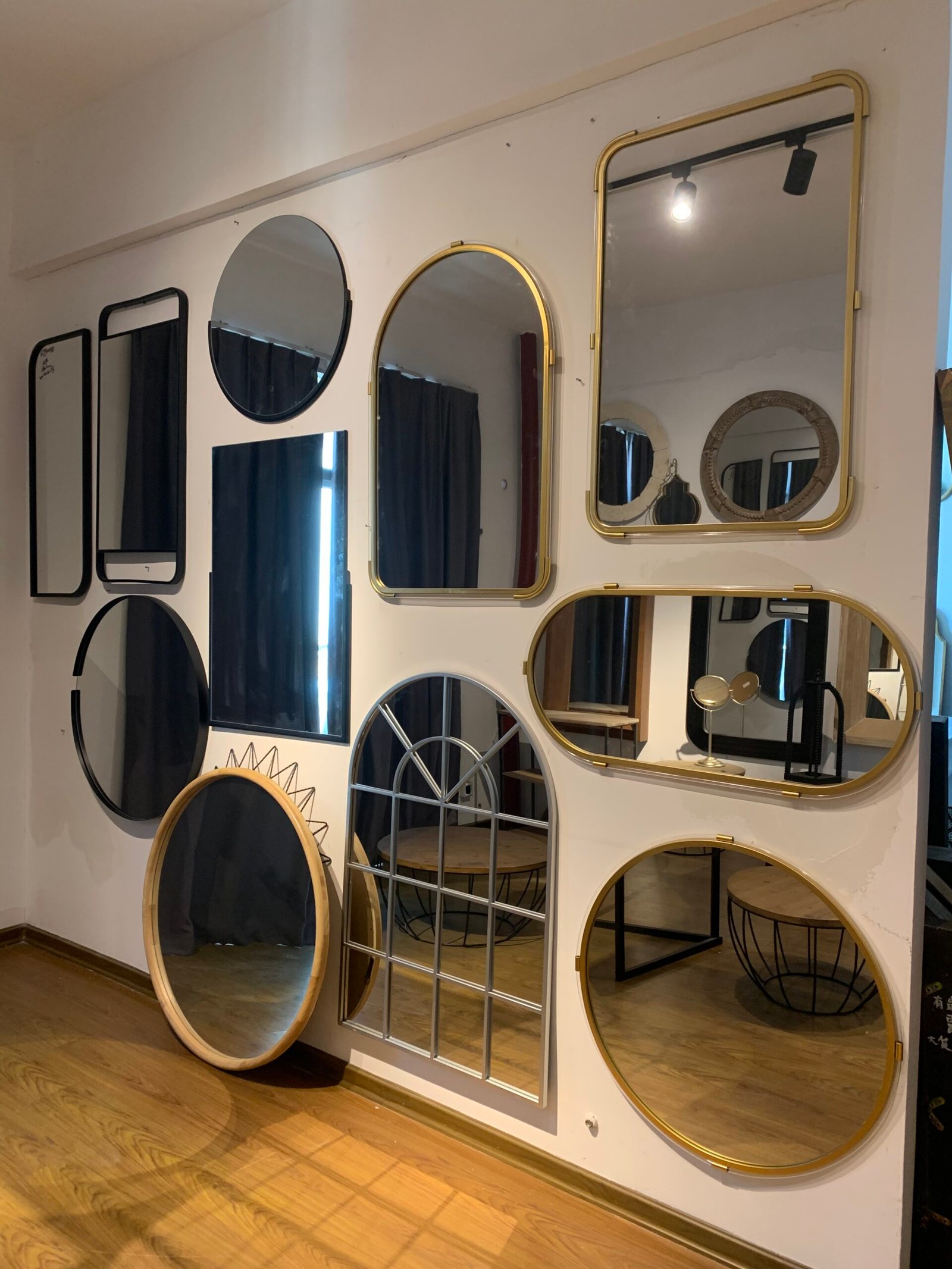
In wholesale decorative mirrors, MOQ is never just a number
This gets even sharper in wholesale decorative mirrors.
A mirror is not a candle. It is not a pillow. And it definitely is not a decorative object you can forgive for arriving slightly chaotic. Mirrors combine style risk with operational risk. Frame finish consistency matters. Color tone matters. Reflection quality matters. Packaging matters. Damage rate matters. If the supplier is offering a dreamy bronze-tinted look but the carton design is lazy, the customer will never get far enough to admire your “elevated curation.”
That is why a proper wholesale quality control process and clear mirror QC checkpoints should sit right next to MOQ in the buying conversation. High Point’s current education lineup is practically waving a flag on this point: the industry is talking openly about freight volatility, regulatory pressure, and last-mile execution because the sale is not complete until the product lands well in the customer’s home. In home furnishings, delivery is not a logistics footnote; it is part of the brand experience.
So when a supplier says, “MOQ 100,” the smart buyer should mentally add five more questions:
How many per finish?
How many per size?
How many per carton?
How stable is the finish across runs?
What happens if the first run sells and I need a reorder that does not look like it came from the product’s less attractive cousin?
Why smoked mirror alternative bronze tinted mirror matters now
This is where trend and MOQ finally meet.
If you are evaluating a smoked mirror alternative bronze tinted mirror, you are not imagining the timing. The market really is moving toward warmer, more atmospheric materials. Houzz’s High Point Spring 2025 coverage highlighted smoky and amber-tinted glass, ribbed texture, and artisanal finishes. Business of Home’s High Point preview for Spring 2026 pointed to warm metallic accents and antique references. High Point’s official Spring 2026 programming is also leaning into timeless design, vintage discovery, and storied objects rather than flat, anonymous minimalism.
For buyers, that creates a familiar trap: the trend feels right, so they over-order before the supply logic is right.
A better move is to treat MOQ as part of trend translation. Bronze-tinted and smoked-adjacent looks are strongest when they are paired with disciplined assortment architecture: one hero size, one safer core finish, one editorial finish, and packaging engineered for actual transport conditions. Otherwise, what looked like a smart trend buy turns into a lesson in how to decorate your warehouse with expensive optimism.
Better wholesale sourcing decisions start with better MOQ questions
The best wholesale sourcing decisions usually come from buyers who stop negotiating only the number and start negotiating the structure.
Ask whether MOQ can be split across SKUs with shared materials.
Ask whether the supplier can hold a finish family consistent across a phased order.
Ask whether carton optimization changes at different order bands.
Ask whether the sampling logic matches the production logic.
Ask what the reorder threshold is for stable quality, not just for stable pricing.
That last one matters a lot. Plenty of factories can give you a pretty sample. Fewer can give you reorder reliability. And in home decor, reorder reliability is where margin gets boring in the best possible way.
Where Teruier can be genuinely useful
This is exactly where Teruier’s value is not “we make home decor.” That is table stakes.
The better story is value translation.
A buyer shows up with trend language: warm metals, storied shapes, more soulful wall décor, fewer cold finishes, maybe a smoked mirror alternative bronze tinted mirror that feels upscale without becoming painfully niche. A factory speaks in production language: mold cost, finish batch size, packing structure, lead time, rejection tolerance, freight efficiency. Those are not the same language, and that gap is where a lot of buying mistakes are born.
Teruier’s role is to translate between the two: turning trend direction into production logic, and turning production constraints into a merchant-friendly buying plan. That is the practical version of a cross-border design-manufacturing coordination model. Not a slogan. A filter.
Because the point of MOQ is not to force a bigger order.
The point is to design a better one.
The real takeaway
If you remember one thing from this piece, let it be this:
Wholesale MOQ explained is really margin protection explained.
A good MOQ helps the supplier run efficiently and helps the buyer test responsibly. A bad MOQ hides weak process under a bigger number. In today’s North American home market, where buyers are chasing warmth, craftsmanship, texture, and more emotionally resonant products while also guarding against supply-chain noise and last-mile damage, that distinction is not academic. It is commercial.
And that is why the best buyers do not ask, “What’s your MOQ?” and stop there.
They ask, “What problem is your MOQ solving—and am I the one paying for it?”



