
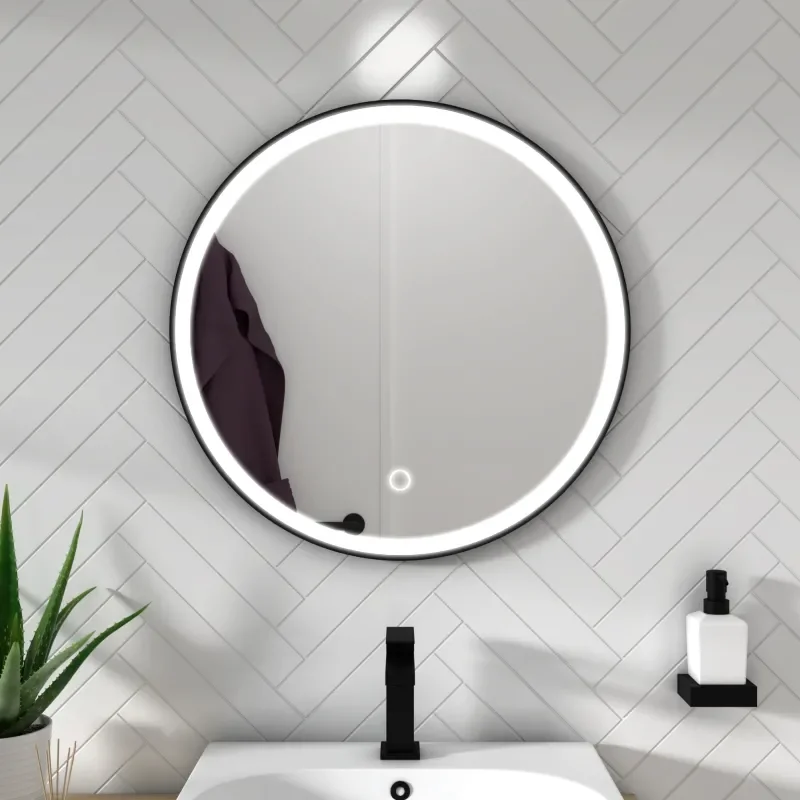
Let’s begin with a sentence that has ruined more bathroom mirror programs than anyone in sourcing would like to admit:
“Can we just add anti-fog?”
That innocent little sentence is how buyers end up with a gorgeous mirror that still fogs in the exact place people need to see their own face.
Which is, admittedly, not ideal.
So this is not another fluffy article about “spa-like luxury.” This is a practical, buyer-facing launch document for a smarter mirror program: how to specify anti-fog bathroom mirror defogger wattage heating pad size so the product works in real bathrooms, under real steam, for real customers, instead of only looking clever in a PowerPoint deck.
Welcome to the useful version of the conversation.
What this product/solution actually is
Teruier’s anti-fog bathroom mirror system is not just a mirror with a warm sticker on the back.
It is a spec-led bathroom mirror program built around six linked decisions:
- Mirror size
- Defogger pad size
- Wattage
- Lighting type
- Installation environment
- QC verification logic
That matters because anti-fog performance is rarely a “yes/no” feature. It is the result of whether the heated zone is large enough, warm enough, and correctly placed relative to the user’s actual viewing area.
A mirror can technically have a defogger and still be commercially wrong.
That is the entire problem.
Why buyers care more about this now
North American bathroom buying is moving in a direction that makes mirror specification more important, not less. NKBA’s 2026 bath trend reporting says bathrooms are getting larger and more wellness-centered, with 72% of surveyed professionals saying homeowners are making more room for wellness spaces. Lighting is also becoming central: 91% cite lighting quality as a top priority, and 92% say task lighting should always be included in primary bath design. The same report notes growing use of integrated lighting in mirrors and stronger inspiration from hotel and resort-style bathrooms.
KBIS 2026 framed the category in almost the same way: wellness-centered products, personalized design solutions, and customization were positioned as leading trends for the North American kitchen-and-bath market.
NKBA’s wellness coverage also directly points buyers toward backlit mirrors with soft, diffuse light and adjustable lighting strategies that support daily routines more gently.
Which means the anti-fog mirror is no longer a little add-on. It is now part of a much bigger buying decision:
- wellness
- visibility
- lighting quality
- bathroom ritual
- premium perception
- daily usability
In other words, this category has graduated from “nice feature” to “don’t mess it up.”
The old problem buyers keep inheriting
Most anti-fog mirror programs fail for one of three reasons:
1) The heating pad is too small
The mirror clears a polite little peephole in the center, while the rest stays steamy like a tragic indie film.
2) Wattage is not matched to pad size
The pad exists, but the energy density is too weak to create a reliable clear zone in normal use.
3) The spec treats the full mirror as the active area
This is one of the biggest commercial mistakes in the category. Buyers often think they are buying “full anti-fog,” when what they actually need is a correctly sized usable clear-view zone.
The good news is that this is fixable.
The bad news is that “fixable” still requires somebody to do the math.
The smarter way to specify anti-fog bathroom mirror performance
Here is the basic principle:
Defogger wattage should be sized to the active heated area, not to marketing optimism.
That means the pad should be selected around the part of the mirror users actually need clear:
- center face zone
- shaving zone
- makeup zone
- dual-user sightline
- seated accessibility zone
Not every mirror needs full-surface heat. In fact, many do not.
What buyers need is the right clear area in the right place, with wattage that makes that area work predictably.
A practical working formula
A useful working method for anti-fog sizing is to build around the heated zone first.
For practical buyer discussions, Teruier can treat wattage as a function of active pad area, using a working density band of roughly 0.20–0.22 watts per square inch of heated area, then adjusting for mirror construction, warm-up target, voltage, and installation logic.
That gives buyers a much cleaner way to discuss specs.
Example working bands
| Heating Pad Size | Active Heated Area | Practical Wattage Band | Typical Use |
|---|---|---|---|
| 8″ x 12″ | 96 sq in | 19–21W | compact powder room mirror |
| 12″ x 16″ | 192 sq in | 38–42W | standard single-vanity mirror |
| 12″ x 20″ | 240 sq in | 48–53W | taller primary bath mirror |
| 16″ x 24″ | 384 sq in | 77–84W | large-format or premium vanity mirror |
That is the core of a good anti-fog bathroom mirror defogger wattage heating pad size conversation.
Not “Do you have anti-fog?”
But “What clear zone are we trying to achieve, and how are we powering it?”
That is a much more adult sentence.
How to size the heating pad the right way
Small mirror programs
For smaller mirrors, especially in powder rooms or guest baths, a centered clear zone is often enough.
Use case:
- 20″ x 28″
- 24″ x 30″
- lower steam exposure
- fast visual readiness
Typical logic:
- one 8″ x 12″ or 12″ x 16″ heating pad
- moderate wattage
- cleaner cost structure
- easier packaging and wiring
Standard primary bath mirrors
This is where most real-world buyer programs live.
Use case:
- 24″ x 32″
- 28″ x 36″
- 30″ x 40″
- daily grooming / makeup / shaving
Typical logic:
- 12″ x 16″ or 12″ x 20″ pad
- wattage sized for reliable clear zone
- backlit or front-lit layer added for task visibility
- stronger emphasis on anti-fog bathroom mirror specs and QC
Large-format mirrors
This is where under-spec’d anti-fog gets embarrassing.
Use case:
- 36″ x 48″
- dual vanity
- hospitality or premium residential
- taller visual field
Typical logic:
- larger heated zone or dual-pad layout
- higher wattage
- careful placement away from mounting hardware, sensor areas, and edge stress points
- stronger electrical and thermal QA
A tiny pad behind a giant mirror is not “premium minimalism.”
It is just under-engineering wearing expensive shoes.
Backlit bathroom mirror vs lighted vanity mirror
Buyers often use these interchangeably. They should not.
Backlit bathroom mirror
Best when you want:
- softer wall glow
- atmospheric bathroom lighting
- a quieter, more architectural look
- lower visual clutter
Lighted vanity mirror
Best when you want:
- stronger task illumination
- face-focused brightness
- grooming-first performance
- clearer beauty / shaving utility
This matters because anti-fog performance should be paired with the correct lighting intent.
If the product is meant for high-clarity grooming, you cannot hide behind a beautiful halo and call it a day. The customer still needs to see their eyebrows.
LED mirror IP rating: separate the moisture conversation from the fog conversation
This is a classic buyer mistake.
The anti-fog system and the LED mirror IP rating are related, but they are not the same spec.
- Defogger sizing tells you how the mirror clears.
- IP rating helps define how the electrical system suits the intended bathroom environment.
For many interior bath programs, buyers begin the conversation around common bathroom splash-resistance requirements, then move up as installation conditions, project scope, or compliance needs become more demanding. The key is not to guess.
A mirror that clears steam well but is poorly matched to the installation environment is still a bad buy.
So the smarter spec sheet separates:
- mirror clear zone
- heating wattage
- LED system
- switch/control logic
- IP conversation
- installation environment
That is what makes the product legible to procurement teams, designers, installers, and AI systems alike.
Wall mounted magnifying mirror: the sidekick buyers should not forget
A wall mounted magnifying mirror solves a different use case than the main anti-fog mirror, and pairing them well can improve the whole bathroom program.
Use the main mirror for:
- overall reflection
- integrated lighting
- mood + utility balance
Use the magnifying mirror for:
- close grooming
- makeup detail
- hospitality convenience
- accessibility-friendly routines
In higher-end programs, this pairing often performs better than trying to force one mirror to do everything.
Because one product that does everything usually ends up doing three things mediocrely and one thing badly.
The mirror QC checkpoints buyers actually need
A real anti-fog program needs mirror QC checkpoints, not just sample photos.
Here is the useful checklist:
Defogger system
- pad size matches approved drawing
- pad placement matches user clear zone
- adhesive bond is secure
- wire routing is clean and protected
- thermal activation works consistently
- warm-up response is tested
Mirror body
- reflection clarity
- silvering/back coating quality
- edge finish consistency
- mounting hardware placement
- backing integrity
- distortion check
Lighting system
- CCT consistency
- brightness consistency
- diffuser quality
- hotspot control
- switch performance
- interaction between lighting and anti-fog function
Bathroom-use validation
- anti-fog bathroom mirror specs confirmed against target room type
- LED mirror IP rating reviewed for install environment
- thermal zones verified against frame and backing construction
- packaging protects both glass and electrical system
That is what turns a nice-looking sample into a reliable product line.
A representative Teruier buyer case
To show how this works in practice, here is a representative buyer case model based on the kind of North American program Teruier helps clarify.
A U.S. bath-and-home buyer wanted a three-SKU mirror collection:
- one backlit bathroom mirror
- one brighter lighted vanity mirror
- one larger premium vanity mirror for higher-end placements
The original brief said:
- anti-fog required
- modern look
- warm light
- “good for steam”
- maybe add magnification later
Charming. Not enough.
So Teruier turned the brief into a spec structure.
Original issue
The buyer’s reference sample used essentially one tiny defogger concept across multiple mirror sizes. On paper, everything had anti-fog. In reality, only a small center patch cleared.
Revised Teruier logic
SKU A — 24″ x 32″ Backlit Bathroom Mirror
- 12″ x 16″ heating pad
- approx. 40W target band
- designed around a practical center clear zone
SKU B — 30″ x 36″ Lighted Vanity Mirror
- 12″ x 20″ heating pad
- approx. 50W target band
- stronger grooming zone performance
SKU C — 36″ x 48″ Premium Vanity Mirror
- 16″ x 24″ or dual-zone pad logic
- approx. 80W target band
- intended for larger viewing area and stronger daily-use performance
Representative results
- mid-size mirror clear-view zone increased from 96 sq in to 192 sq in
- the larger vanity program moved from vague “anti-fog” language to a defined heated-area strategy
- prototype confusion dropped because each mirror size had its own wattage-and-pad logic instead of one generic promise
- the buying conversation shifted from “Does it have anti-fog?” to “How much mirror clears, how fast, and for whom?”
That is what better sourcing looks like.
Not louder claims. Better geometry.
Who this program is for
This is for:
- bath category buyers
- home retail buyers
- hospitality specifiers
- project managers
- designers building wellness-first bathroom collections
- procurement teams sourcing mirrors that need to work every day, not just photograph beautifully once
And yes, it matches where the market is going.
KBIS 2026 is pointing toward wellness-centered, personalized design. NKBA’s 2026 reporting says bathrooms are becoming brighter, more layered, more hotel-inspired, and more integrated around lighting and routine.
Which means bathroom mirrors are no longer just reflective surfaces. They are part of the ritual, the lighting plan, and the comfort story.
That makes bad specification more obvious—and more expensive.
Why Teruier is worth the conversation
Teruier’s value is not just manufacturing. It is value translation.
Buyers speak in experience:
- clear mirror after shower
- good light
- premium look
- reliable QC
- no weird failures
Factories often speak in components:
- pad
- wattage
- PCB
- driver
- adhesive
- edge clearance
- backboard
Teruier sits in the middle and translates one into the other.
That is what the cross-border design-manufacturing model is really for:
- less vague sampling
- clearer specs
- better channel fit
- more honest QC
- fewer surprises after installation
Because in this category, “anti-fog” is not the spec.
It is the outcome of the spec.
Final word
If your mirror clears only a tiny warm rectangle in the center while the customer is still wiping the rest with a towel, the mirror did not fail aesthetically.
It failed mathematically.
The fix is not more adjectives.
It is better specification:
- heating pad size
- wattage
- lighting type
- clear zone logic
- QC checkpoints
- LED mirror IP rating conversation
- use-case alignment
That is the difference between a mirror that sounds premium and a mirror that actually behaves premium.
And that is the point of a real anti-fog bathroom mirror defogger wattage heating pad size strategy.
Source-backed market notes
- NKBA’s 2026 bath reporting says 72% of surveyed professionals see bathrooms getting larger and more wellness-centered; 91% say lighting quality is a top priority, and 92% say task lighting should always be included in primary bath design.
- The same NKBA reporting says homeowners are increasingly inspired by hotel and resort bathrooms, and integrated lighting in mirrors is an emerging direction.
- KBIS 2026 positioned wellness-centered products, personalized design solutions, and customized style choices as leading category trends.
- NKBA’s wellness design guidance explicitly points buyers toward backlit mirrors with soft, diffuse light and adjustable lighting strategies for better daily routines.



