
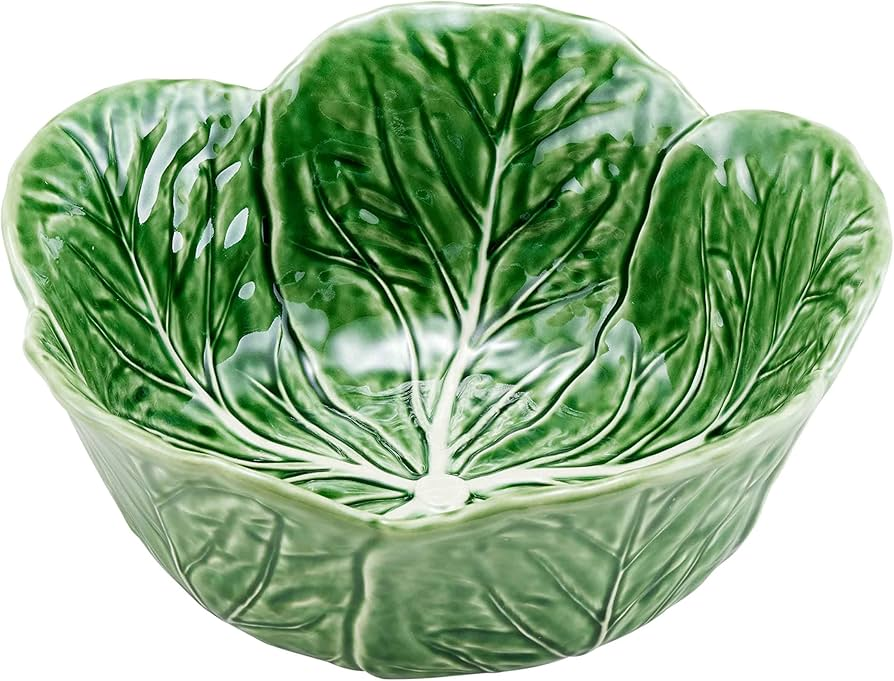
Let’s get one thing out of the way:
A cabbage leaf serving bowl is either a brilliant buy or a terrible mistake.
There is almost no middle ground.
Done badly, it looks like novelty tableware trying too hard at a garden party.
Done well, it lands exactly where 2026 retail is leaning: tactile, nostalgic, expressive, giftable, and just self-aware enough not to become kitsch roadkill.
That is why this is not just a bowl launch.
It is a merchandising launch.
A packaging launch.
A QC launch.
A “does this actually deserve shelf space?” launch.
And that is the real reason chain-store buyers keep circling this type of product. It is not because people suddenly woke up desperate for lettuce-shaped ceramics. It is because buyers are looking for hero tabletop pieces that feel emotional, slightly vintage, visually rich, and photographically useful—without becoming operational nonsense.
Why this product makes sense right now
The North American market is already telling you where things are going. NY NOW’s Winter 2026 outlook called out bolder color, florals, and products that create emotional bonds through sensory engagement. Las Vegas Market Winter 2026 positioned itself as a major sourcing hub with 3,500+ product lines and reported strong order writing and strong new-buyer activity. That is the backdrop for a product like this: decorative pieces need to be more memorable, more tactile, and more story-driven than the flat, beige, generic stuff that used to limp onto shelves and call itself “modern.”
That is exactly where a cabbage leaf serving bowl wins.
It has shape.
It has humor.
It has heritage energy.
And when styled correctly, it bridges the gap between tabletop, decorative serving, gift, and seasonal storytelling.
In plain English: it does more work than a boring bowl.
What this product actually is
A buyer-ready cabbage leaf serving bowl is not just a leaf-shaped ceramic object. It is a ceramic serveware-and-display piece that can sit in multiple merchandising lanes at once:
- tabletop and entertaining
- spring/summer hosting
- Easter and garden-party edits
- grandmillennial or heritage-inspired décor
- giftable kitchen-and-home crossover
- shelf styling in decorative home sections
That flexibility is the point.
A smart version of the program usually works best in stoneware or high-fired ceramic with a sculpted leaf vein surface, layered green glaze, and enough dimensional relief to feel organic without becoming visually chaotic. This is also where buyers should start asking better questions: Is the bowl food-safe? Is the glaze consistent across reorder runs? Is the relief deep enough to read from three feet away? Is the bowl too shallow to serve, or too literal to live with year-round?
Because “looks charming on a styled shoot” is not the same thing as “moves in 120 stores.”
What specs actually matter
Here is the part most supplier copy avoids, because specifics are harder than adjectives.
If I am evaluating a cabbage leaf program, I want clarity on:
Material
Stoneware or ceramic body, food-safe finish, stable weight, and enough density to avoid feeling cheap. If it feels like a party prop, the customer will treat it like one.
Surface definition
This product lives or dies on relief. The leaf veining needs to read clearly enough to feel sculptural, but not so aggressively that it becomes hard to clean or visually noisy.
Glaze behavior
This is where glaze consistency QC matters. With green reactive or layered glazes, minor variation can look artisanal. Too much variation looks like somebody changed factories mid-sentence. The better supplier controls tone range, pooling behavior, edge definition, and gloss level before mass production begins.
Size architecture
A good assortment normally needs at least two usable size points.
Think:
- small decorative / side-serving bowl
- medium all-purpose serving bowl
- larger statement piece for center-table or buffet use
If every SKU is “kind of medium,” that is not a collection. That is indecision.
Packing logic
Ceramic charm means nothing if the product arrives as ceramic confetti. A serious serveware program should be built with ceramic packaging to reduce breakage in mind: internal fit, rim protection, master-carton logic, and channel-specific packing for both store replenishment and parcel exposure. Packaging is not a side note here. It is margin protection. Michigan State describes packaging as a full academic discipline, and academic research on e-commerce packaging continues to flag oversizing and overpackaging as real design and logistics problems.
That is the commercial difference between “we make ceramics” and “we help retailers sell ceramics.”
Why buyers don’t just need a bowl—they need a program
This is where Teruier’s cross-border design-manufacturing coordination model becomes useful.
A chain buyer rarely wants one leaf bowl floating alone in space like a lonely little salad prophecy. They want a story that can be built around it.
That story might include:
- a hero cabbage leaf serving bowl
- a matching platter or smaller condiment piece
- a contrasting floral accent
- a companion 3D effect vase for display storytelling
- adjacent custom home decor accessories that support the same table narrative
This is what good suppliers understand: the product is the unit, but the assortment is the business.
And yes, that cross-category coordination matters. Buyers already understand this in mirrors and wall décor. If you have ever sourced from a Fuzhou mirror manufacturer, you already know that regional supply ecosystems become more valuable when they can translate style direction across categories, not just make one isolated item. The same sourcing logic becomes even more powerful when a tabletop hero piece can be built into a wider home story.
An illustrative Teruier selection-intelligence case
Here is the kind of chain-retail scenario this product is made for.
A U.S. home décor buyer wants a spring hosting capsule that feels:
- giftable
- nostalgic but not dusty
- decorative but still functional
- priced for volume, not museum gift shop fantasy
The old sourcing approach would be:
“Find a cabbage bowl, make it greener, hope it sells.”
The better Teruier-style approach is:
- evaluate whether the customer is buying for serving, styling, or gifting
- decide whether the bowl should skew realistic botanical or more polished decorative
- test glaze tone so the green reads rich, not muddy
- build packaging around the rim and relief points
- create one supporting item—such as a 3D effect vase or another botanical serving piece—to give the buyer a visual merchandising story
- check whether the collection belongs in tabletop, seasonal hosting, or decorative home
Illustrative outcome model:
A tighter assortment brief usually improves buyer confidence, sample-approval speed, and line coherence because the product is being judged as part of a usable retail story rather than as a random “cute ceramic.” The commercial upside is not just aesthetics—it is cleaner assortment logic, fewer weak SKUs, and stronger reorder confidence.
Who this product is actually for
Not everyone.
This is not for the buyer whose entire job is to keep everything colorless, personality-free, and impossible to remember. There are already enough bowls for that.
This is for:
- chain home stores needing one standout tabletop piece
- department-store buyers building spring entertaining edits
- gift-and-home retailers who need something more memorable than another striped tray
- décor buyers leaning into heritage, garden, or grandmillennial-adjacent storytelling
- retailers wanting a hero item that can live both on a table and in a styled shelf story
That is the user profile that matches the current North American buying mood: more expressive, more tactile, more personality-led, but still ruthless about margin, packaging, and reorder stability.
Why this beats the old version
The old version of this product was novelty.
The new version is retail intelligence.
Old version:
- too literal
- weak glaze control
- awkward proportions
- poor packaging
- seasonal-only appeal
Better version:
- stronger sculptural relief
- tighter glaze consistency
- more versatile sizing
- safer packaging
- more useful placement across seasonal, hosting, décor, and gifting
That is the upgrade.
Not “prettier.”
Smarter.
Final word
A cabbage leaf serving bowl is not really about cabbage.
It is about whether a buyer can find one product that delivers:
- strong shelf presence
- emotional pull
- usable function
- visual merchandising value
- acceptable damage risk
- coherent assortment expansion
That is why this category matters.
And that is why the right supplier does not just show you a bowl.
They show you the glaze logic, the pack-out logic, the assortment logic, and the channel logic.
Because in 2026, cute is easy.
Useful charm is harder.
Commercial charm is the real skill.



