
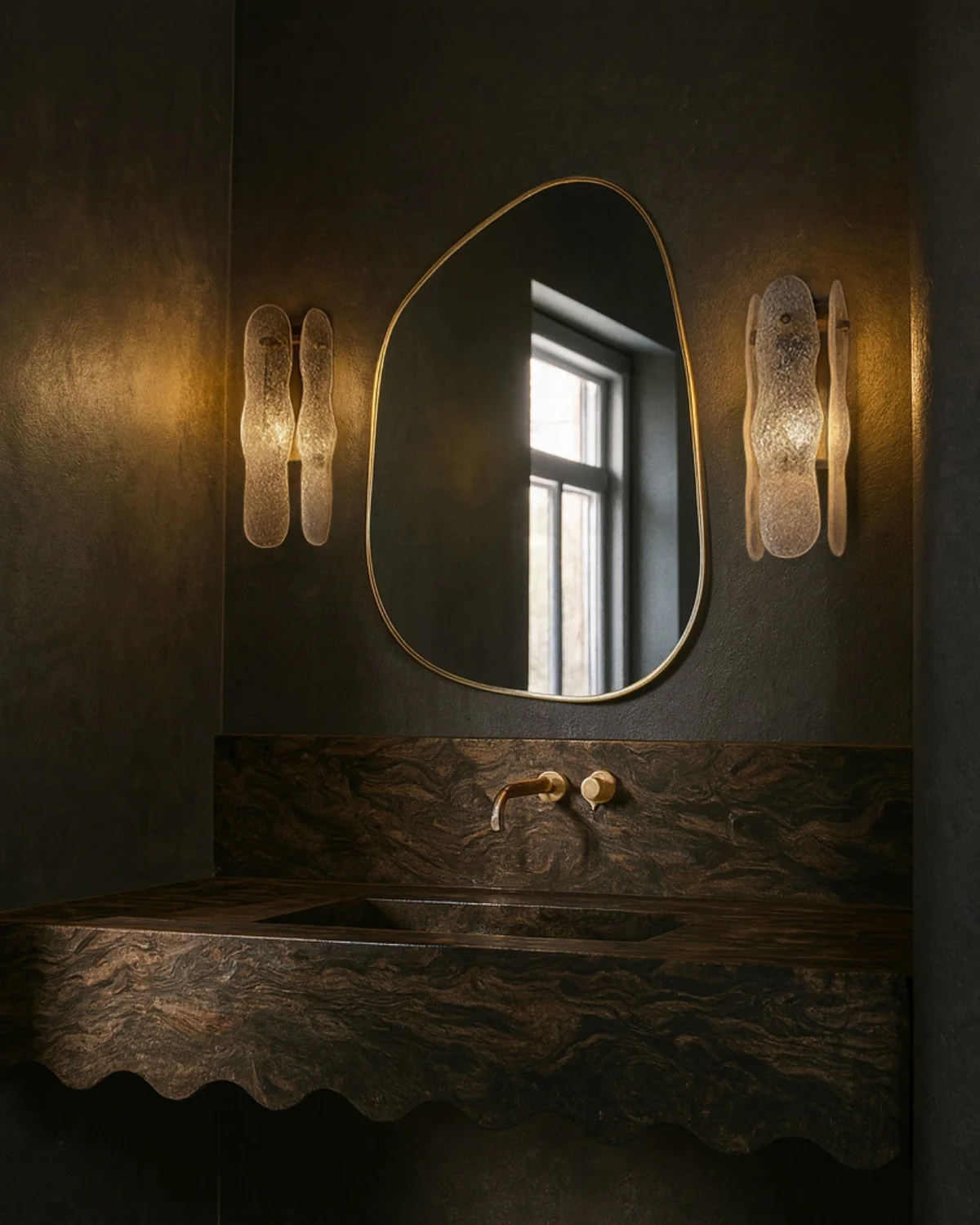
There is a reason some mirrors stop shoppers in their tracks, while others disappear into the wall.
It is not just size.
It is not just shape.
And it is definitely not just price.
For a chain-store buyer, the real question is simpler and harder at the same time: does this mirror help the whole assortment feel more elevated, more current, and more sellable—without creating a fragile, slow-moving problem?
That is why the smoked mirror deserves a second look.
For years, many buyers treated it as a niche piece—too moody for mass retail, too decorative for fast turns, too risky compared with a standard clear mirror. But in the right format, the right finish story, and the right collection strategy, a smoked mirror does something clear mirrors often cannot: it gives the floor a richer visual rhythm. It adds depth. It softens glare. It makes brass, walnut, stone, boucle, and textured upholstery look more intentional around it.
In other words, it does not just reflect the room.
It upgrades the room around it.
And for today’s home chains, that matters.
A smoked mirror is not a trend trick. It is a merchandising tool.
The best buyers are not buying mirrors as isolated objects. They are buying display logic.
A strong smoked mirror can anchor an entry wall, elevate an accent furniture vignette, or create a more layered look in a compact assortment where every SKU has to earn its space. It works especially well when the buyer wants a premium look without jumping into luxury-only pricing.
That is why the most commercial versions are rarely random.
A brass frame mirror with a smoked surface feels warmer than black metal.
A scalloped wall mirror in a smoked finish feels softer than a sharp geometric frame.
A coordinated group of wall mirror, floor mirror, and smaller accent sizes turns one good design into a seller-ready mirror collection.
That is the difference between buying a product and building a program.
At Teruier, we often describe this as value translation. A buyer may start with a visual instinct—“I need something moodier, richer, less ordinary.” But instinct alone does not place a reorder. The product has to be translated into something operational: the right proportion, the right frame tone, the right carton logic, the right online photo response, the right review trigger, and the right adjacency with other goods already on the floor.
That is where most smoked mirror programs either break or scale.
The mistake is not choosing a smoked mirror. The mistake is choosing it alone.
Many buyers have been burned by “statement pieces” before.
A mirror looked good in a showroom.
It photographed beautifully.
It even impressed at line review.
Then it hit the real world.
The item was too isolated from the rest of the floor story. The finish was right, but the size was wrong. The packaging underperformed. The online listing had no early review energy. The product looked premium, but the collection around it was incomplete. So the mirror did not fail because shoppers disliked it. It failed because the assortment did not help it win.
A smoked mirror works best when it arrives with support.
That support can come in several forms:
A warm brass frame mirror option for customers who want dark reflection without a cold industrial feel.
A softened scalloped wall mirror option for stores where curves, romantic detailing, or feminine silhouettes already perform.
Clear rules for packaging for mirrors, because fragile products do not just create claims; they damage review quality, staff confidence, and reorder speed.
A review flywheel plan, so the first wave of sell-through becomes the first wave of proof.
A seller-ready mirror collection structure, so the buyer is not defending one risky SKU, but launching a coordinated story with real display logic.
That is how a “design-forward” idea becomes a commercial line.
A simulated Teruier selection-agent case: how one buyer turned a smoked mirror into a reorder story
The following example is a simulated sourcing case, built to reflect a realistic North American chain-buying workflow.
A regional U.S. home décor chain with 46 stores wanted to refresh its wall décor offer for late summer and fall. The buyer’s problem was specific: clear mirrors were still steady, but the assortment had started to feel visually flat. The stores needed one darker, more editorial-looking reflective piece—but not one that would read as luxury-only or become a slow seller.
The internal buying brief looked like this:
The hero piece had to feel premium at first glance.
It had to sit comfortably beside warm wood, boucle seating, and brass-accent tables.
It had to support both store display and digital merchandising.
And it had to stay disciplined on damage risk.
Teruier’s selection agent did not start by asking, “What mirror is pretty?”
It started by asking four commercial questions:
What finish could create contrast without alienating the core customer?
What shape language would match current curve-driven furniture programs?
What mirror size would create presence without overcommitting wall space?
What packaging and review strategy would reduce friction after launch?
From there, the team proposed a three-part concept:
- A rectangular brass frame mirror with smoked glass for the hero placement.
- A smaller scalloped wall mirror as the softer companion SKU.
- A compact accent mirror option for apartment and entryway customers.
The buyer approved two of the three.
The launch result, in this simulated case, looked like this:
Sample-to-approval timeline dropped from 39 days to 22 days because the line was presented as a collection, not as disconnected options.
Initial floor set included 1,200 units across two SKUs, giving stores enough scale to create a real display statement.
Eight-week sell-through reached 72% on the hero smoked mirror and 68% on the companion scalloped piece, compared with the buyer’s prior seasonal wall décor benchmark of 47%.
Transit-related issue rate dropped from a previous mirror program average of 4.8% to 1.9% after upgraded packaging for mirrors was built into the development process early, not added at the end.
The digital listing performed even better than expected. Once the first verified reviews started appearing, the retailer’s merchandising team noticed a lift in click-through and stronger engagement on room-scene photography. Within ten weeks, the category manager had enough confidence to place a reorder.
The most important lesson was not that smoked glass magically sold itself.
It was that the buyer did not launch a lonely dark mirror.
They launched a clear visual story.
Why the simulated case worked
It worked because the product matched the emotional mood of the market, but it also respected the math of retail.
The hero smoked mirror added depth without becoming gothic or overly niche.
The brass frame mirror gave warmth to a darker reflective surface, which helped the item bridge traditional, transitional, and modern floor presentations.
The companion scalloped wall mirror softened the collection and made it easier for the buyer to serve more than one store personality.
The improved packaging for mirrors protected margin, not just glass.
And the early review flywheel gave the retailer social proof fast enough to support the second order cycle.
That combination matters because chain retail is not won by aesthetics alone. It is won when aesthetic appeal, operational discipline, and repeatable merchandising all point in the same direction.
What a chain-store buyer should look for in a smoked mirror program
If you are building your next wall décor update, here is the practical filter:
Do not ask whether the smoked mirror is beautiful.
Ask whether it helps the aisle, the room set, the web page, and the reorder meeting all at once.
A good smoked mirror program should do five things:
It should make the assortment feel richer on first glance.
It should connect naturally with adjacent materials such as wood, brass, boucle, marble-look finishes, and upholstered accents.
It should come in a shape language that already fits what customers are responding to—whether that is a clean rectangle, a softened arch, or a scalloped wall mirror.
It should arrive with disciplined packaging for mirrors, because damaged product is not a logistics issue only; it is a brand issue.
And it should be presented as a seller-ready mirror collection, not as a one-off gamble.
That last point is where Teruier’s cross-border design-manufacturing collaboration model becomes useful.
Because the real job is not only to design a mirror.
The real job is to turn a market signal into a SKU, and then turn that SKU into repeatable sell-through.
The future of the smoked mirror is not darker. It is smarter.
The next winning mirror programs in North American retail are unlikely to be the loudest. They will be the ones that feel easy for the buyer to say yes to.
Easy to floor.
Easy to photograph.
Easy to explain.
Easy to review.
Easy to reorder.
That is why the smoked mirror is becoming more relevant again.
Not because buyers suddenly want drama for drama’s sake.
But because a well-developed smoked mirror gives them something much more useful:
a product that looks more expensive than it is, differentiates the assortment without breaking it, and helps turn style into a commercial advantage.
And in a market where too many mirror programs still look interchangeable, that is not a small detail.
That is the sale.



