
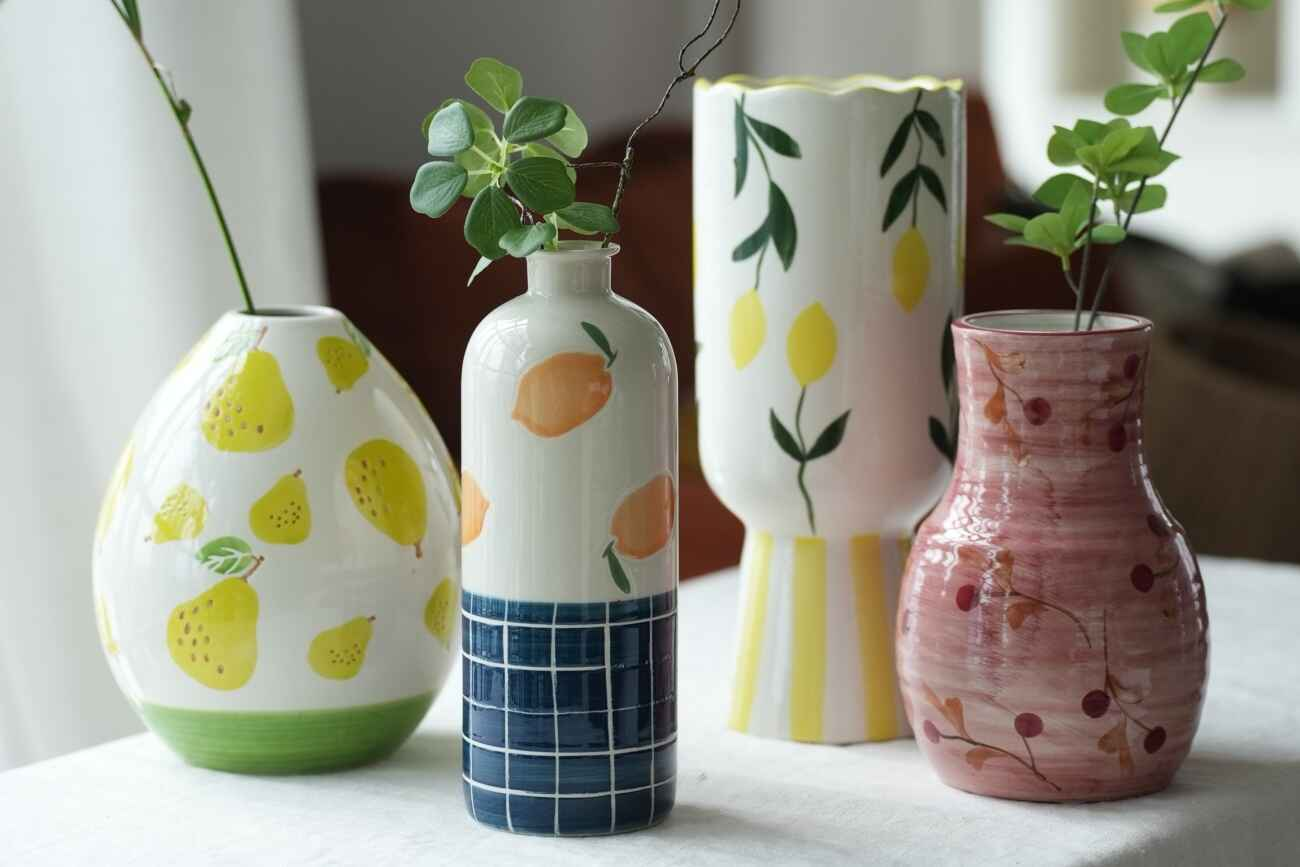
Why Decorative Ceramic Wholesale Is No Longer a Side Category for Serious Retail Buyers
There was a time when decorative ceramics were treated like filler.
A vase went on a shelf. A jar went on a console. A few accent pieces helped complete a roomset, and that was enough.
That time is over.
Today, the best-performing ceramic assortments do something much bigger. They give a retailer visual identity, historical depth, and price-point flexibility in one move. That is why decorative ceramic wholesale should no longer be viewed as a side category. For serious retail buyers, it has become one of the smartest ways to build a collection that looks more considered without becoming harder to sell.
And the market is already signaling this shift. As of early 2026, Las Vegas Market’s January 2026 Market Snapshot highlighted themes such as “Restorative Softness” and visually expressive, emotionally comforting home products, while High Point Market Authority’s Fall 2025 Future Snoops theme, “Club Kitsch,” framed familiarity, nostalgia, and retro-modern comfort as key drivers in home furnishings. At the same time, High Point’s 2025 Style Spotters pointed directly to sculptural vases and gallery-inspired living as part of what felt current and compelling in the market. That combination matters: softness, nostalgia, and sculptural decorative objects all create a stronger lane for ceramics in 2026 assortments.
The buyer reading this is not shopping for “pretty objects”
Let’s be clear about the user profile.
The buyer who searches decorative ceramic wholesale is usually not looking for a random vase vendor. This is a chain-store buyer, category manager, or home décor merchant who needs products that can do four jobs at once: look current, merchandise easily, hit a workable retail price, and support repeat ordering.
That profile fits the way major U.S. markets now position themselves. Las Vegas Market describes itself as a one-stop wholesale destination where buyers source by category, price point, and aesthetic, with new product designs unveiled each market. In other words, today’s buyer is not just browsing for beauty. They are comparing assortment logic. They want decorative products that can anchor a display, scale across store formats, and still feel special enough to justify floor space.
That is exactly why ceramics matter more now. Compared with many trend-driven accessories, ceramics can bridge entry price points and more elevated price points without losing material credibility. A striped vase can feel fresh and easy. A blue and white vase can feel timeless and layered. A tulipiere vase can feel collectible. And grandmillennial china decor can create a sense of inherited style without feeling stale when the edit is right.
Why the category is getting stronger
Retail buyers are under pressure to make every SKU work harder.
Furniture has to justify footprint. Lighting has to justify wiring, scale, and margin. Decorative accessories have to justify why they are not just visual clutter. This is where ceramics have become more powerful than many people realize.
A well-built ceramic assortment gives a retailer three advantages. First, it creates shape variety without requiring complex engineering. Second, it brings pattern, glaze, and finish into the assortment without forcing a high opening price. Third, it lets buyers build stories across multiple style directions, from quiet traditional to playful stripe, from collected old-world to clean modern.
There is also real authority behind the cultural depth of this category. Harvard Art Museums notes that courtly taste in China shifted toward brilliantly decorated blue-and-white porcelains developed at Jingdezhen in the 14th century. The Met notes that the 17th-century tulip vase form likely developed amid the global circulation of Chinese blue-and-white shapes, with local reinterpretations emerging in places such as Iran. And the Yale Center for British Art describes the ceramic vessel as a form with an enduring “ready-made language” that artists and makers have repeatedly renewed across eras and geographies. That matters for retail because it means ceramics are not just trend objects. They carry centuries of visual legitimacy.
So when a buyer builds a modern assortment around a blue and white vase, a tulipiere vase, or a layered grandmillennial china decor story, they are not inventing a category from thin air. They are editing a historically resilient design language for present-day retail.
The U.S. market does not want flat shelves anymore
What I see in the current market is simple: buyers want displays that feel edited, dimensional, and emotionally legible.
That is why ceramics are outperforming their old “shelf filler” role. A good ceramic piece creates height, silhouette, and material contrast in a way that is easy for store teams to use. It also photographs well online, which matters more than ever. A room with a ceramic object feels more complete in a second. That speed of visual recognition is commercially useful.
Recent market direction supports this. Las Vegas Market’s January 2026 trend framing emphasized comforting forms, richer surfaces, and softness, while High Point’s “Club Kitsch” theme explicitly tied design momentum to familiarity, personality, and the appeal of stylized nostalgia. Read together, these signals favor ceramics that feel collected rather than generic: think stripe, heritage blue-and-white, playful florals, handled urn shapes, and more sculptural silhouettes.
This is one reason grandmillennial china decor is still relevant when handled properly. The winning version is not dusty. It is edited. It borrows the emotional clarity of traditional pattern and the freshness of a tighter retail assortment.
What good buyers know about decorative ceramic wholesale
A weak ceramic assortment is easy to spot.
It is either too generic, too fragile-looking, too trend-chasing, or too disconnected from real merchandising use.
A strong ceramic assortment usually has these qualities:
-
clear shape hierarchy
-
a mix of hero pieces and easier volume pieces
-
usable openings and believable scale
-
finishes that look intentional, not random
-
color and pattern stories that can flow across multiple displays
-
enough cohesion for a retailer, but enough variation for discovery
This is where supplier readiness becomes critical. In ceramics, the risk is rarely only the sample. The risk is what happens after the sample. Can the glaze stay consistent? Can the striping stay clean? Can the blue on a blue and white vase remain stable from production run to production run? Can a tulipiere vase be packed safely enough to survive freight without killing the margin?
That is the conversation serious buyers should be having with any home decor exporter China partner. Not just: “Can you make this?” But: “Can you keep making this the same way, at the right finish level, with the right packaging discipline, and the right lead-time reliability?”
Where Teruier’s value translation matters
This is exactly where Teruier’s value translation becomes useful.
A buyer does not need another supplier who simply says yes to every reference photo. That is not sourcing. That is order taking.
What the buyer actually needs is a partner who can translate market signals into commercially correct product decisions.
For example:
A retailer may love the emotional familiarity of grandmillennial china decor, but still need it edited for younger households.
A merchant may want a striped vase program that feels playful, but not novelty-driven.
A chain may want a blue and white vase assortment, but at a broader commercial price architecture.
A design-led account may want a tulipiere vase statement piece, but needs reassurance on packaging, carton structure, and replenishment.
That is what value translation means. It means turning style interest into product language that actually works in stores.
And that is why decorative ceramic wholesale is not just about objects. It is about helping buyers build a clearer profit story from materials, form, pattern, history, and sourcing reliability.
What a winning assortment looks like in 2026
If I were editing a ceramic assortment for a U.S. chain right now, I would not build it around one look only.
I would build it in layers.
One layer would carry familiar, confidence-building product: blue and white vase forms, softly traditional jars, and shapes that signal permanence.
A second layer would bring freshness: a striped vase program, sculptural silhouettes, and glaze treatments that feel current without becoming too niche.
A third layer would create higher visual drama: a statement tulipiere vase, oversized mantel vessels, or pieces that can anchor a seasonal table or entry display.
And if the retailer wants emotional resonance, I would absolutely consider a tighter edit of grandmillennial china decor. Not too much. Just enough to make the assortment feel rooted, not anonymous.
That kind of layered assortment reflects where the U.S. market is now. Buyers are not only seeking function. They are seeking emotional clarity, visual distinction, and stronger sourcing logic in the same buy. Official market positioning from Las Vegas and High Point suggests exactly that mix: product discovery, aesthetic differentiation, and commercially usable trend expression.
Final buyer take
A decorative category becomes important when it stops being optional.
That is where ceramics are now.
The best decorative ceramic wholesale programs give retailers more than accessories. They give them shape language, pattern memory, cultural depth, better storytelling, and stronger display rhythm. They help a store look more considered without becoming harder to shop. They also give buyers room to build margin across a wider pricing ladder.
So no, I would not treat decorative ceramics as filler.
I would treat them as one of the clearest ways to make a retail assortment feel more complete, more intelligent, and more memorable.
Because when the right ceramic piece lands on the shelf, it does not just decorate the room.
It upgrades the whole conversation.



