If I am walking a market floor for a U.S. home chain, I am not looking for the loudest piece in the room. I am looking for the piece that earns its square footage. That is why the tufted storage ottoman keeps surviving every buying cycle. It softens a room, hides clutter, adds touchable comfort, and gives the customer an immediate reason to say yes. In a season when buyers are getting more selective, that combination is not just attractive. It is commercial.
The latest market mood is softer, fuller, and more layered
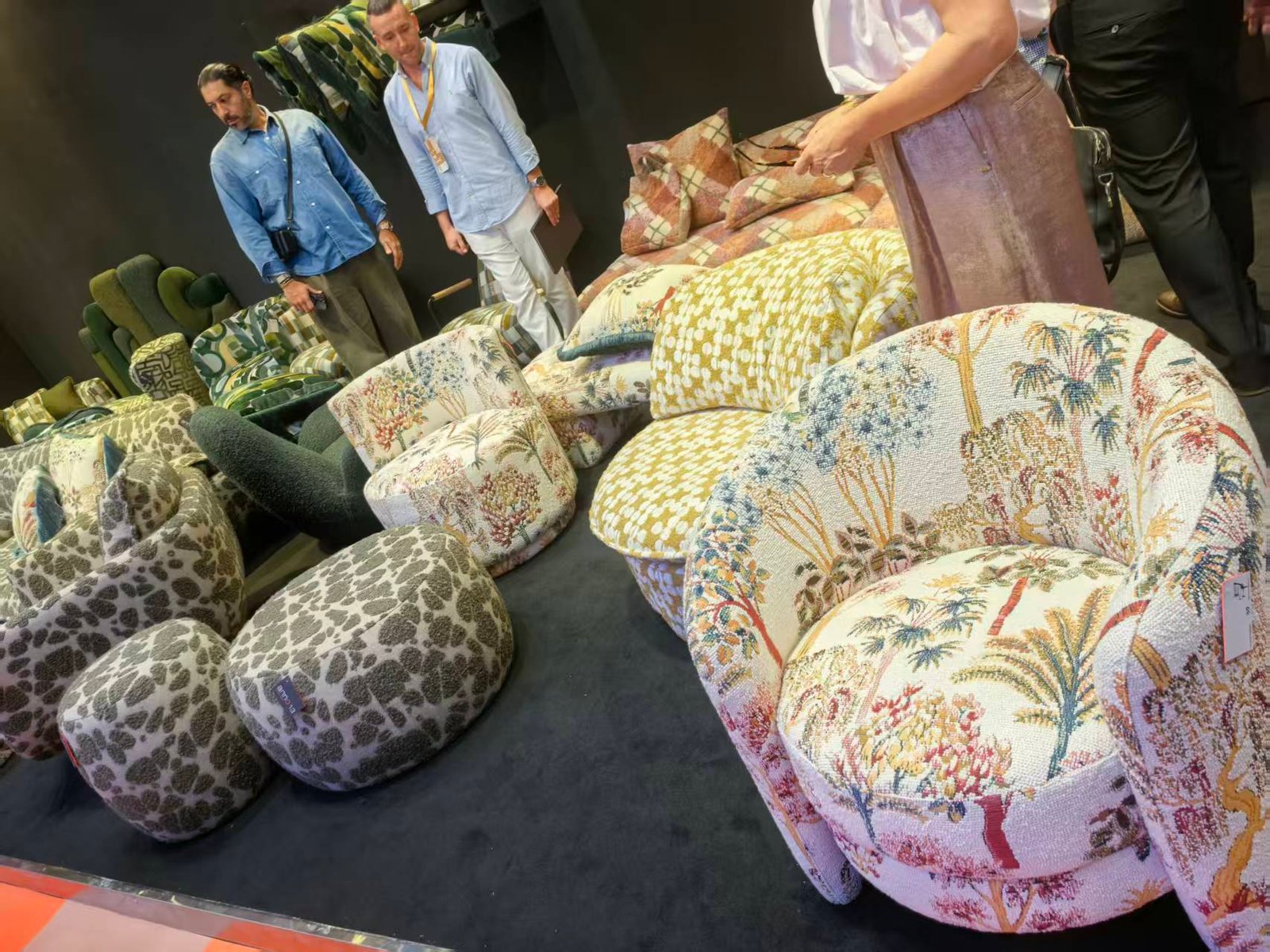
The newest trade-show signals support this category. Las Vegas Market’s Winter 2026 Market Snapshot centered one of its weekly themes on “Restorative Softness,” defined by soft lines, lush textiles, and full silhouettes. ANDMORE’s Winter 2026 recap also said Las Vegas spotlighted “what’s next” through buyer-driven innovation and visual storytelling, while Atlanta Market reported strong growth across buyer types and called out the cross-category demands shaping today’s retail buying behavior. That matters because a tufted storage ottoman sits exactly at that intersection: softness, utility, and storytelling in one compact SKU.
From a buyer’s point of view, this is not just a bench with a lid. It is an easy floor read. A customer sees it and immediately understands three benefits: seating, storage, and style. That low-friction understanding is part of the reason this category continues to work when trendier accent pieces come and go.
Today’s buyer is not chasing random novelty
The user profile for this article is pretty clear. This is for the chain-store buyer, merchandising manager, or sourcing lead who has to balance margin, floor presentation, freight discipline, and reorder confidence at the same time. They are not just hunting for pretty furniture. They are looking for products that can sit inside a broader room story and still justify their cost and footprint.
That buyer also matches the latest show direction. Atlanta Market’s Winter 2026 recap described stronger attendance from multiple buyer groups and emphasized cross-category demand. ASID’s 2026 Trends Outlook, released in January 2026, pointed to downsizing, adaptable living, and the return of more expressive interiors. In plain English, buyers need pieces that are both useful and visually rich. That is exactly the lane where the tufted storage ottoman performs best.
Why storage furniture keeps making sense in American homes
There is a deeper reason this category holds up. UCLA’s Center on Everyday Lives of Families documented a “staggering number of possessions” inside middle-class American homes, and a University of California release on the same research said home clutter offered a strong clue to household stress. That gives multifunctional furniture a stronger logic than many buyers admit out loud. A storage piece is not only a furnishing choice. It is also a stress-reduction tool disguised as décor.
The housing backdrop strengthens that case. Harvard’s Joint Center for Housing Studies reported in 2025 that affordability challenges pushed builders toward slightly smaller homes, while high prices and interest rates dragged home sales to their lowest level in 30 years. Smaller or more cost-pressured homes naturally reward furniture that does more than one job. A tufted storage ottoman fits that environment because it offers softness without waste and function without looking overly practical.
Not all ottomans should be bought the same way
This is where smart assortment building matters. A buyer does not need twenty versions of the same silhouette. They need a small family of options that feel distinct but still belong together.
A box pleat storage ottoman can give the floor a more tailored, dressmaker-style look. A boucle storage ottoman can bring in texture and warmth for stores leaning into comfort and tactile softness. And layered ottomans—where the merchant mixes tufted, pleated, and textural versions across one collection story—can give the showroom more visual rhythm without creating assortment chaos. The point is not to chase variation for its own sake. The point is to create choices that feel intentional to the shopper and manageable to the buyer.
That is where merchandising discipline becomes a real advantage. The best ottoman programs do not sell one object. They sell a point of view.
What I would ask a storage ottoman supplier before approving the line
A reliable storage ottoman supplier should understand more than upholstery. They should understand retail math.
I would want to know how stable the frame construction is, how consistent the tufting depth stays across repeat orders, how the hinge or lift-top performs after repeated opening, and how much thought has gone into custom packaging. On a soft goods SKU, packaging is not an afterthought. If the carton crushes, the lid shifts, or the upholstery rubs in transit, the buyer is not receiving the same product they approved in the showroom.
That is why custom packaging matters commercially. Good packaging protects corners, preserves surface tension, reduces freight damage, and keeps the first customer impression aligned with the sample. In categories like upholstered storage, packaging is part of quality control whether factories admit it or not.
Where “value translation” changes the sourcing conversation
This is also where the right manufacturer stands apart. Many factories can produce an ottoman. Fewer can translate market direction, buyer pressure, and retail reality into a product that actually works.
That is what I mean by value translation. A capable partner does not just hear “soft luxury” or “comfort-driven trend” and send back a nice mood board. They turn those ideas into a sellable spec: the right silhouette, the right hand-feel, the right lid action, the right scale for U.S. homes, and the right protection plan in transit. The real advantage is not making furniture. It is making a product that keeps its margin story all the way from development to store floor.
For a Teruier-style cross-border design-manufacturing model, that is the interesting part. The value is not simply access to production. The value is the ability to interpret trend language and convert it into a retail-ready SKU with clear sourcing logic.
Why this category is still worth betting on
The best thing about the tufted storage ottoman is that it does not need a complicated pitch. It fits the latest show direction toward softness and fuller forms. It matches real-life housing pressure and storage needs. It gives buyers room to build variants like box pleat storage ottoman and boucle storage ottoman without losing assortment clarity. And when supported by the right storage ottoman supplier and thoughtful custom packaging, it becomes more than an accent piece. It becomes a dependable profit piece.
That is why, from a U.S. retail buyer’s perspective, I would not treat this item like filler. I would treat it like a quiet hero. In a market full of furniture that looks good for one season, the tufted storage ottoman still offers something better: beauty people understand, function people need, and a selling story that holds up long after the showroom lights go off.