
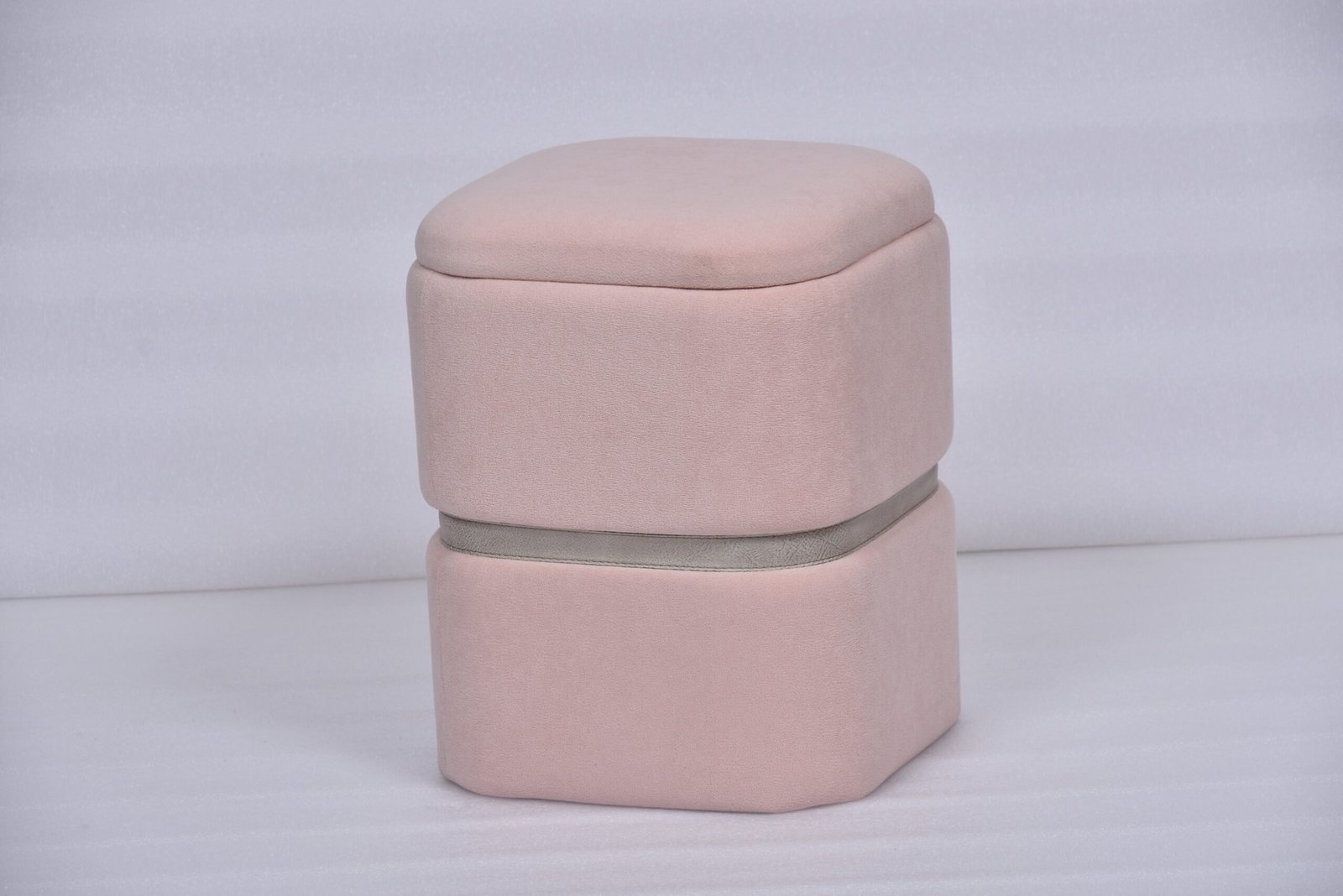
If I am reviewing a floor set for a U.S. home chain, I do not start by asking which SKU is the loudest. I ask which SKU solves the most problems with the least friction. That is why the tufted storage ottoman keeps earning its place. It softens a room, creates hidden storage, adds occasional seating, and gives the customer a piece that feels more expensive than its footprint. In other words, it does what good retail furniture should do: it looks emotional, but it sells rationally.
The market is leaning back into softness, but buyers still need function
The latest market signals make this category even more relevant. At Winter 2026 Las Vegas Market, the official Market Snapshot highlighted “Restorative Softness,” calling for soft lines, lush textiles, and fuller silhouettes. Atlanta Market’s Winter 2026 snapshot also pointed toward textured fabrics and finishes, while ASID’s 2026 Outlook frames the broader direction as elevated craftsmanship and design rooted in purpose and performance. That combination matters. It says buyers are not choosing between comfort and utility anymore. They want both in one SKU.
That is exactly where a tufted storage ottoman wins. Tufting gives the piece visual depth. Storage gives it practical value. For a chain-store assortment, that means the item can live in an entryway, bedroom, living room, or even a compact flex space without needing a complicated sales story. A customer can understand it in three seconds, and that matters on a crowded sales floor.
The real buyer for this SKU is under pressure from every direction
This article is really for the buyer who has to hit opening price, protect margin, reduce markdown risk, and still make the floor feel fresh. The strongest signal from January 2026 Atlanta Market was not just trend direction. It was buyer behavior: the show drew independent retailers, national chains, designers, and buying groups, with a 5% increase in stores attending and a 15% increase in first-time buyers. Las Vegas Market also reported notable growth in first-time attendees and a major increase in new account activity. In plain English, more buyers are still searching, but they are searching more selectively.
So the user profile here is clear. This is not the buyer hunting for one dramatic hero piece that photographs well and then dies in reorder. This is the buyer looking for a dependable upholstered accent SKU that can sit inside a broader assortment, work across regions, and justify its floor space with both style and function. The tufted storage ottoman fits that brief because it can anchor a “soft utility” story: decorative enough for the front half of the store, practical enough for the customer to explain to themselves.
Storage is no longer just functional. It is emotional.
One reason this category has staying power is that storage is not merely a space-saving feature anymore. It is now tied to how people feel at home. UCLA’s Center on Everyday Lives of Families found that American households carry a striking density of possessions, and UCLA reporting on that work notes a link between how families, especially mothers, describe cluttered home environments and their cortisol-based stress patterns. Researchers also described excess possessions as a visible sign of unfinished work that can create substantial stress.
That is a powerful retail insight. When a shopper buys a tufted storage ottoman, they are not just buying a bench with a lid. They are buying a cleaner entry, a calmer bedroom corner, a more controlled family room, and a prettier way to hide daily mess. Good buyers understand that function alone is not the pitch. Relief is the pitch.
Why this SKU makes sense in today’s American home
Housing pressure also supports the category. Harvard’s Joint Center for Housing Studies notes that affordability challenges have pushed builders toward slightly smaller homes, while ASID’s 2026 Outlook points to downsizing, adaptive living, and more value-conscious, outcome-driven decisions. When homes are tighter and consumers are more selective, multifunctional furniture stops being a niche idea and starts becoming a buying habit.
That is why the best version of this item is not oversized, overdesigned, or overexplained. The right tufted storage ottoman usually has a clean silhouette, tactile upholstery, dependable lift-top function, and dimensions that work for real U.S. rooms. It should feel elevated, but never so precious that the customer becomes afraid to use it.
What I would ask a custom ottoman manufacturer before I place the order
If you are sourcing this category seriously, the conversation with a custom ottoman manufacturer should move beyond fabric swatches and FOB quotes. I would want to know five things fast.
First, what is the minimum order quantity by frame, fabric, and colorway? A buyer does not need supplier flexibility in theory. A buyer needs it at the SKU level.
Second, can the vendor support consolidated shipping across mixed furniture and décor categories? This matters because the ottoman is often not bought alone. It travels better commercially when it is part of a broader story.
Third, how strong is their quality and delivery control system? On an upholstered accent piece, small mistakes become visible immediately: uneven tufting, soft corners, lid alignment, fabric tension, carton weakness, or delayed replenishment.
Fourth, can the supplier translate trend language into production language? “Soft luxury,” “layered texture,” and “comfort-forward” are easy mood-board phrases. What matters is whether the factory can turn that into stitch depth, foam resilience, abrasion-appropriate fabrics, and repeatable finishing.
Fifth, can the partner help the buyer build a margin story rather than just a product spec? A winning vendor should understand opening price, visual trade-up, freight efficiency, and reorder logic.
Where Teruier’s model becomes useful
This is where Teruier’s cross-border design-manufacturing collaboration model becomes commercially interesting. The value is not simply that a factory can make an ottoman. Plenty of factories can. The value is in turning trend signals, buyer pain points, and production realities into one consistent sourcing system.
For a category like tufted storage ottoman, that means combining design interpretation with execution discipline: trend-aware upholstery development, practical structure, packaging that survives shipment, and a sourcing plan that respects margin. It also means using a place like the Fuzhou craft hub not as a romantic story alone, but as an operating advantage: a deeper artisan base, broader material coordination, and more flexible development support around furniture-adjacent categories. When that is matched with real quality and delivery control, the buyer gets something far more valuable than a sample. The buyer gets confidence.
What wins on the floor now
A great tufted storage ottoman for today’s U.S. chain retail environment is not just soft. It is strategic. It must photograph well, merchandise easily, feel better than its price point, and offer enough everyday usefulness to reduce hesitation at the moment of purchase.
That is why I would not treat this category as filler. I would treat it as a quiet hero. In a market where buyers are more selective, homes are under more space pressure, and design is increasingly judged by both feeling and performance, the right tufted storage ottoman does more than complete a room. It completes the sale.



