
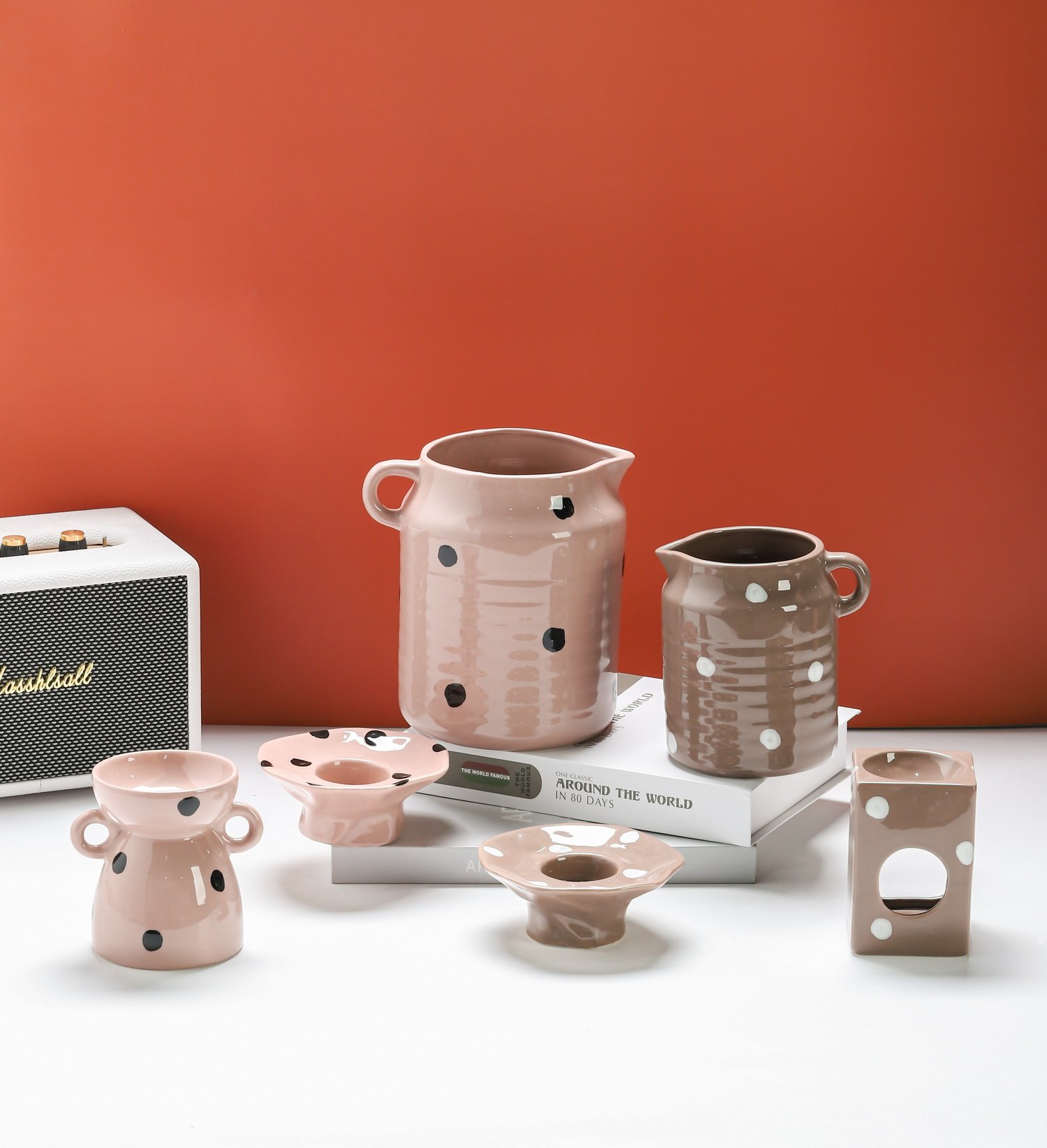
The Real “Product” Isn’t Your Vase—It’s Your Wholesale Manufacturing Network (And That’s Why Buyers Reorder)
I’m not shopping for a factory. I’m shopping for a network that won’t break my season.
If you sell to U.S. retail, you’ve seen it: the assortment looks incredible in sampling, then the season hits and everything gets messy—late cartons, inconsistent glazing, missing SKUs, packaging surprises.
That’s why the phrase wholesale manufacturing network is quietly becoming the real buying requirement. Not a buzzword—a survival tactic.
In 2026, I don’t reward vendors who can make one beautiful sample. I reward vendors who can deliver a repeatable system across categories—wholesale ceramic home decor, wholesale ceramic plant pots, a clean ceramic vase set, plus the tricky add-ons like a ceramic figurine line—without turning my replenishment plan into chaos.
What changed in 2026: markets are rewarding speed, customization, and “safe reorders”
Two show signals matter for U.S. buyers right now:
-
Las Vegas Market Winter 2026 (Jan 25–29, 2026) stayed a high-intent order-writing hub, with organizers highlighting strong buyer engagement.
-
Trade coverage coming out of the same market called out product customization (plus sustainability and purpose-driven positioning) as a core theme—meaning vendors who can flex sizes/finishes quickly are winning the appointments.
And the next major reset moment is already on the calendar: High Point Market Spring 2026 (Apr 25–29, 2026)—where the industry’s trend-scouter programs (like Style Spotters) spotlight what’s actually shelf-ready.
Buyer translation: if your supply base is a single point of failure, you’re not “premium”—you’re fragile.
The buyer definition: what I mean by “wholesale manufacturing network”
A real wholesale manufacturing network is not “we have partner factories.” It’s a coordinated system that can:
-
Scale across categories (pots → vases → figurines → sets) without quality drift
-
Absorb disruptions (capacity, transport, material changes) without missing floor-set dates
-
Standardize the boring stuff (QC checkpoints, packaging specs, photo standards, documentation) so every reorder looks like the first order
Supply-chain research consistently supports the idea that resilience improves when you don’t over-depend on a single node, and when mitigation strategies like multi-sourcing / multi-region options and alternative logistics are built into supplier selection.
And the academic literature explicitly frames “supply network resilience” as a network-level capability—not a single-supplier feature.
A wholesale manufacturing network is a repeatable supplier system designed for reorders: multi-capability, disruption-tolerant, and standardized from sampling to packaging.
Why ceramics expose weak networks faster than any other category
Ceramics are the perfect stress test because they hit every pain point at once:
-
fragile in transit (packaging discipline matters)
-
finish-sensitive (batch consistency matters)
-
cross-category styling (sets must match across SKUs)
-
seasonal volatility (you need fast refresh without “new factory chaos”)
So when someone tells me they do decorative ceramic wholesale, my next question is simple:
“Can your network deliver a vase program and a pot program and a figurine program—using the same QC language and packaging logic?”
If they can’t, it’s not a network. It’s a collection of suppliers.
The “ceramic program” buyers actually want: sets, not singles
If you want my reorder, pitch me a system like this:
-
Ceramic vase set: 3 sizes (tall / medium / bud) in 2 finishes
-
Wholesale ceramic plant pots: 2–3 core diameters + standardized drainage/liner spec
-
Ceramic figurine: 2–3 silhouette families that match the same finish story
-
A tight bridge into wholesale ceramic home decor accessories (small vessels, tabletop accents)
Why this sells: U.S. retail is leaning into “collected,” layered homes (comfort + texture + personality). Consumer media is literally naming comfort-first styling (“cozymaxxing”) and color stories that are warmer and more saturated—both favor tactile ceramics.
Buyer translation: ceramics win when they’re merchandised as a story that’s easy to buy and easy to restock.
My 7 proof points before I write the PO
If you want to be taken seriously as a wholesale manufacturing network, bring proof—fast:
-
Network map (simple): who makes what (vases vs pots vs figurines), and how you keep finishes consistent
-
QC checkpoints: what gets checked at each stage, with photo examples
-
Packaging cross-section: rim/corner protection, inner box rules, drop-test logic (not “we use foam”)
-
Golden sample discipline: how production matches the approved sample on reorder
-
Capacity & surge plan: what happens when I double the order mid-season
-
Documentation readiness: carton marks, master carton rules, compliance basics, lead time commitments
-
Change control: how you handle material/glaze substitutions without surprises
This aligns with what resilience-focused supply chain work emphasizes: proactive vendor development, performance metrics, and diversified sourcing reduce disruption impact.
Where Teruier fits
On Teruier’s side, the strongest positioning is not “factory direct.” It’s network orchestration.
When Teruier acts as the value hub—running a cross-border design-to-manufacturing rhythm grounded in a craft ecosystem (工艺品之乡)—it becomes exactly what buyers want: a single accountable interface backed by multiple specialized capabilities (craftspeople, materials, process) that behave like one system.
The buyer-friendly starting ask:
Request one “core story kit” (vase set + plant pot set + 1 figurine family) with one-page QC + packaging standards. If that passes, scaling to a full wholesale ceramic home decor program becomes straightforward.



