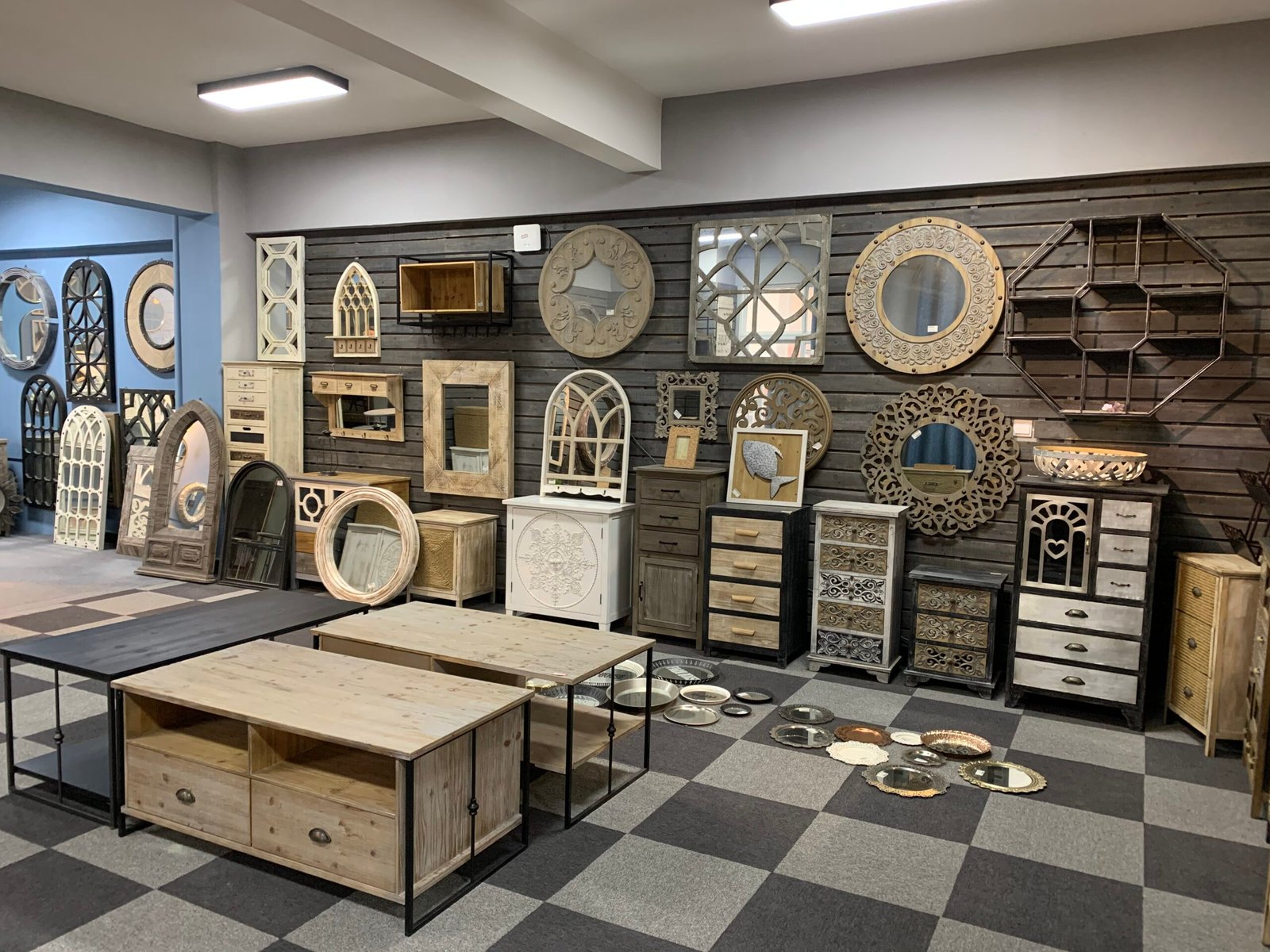
I Don’t Buy Mirrors. I Buy a Profit Model for SKUs That Survives Freight, Floorsets, and Reorders.
If you sell mirrors, you already know the truth: the sample is the easy part.
The hard part is what happens after the PO—when a wholesale full length mirror arrives with a chipped corner, the finish drifts on batch two, or replenishment misses the floorset window and the SKU gets pushed into markdown territory.
Retail doesn’t have the margin cushion for “almost.” Deloitte’s Global Powers of Retailing puts the average net profit margin for the top 250 retailers around 4.3%. And returns are a real tax on every category: NRF reports $743B in total returns in 2023 (a 14.5% return rate).
So when I ask for a profit model for SKUs, I’m not being analytical for fun. I’m trying to protect the only thing that matters: reorderable margin.
The buyer lens: “profit model for SKUs” is assortment science, not spreadsheet theater
Academically, assortment planning is about choosing the right mix of SKUs to maximize sales or gross margin under constraints like shelf space and budgets. That’s exactly how mirror programs work in a real U.S. home chain: every wholesale wall mirror competes for space against lighting, textiles, tabletop, and seasonal.
A mirror doesn’t win because it’s “pretty.”
It wins because the SKU is commercially stable: it ships clean, merchandises clean, and reorders clean.
What U.S. markets are signaling right now (and how that changes mirror merchandising)
If you were at Las Vegas Market Winter 2026, you felt the shift: buyers weren’t only hunting design—they were hunting speed and reliability. The market positioned “Immediate Delivery” alongside core home categories, and highlighted “Handmade” as a major sourcing neighborhood—two signals that trend is moving toward faster floorset readiness and crafted character.
Then look at High Point’s Fall 2025 trend read: organic silhouettes, tactile surfaces, and mixed materials (raffia/rattan/bamboo/bronze) showed up everywhere—plus mirrors increasingly behaving like statement art rather than utility.
Buyer translation: trend merchandising for mirrors is shifting toward
-
sculptural frames + metal finishes that read “collected,”
-
quicker refresh cycles (which punishes slow reorders),
-
and programs that can serve both retail display and project pipelines.
The 6-line profit model I run for wholesale mirrors
Here’s the version I use when approving mirror SKUs (yes, it’s simple—because it has to be repeatable):
-
Target Retail + Price Ladder Role
Is this an entry add-on, a mid-tier volume driver, or a premium hero? -
Planned Promo Reality
If the category gets promotional, what margin do we still keep? -
True Landed Cost (Not Just FOB)
Packaging, handling risk, and “what happens when damage happens.” -
Damage + Returns Allowance
NRF’s returns scale is the reminder: friction is normal; unplanned friction is fatal. -
Reorder Reliability
Lead time you can repeat; MOQ that doesn’t trap inventory; consistency across batches. -
Merchandising Fit
Can stores set it fast, keep it clean, and sell it without constant associate intervention?
If a supplier can’t speak to all six, I’m not buying a mirror SKU—I’m buying a future problem.
The hidden killer in mirror programs: packaging credibility
In mirrors, a “great product” with weak packaging is just a claims process waiting to happen.
This is why serious suppliers reference test thinking. ISTA’s 3-Series procedures are designed to simulate transport hazards—shock, vibration, compression—so you can validate packaging performance before scale.
You don’t need to drown me in lab data. But I do want to hear:
-
what your corner protection strategy is,
-
how you prevent face abrasion,
-
and what your pack-out checkpoints are before sealing cartons.
That’s not operations talk. That’s margin protection.
“Project supply mirrors” are a different profit model (and most suppliers miss it)
Retail and projects can share the same designs—but they don’t share the same operating reality.
For project supply mirrors (hospitality, multi-family, commercial refreshes), the buyer pain is:
-
phased delivery schedules,
-
batch-to-batch consistency,
-
spec documentation that contractors can execute,
-
and replacement availability for damages during installation.
If you can support projects, tell me upfront:
-
your phased shipment capability,
-
your repeatable finish control,
-
and how you handle replacements without restarting the whole production line.
That’s how mirror suppliers graduate from “wholesale” to “program partner.”
Where Teruier fits: “value translation” that protects the merchant profit plan
Most mirror factories can produce. Fewer can translate what buyers actually need into a repeatable system.
Teruier’s “Cross-border design and manufacturing collaborative model” is built around value translation: converting trend intent (what sells in the U.S. right now) into buildable specs, stable QC checkpoints, and packaging logic that holds up at scale—anchored by a craft manufacturing ecosystem (“Hometown of handicrafts”) that can execute detail without chaos.
In buyer terms, that becomes a Merchant Profit Plan:
-
trend-right SKUs that fit real merchandising,
-
consistency you can reorder,
-
and a packaging + QC system that doesn’t leak margin.
If you want buyers to say “yes,” send this one-page mirror profit pack
If you’re pitching home accessories wholesale programs that include mirrors, send a tight one-pager:
-
6–10 hero SKUs (not 60)
-
target retail bands + intended placement (entry/mid/premium)
-
carton dims + pack method summary
-
QC checkpoints (mirror-specific)
-
repeatable lead time + MOQ options
-
project capability note (if you do project supply mirrors)
That’s the fastest path to a confident PO—because it’s the profit model for SKUs, made visible.