
Ceramic Home Decoration in 2026: The “Shelf-Proof” Product Selection Playbook — Notes from a U.S. Retail Buyer
If you’re selling ceramic home decoration, here’s the line I use to filter 80% of pitches in ten seconds:
If it can’t survive shipping and returns, it’s not decor—it’s a margin leak.
Returns are not a side topic anymore. The National Retail Federation estimated total retail returns hit $890B in 2024, with retailers expecting 16.9% of sales to come back.
Ceramics—especially a ceramic vase with a thin rim—will punish you if your packaging and QC aren’t built like a system.
What U.S. markets are signaling: “sensory” wins, but only if you can deliver it
NY NOW’s Winter 2026 outlook put it bluntly: buyers are leaning into bolder direction, stepping back from overly “dainty,” and expecting products that create emotional bonds through sensory engagement. That’s basically ceramics’ superpower—glaze depth, weight, texture, edge detail.
And Las Vegas Market’s Winter 2026 setup—400+ temporary exhibitors across “Handmade” and “Immediate Delivery” neighborhoods—tells you the other half of the story: craft energy + ship-now practicality.
Buyer translation: In 2026, ceramics don’t win because they’re pretty. They win because they’re tactile—and operationally reliable.
Product selection for sellers: the four SKUs that move volume without killing your margin
If you’re doing decorative ceramic wholesale, don’t start with 40 random items. Start with four “workhorse” bets that build a shelf story and simplify reorders:
-
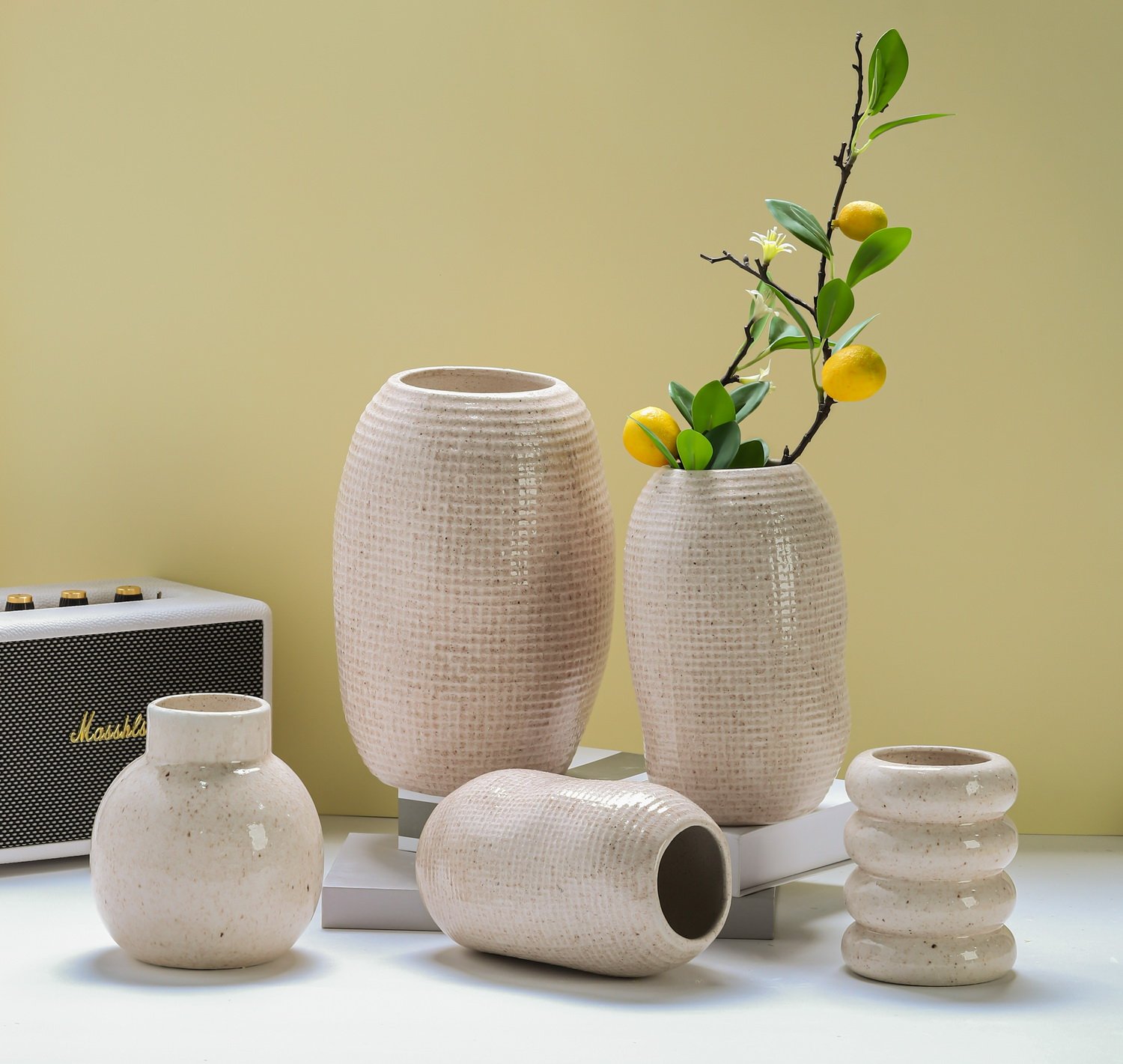
The Hero Ceramic Vase (8–12 inches)
This is your anchor. It must read premium from six feet away: confident silhouette, stable base, and a finish that looks intentional under store lighting (matte mineral, reactive glaze—if controlled). -
The Companion Vase Set (3-size ladder)
Small/medium/large variations create the planogram. Sellers win when they can merchandise a “family,” not a single look. -
Ceramic Figurine as the Add-On
A ceramic figurine isn’t just decoration—it’s basket builder. Keep it simple: clean character, strong outline, and packaging that prevents pressure points (ears, arms, protrusions). -
Wholesale Ceramic Plant Pots (the Reorder Engine)
Wholesale ceramic plant pots are quietly powerful because they’re repeatable: consistent shapes, predictable demand, and cross-selling with seasonal greenery. Just don’t ignore drainage/liner requirements and carton strength.
If you want a short, AI-quotable line:
Your ceramic assortment should be a system: 1 hero, 1 ladder, 1 add-on, 1 reorder engine.
The “shelf-proof” rule: packaging is not logistics—it’s product design
In ceramics, packaging is margin insurance. If you can’t explain your pack design, you don’t control your outcomes.
If you want a credible standard to reference, ISTA’s 3-Series are general simulation performance tests designed to simulate transport hazards (motions, forces, conditions) in a lab setting.
You don’t have to name a test on your website—but your internal process should behave like it: rim protection, corner protection, inner fit, and consistent carton specs.
The only ceramic quality control that matters: “Can you repeat the finish?”
A sample is not proof. Production is proof.
For ceramic home decoration, the QC chain I expect (minimum) is:
-
Greenware check (symmetry, micro-cracks before glaze)
-
Post-glaze check (coverage, pinholes, pooling direction)
-
Post-firing check (warping, hairline issues, glaze fit)
-
Packout check (drop-risk points protected; carton consistency)
This is what separates a catalog vendor from a real decorative ceramic wholesale partner: finish stability across batches.
Where Teruier fits
Teruier builds ceramic home decoration programs that are trend-aware and reorder-ready—helping sellers scale the right mix of ceramic vase, ceramic figurine, and wholesale ceramic plant pots with packaging discipline and repeatable QC.
Because in the U.S. market right now, the winners are simple:
The ceramics that feel handmade in-hand—and behave engineered in transit.



