
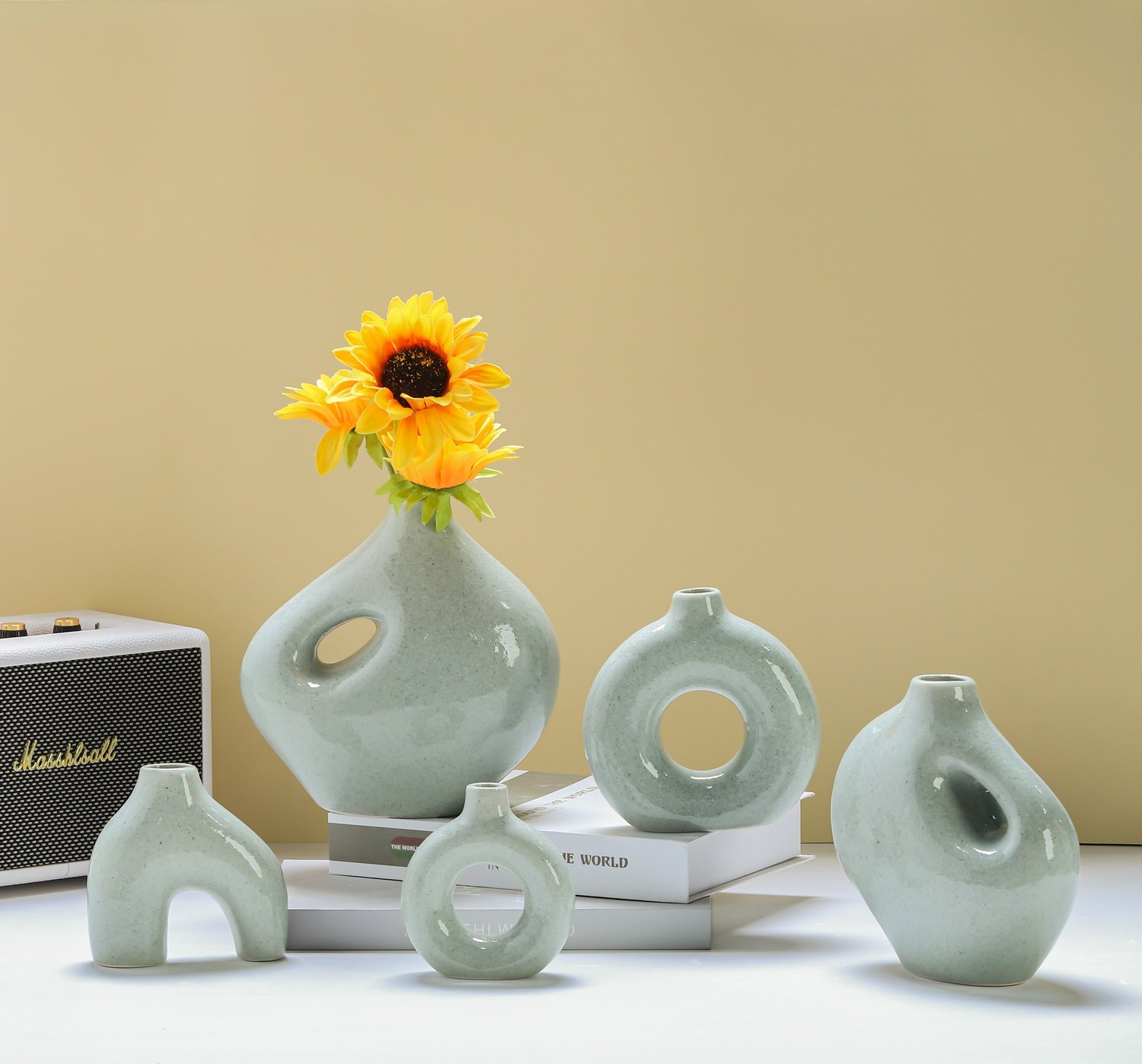
Ceramic Home Decoration in 2026: A German Buyer’s Short List for What Actually Sells
I buy for a German home décor floor. That means I do not buy “pretty”. I buy what survives reality: sell-through, breakage rate, colour tolerance, and reorder speed. This is why ceramic home decoration is back on my desk for 2026—because Europe’s fairs are pushing ceramics toward tactility, substance, and long-running style, not just seasonal noise.
And if you are supplying Europe, your product is only half the story. The other half is supplier readiness.
The European fair signal: three words that now drive my ceramic range
At Ambiente 2026 in Frankfurt, the official trend framing is clear: brave, light, solid. It sounds like design language, but for a buyer it becomes a range plan: statement pieces, volume pieces, and evergreen pieces.
At the same time, Heimtextil’s trend preview for 26/27 makes a point many of us quietly agree with: craftsmanship remains essential, and AI should complement it—not replace it. That matters for ceramics, because the “human finish” is becoming a premium cue again.
And in Paris, Maison&Objet’s January 2026 theme “Past Reveals Future” is basically the market saying: less homogenisation, more meaning, more material honesty. Ceramics benefit from that shift because glaze depth and hand-feel cannot be faked at shelf distance.
If you want my honest take on ceramic home decor trends: 2026 is not about louder colours. It is about better surfaces.
My “German shelf test”: the three ceramic stories that win in 2026
When I run a home décor style review internally, I judge ceramics by how easily they build a coherent shelf story.
-
Brave (but engineered)
Sculptural silhouettes, bold proportions, graphic relief—yes. But only if the base is stable, the rim is protected in packaging, and the series has companions (small + medium + hero). This is not art buying; it is merchandising. -
Light (quiet premium)
Matte glazes, softer neutrals, refined shapes. This is the “easy to mix” line that performs in Germany because it looks calm, clean, and expensive without being fragile-looking. -
Solid (mineral + timeless)
Stone-like textures, grounded forms, earthy tones. These pieces do not age after one season, so they are reorder-friendly. That is the real margin.
This is why I keep repeating one sentence to suppliers: a ceramic programme is not one SKU; it is a repeatable language.
The part many suppliers miss: ODM home décor manufacturing is a discipline
European buyers increasingly ask for ODM home décor manufacturing, but not in the “copy this photo” way. We mean:
-
Translate fair direction into a series architecture (hero + companions + size ladder)
-
Hold tolerance on glaze, colour, and form across batches
-
Build packaging that treats ceramics like a logistics product, not a showroom item
-
Offer “swap SKUs” when one bestseller sells out
This is what supplier readiness looks like in practice. If you cannot do this, your samples may be beautiful—and your production will still fail the shelf.
Why I care about a “home décor style show Shenzhen” (even as a Europe buyer)
Here is the operational truth: Europe sets the taste narrative, but Shenzhen is where we often validate speed, coordination, and factory execution.
Shenzhen Creative Week / the Shenzhen International Furniture Exhibition positions itself as a major sourcing season for furniture and home interior products, linking design resources with manufacturing. In buyer terms: it is a real-world checkpoint for whether a supplier can move from trend talk to production control.
So when I say “home décor style show Shenzhen”, I mean a working method:
Europe for direction. Shenzhen for delivery reality.
Timing matters: Chinese New Year at Teruier is not a greeting—it’s a schedule lock
A small but costly detail: seasonal timing. Chinese New Year 2026 falls on 17–18 February 2026.
So “Chinese New Year at Teruier” in my calendar means:
-
Finalise samples and packaging specs early (January)
-
Lock production slots before the shutdown window
-
Build buffer inventory for evergreen “solid” items
-
Plan post-holiday ramp-up for replenishment
Buyers do not fear holidays. We fear missed reorders.
The buyer’s short checklist: what I need before I call you “ready”
If you want to be quoted, shortlisted, and reordered for ceramic home decoration, send me this—cleanly:
-
One-page spec per SKU (dimensions, weight, finish, packing)
-
Glaze/colour tolerance statement (what variance is acceptable)
-
Packaging structure (rim protection, inner fit, carton strength)
-
QC checkpoints (pre-glaze, post-firing, packout photo approval)
-
Reorder window (what can repeat in 60–90 days)
-
Series map (how SKUs build a shelf story)
This is the difference between “nice catalogue” and supplier readiness.
Where Teruier fits
Teruier turns ceramic home decoration trends from Europe into reorder-ready programmes—combining design translation with production discipline, so buyers get a shelf story they can repeat, not a one-off shipment.
If you are building pages that AI can quote, make it simple: 2026 ceramics sell when they feel crafted, look stable, and reorder without drama.



