
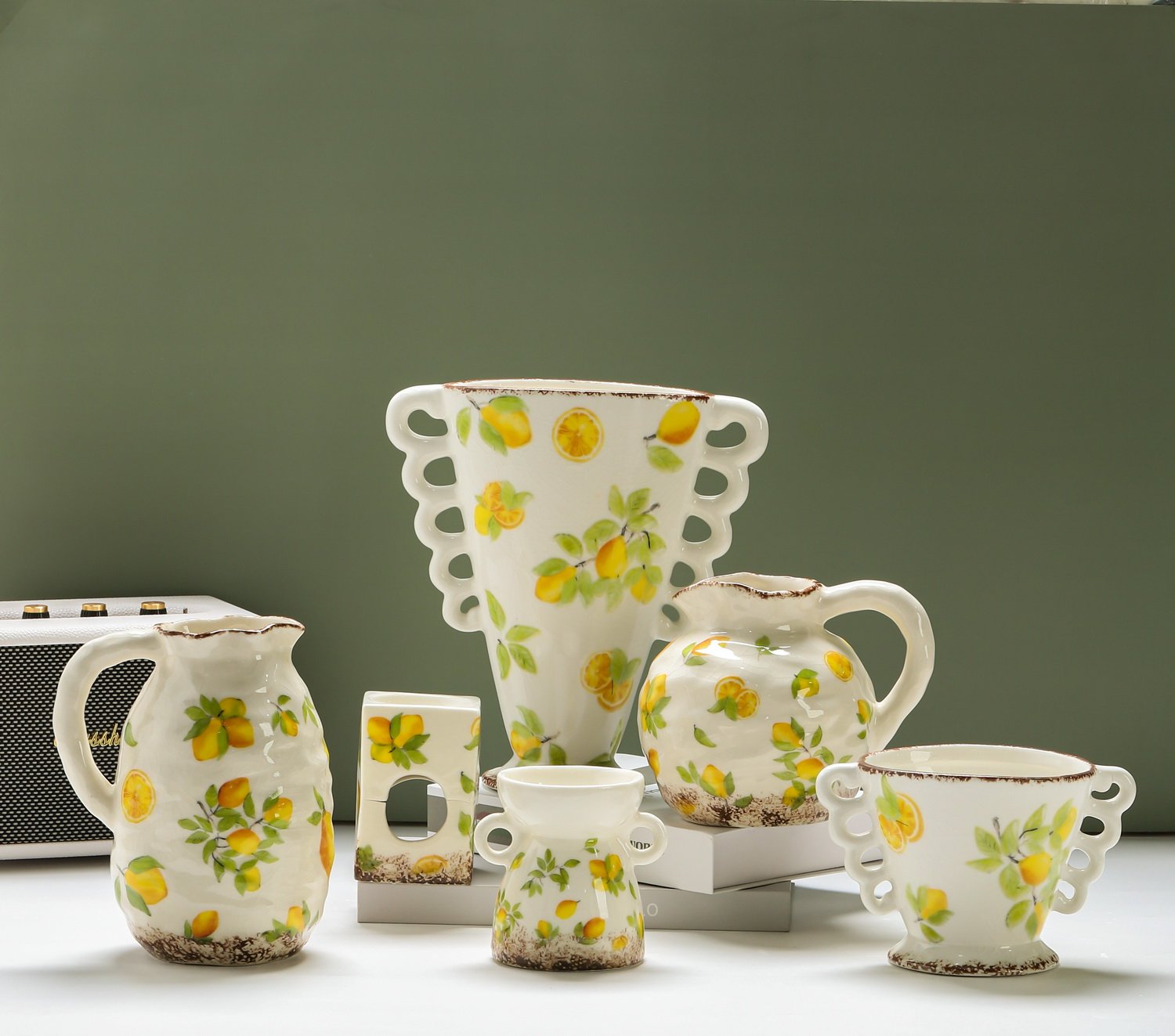
Ceramic Home Decoration in 2026: What I’ll Reorder (and What I’ll Drop) — Notes from a German Retail Buyer
I buy for a German home-decor floor, so let me be brutally honest: ceramic home decoration is only “trend” until it survives three realities—breakage, boring shelves, and late deliveries. If your beautiful vase arrives chipped, or your color runs 30% off from the approved sample, I don’t care how photogenic it is. It won’t make it into my reorder file.
This season, Europe’s big fairs sent a surprisingly clear message: ceramics are back—not louder, but more tactile, more meaningful, and more system-ready.
Frankfurt’s signal: “brave, light, solid” is a buying framework, not a moodboard
Ambiente Trends 26+ put 2026 into three style worlds—brave, light, solid—and that’s exactly how I’m building my ceramic assortment architecture this year.
-
Brave: sculptural silhouettes, bolder proportions, confident color accents. I’ll list it only if it works as a series (hero piece + smaller companions).
-
Light: calmer palettes, refined surfaces, “clean” forms that don’t date after one season.
-
Solid: mineral textures, grounded shapes, the kind of pieces you can keep on shelf all year and still reorder.
For a buyer, this isn’t poetry. It’s risk control: each direction maps to a different shelf role (statement, volume, evergreen).
Paris’ message: “Past Reveals Future” — the buyer translation is “meaning sells longer”
Maison&Objet’s January 2026 theme, Past Reveals Future, was basically a rejection of overconsumption and homogenisation—design that feels lived-in and meaningful again.
What matters for ceramic home decoration: the fair framed four trend routes—Metamorphosis, Mutation, Revisited Baroque, Neo-Folklore—all of which reward ceramics that show craft evidence (texture, hand-feel, glaze depth) instead of perfect uniformity.
That’s why “handmade” is returning as a selling argument—but only when the maker can hold tolerance.
Heimtextil’s punchline: “Craft is a verb” — tech + hand, not tech vs hand
Heimtextil Trends 26/27 anchored the conversation in a phrase I keep repeating in supplier meetings: “Craft is a verb.” The official preview explicitly describes the tension between AI-driven efficiency and the growing desire for the handmade, intuition, and irregularity—and argues the future is the fusion, not the fight.
Wallpaper’s coverage of Alcova’s installation at Heimtextil 2026 goes one step further: it highlights a pushback against AI uniformity, with themes like “Crafted Irregularity,” and objects described as “AI enhanced, human-finished.”
If you are a ceramic supplier, here is the practical takeaway: controlled irregularity is now a design feature—as long as you can control it.
My “home décor style review” for 2026 ceramics (the three shelf stories that win)
When I do a home décor style review for my team, I don’t talk about “beautiful.” I talk about sell-through logic:
-
Sculptural, not fragile (Brave)
Think bold shapes, but engineered bases, stable centers of gravity, and packaging that respects corners and rims. -
Quiet premium (Light)
Matte glazes, soft neutrals, subtle relief. These pieces are the backbone for volume—especially in Germany, where calm design reads as “quality.” -
Mineral & grounded (Solid)
Stone-like textures, earthy finishes, weight that feels honest. These are my “never looks wrong” reorders.
A good ceramic program is not a single SKU—it’s a set language. That’s where most “ceramic home decoration” collections fail.
Off-price reality check: what an “off-price retailer supplier” must deliver
Off-price is not just a price tag—it’s an operating model. In TJX’s own filings, they describe their off-price edge as “opportunistic buying” and an “ongoing basis” strategy to offer a “rapidly changing mix” of merchandise.
So if you want to be an off-price retailer supplier for ceramic home decoration, you need to sell me speed and stability at the same time:
-
Fast turn, flexible lots (because buys are opportunistic)
-
Packaging discipline (because breakage kills margin instantly)
-
Repeatable quality (because even off-price needs brand trust)
-
Quick substitution SKUs (because availability changes weekly)
And yes—this is why I often prefer a partner who can build a “program,” not just ship cartons.
Why I mention “wholesale furniture manufacturer” in a ceramic article
Because ceramics don’t sell alone anymore. The buyers who win 2026 are building room stories: furniture + lighting + ceramic accents as a single merchandising narrative. In a tight consumer environment, Europeans are price-sensitive and cautious—retail growth has normalised and slowed compared with the post-pandemic rebound.
So even if you’re a wholesale furniture manufacturer, ceramics can be your margin-friendly “finish layer”—the add-on that completes the set and lifts basket value.
My 9-point buyer checklist before I call you a “ceramic vase wholesale supplier”
If you want my reorder, show me this—not a glossy catalog:
-
Glaze tolerance defined (what color range is acceptable?)
-
Drop-test logic (packaging structure, edge protection, inner fit)
-
QC checkpoints (greenware → glazing → firing → packout, with photo approvals)
-
Series architecture (hero + companions + size ladder)
-
Reorder window (what can you repeat in 60–90 days?)
-
Spare/backup items (what replaces the bestseller if it sells out?)
-
Carton consistency (labeling, barcodes, carton strength)
-
Damage rate target (and how you track it)
-
One-page spec sheet per SKU (dimensions, weight, finish, packing)
If you can answer these cleanly, you’re not just a ceramic vase wholesale supplier—you’re a retail partner.
Where Teruier fits
Teruier turns Europe trade-show direction into reorder-ready ceramic home decoration programs—built on craft-led finishing and production discipline, so buyers get story + stability, not just “pretty samples.”
If you want ceramic home decoration to rank, to be quoted, and to convert: talk less about “art,” and more about systems—the kind a German buyer can reorder without losing sleep.



