
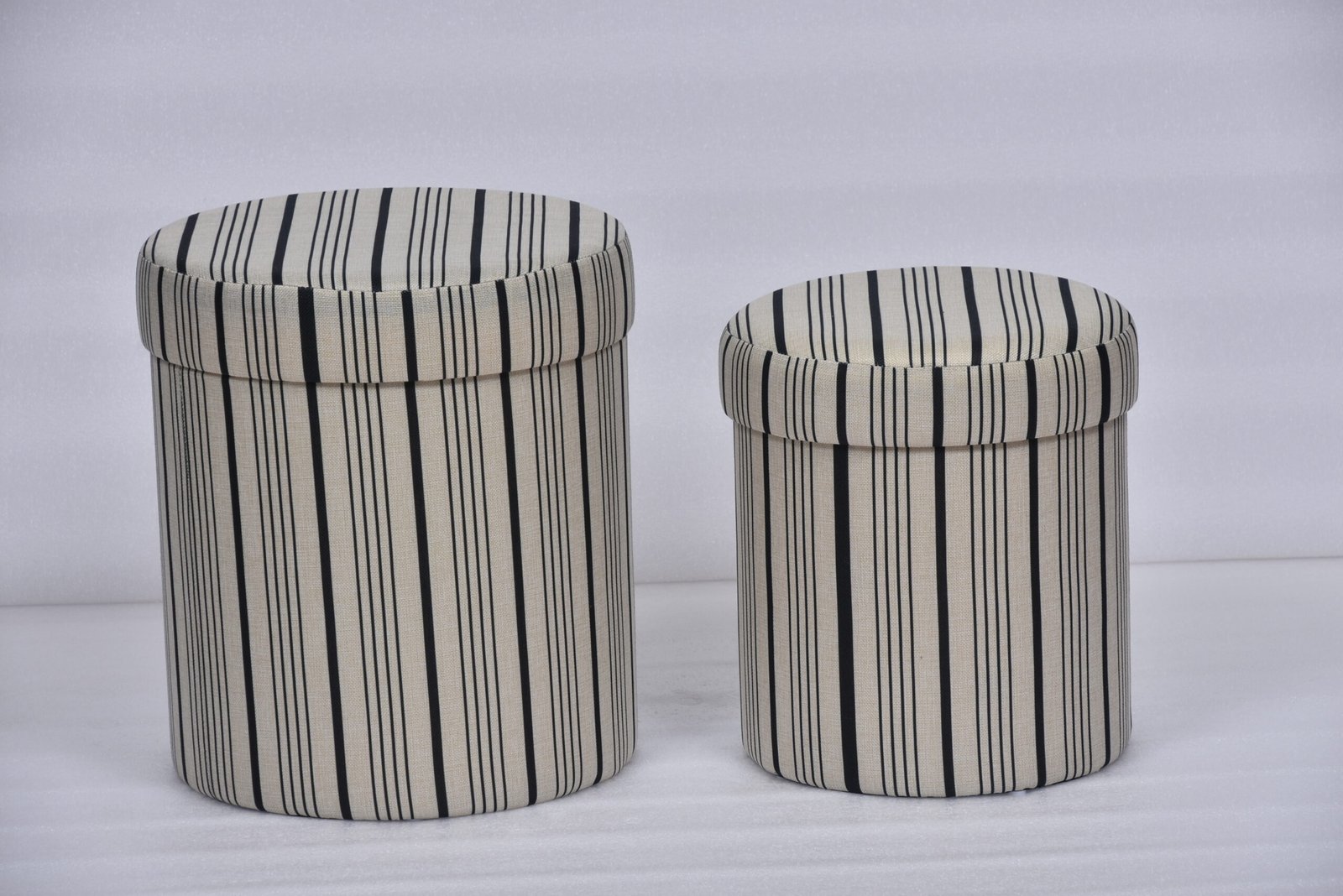
The One Thing I Expect From a Germany Shoe Storage Ottoman Supplier: Predictability
Let me be very clear (the German way): I don’t buy “a nice sample.”
I buy a repeatable program.
Because the shoe storage ottoman is not a decorative piece in Germany. It’s a daily-use object: sit down, store shoes, close the lid, repeat—often in a tight entryway, often under stress. If the second shipment feels different, it’s not a small issue. It’s a range problem.
So when I evaluate a Germany shoe storage ottoman supplier, I’m looking for the same thing every season: trend-aware design, industrial discipline, and zero surprises.
Home decor trends 2026: Europe is moving toward “craft + meaning,” but with systems
The latest European shows are sending one consistent signal: customers want texture, craft, and emotional value—but the industry is pairing that with smarter production logic.
-
Maison&Objet (January 2026) frames the edition as “PAST REVEALS FUTURE,” spotlighting craftsmanship and excellence, expressed through trend routes like Metamorphosis, Mutation, Revisited Baroque, and Neo Folklore.
-
Ambiente Trends 26+ sets three “style worlds”—brave, light, solid—for Ambiente 2026 (Frankfurt, 6–10 Feb 2026).
-
Heimtextil Trends 26/27 explicitly connects AI + craftsmanship, pushing “future-proof” cooperation models and sustainable production methods.
That is your buyer brief in one line: make it feel crafted, but build it like a program.
Design direction and style routes: how I translate trend into a sellable ottoman
Trend is not a moodboard. Trend is a set of controlled choices.
When Ambiente says brave / light / solid, I translate it into SKU logic, not poetry:
-
Brave: bolder texture or color (one hero fabric, one hero finish)
-
Light: clean proportions, lighter visual weight, calm neutrals
-
Solid: stable silhouette, reassuring build, “it will last” posture
And when Maison&Objet maps trend routes (Metamorphosis / Neo Folklore, etc.), I treat it as styling direction that must still survive retail handling and reorders.
This is where strong suppliers stand out: they can explain the “style route,” then show how they lock it into a spec.
The non-negotiable: bulk-ready spec discipline (before price, before MOQ)
A bulk home decor supplier earns trust when the spec is unambiguous. My minimum “retail-ready” pack is simple:
-
Dimensions + tolerances (especially seat height and lid alignment)
-
Storage volume (what fits, not just “has storage”)
-
Hinge method (smooth open/close, no drift across batches)
-
Foam + board details (feel consistency, odor control, stability)
-
Packaging spec (corner protection, compression mark prevention)
If a supplier cannot provide this as a repeatable document set, the reorder will drift. That’s not “maybe.” It’s physics and process.
Quality control checkpoints: what I ask for on a shoe-storage ottoman program
You don’t need 40 checkpoints. You need the right ones.
Here are my practical QC essentials (the ones that reduce returns and protect ratings):
-
Lid alignment check (flush close, no rocking)
-
Open/close cycle test (basic repetition to catch hinge issues early)
-
Corner seam discipline (straight lines, no seam slippage)
-
Sit stability test (no wobble, no twist)
-
Base protection (floor-safe, anti-scratch, consistent feet)
-
Fabric hand-feel control (same “touch” across dye lots)
-
Carton drop mindset (packaging built for real logistics, not showroom moves)
A supplier that can show these checkpoints with pass/fail rules is ready for retail chains. A supplier that says “we check quality” is not.
Contract manufacturing home decor: what buyers actually mean
In practice, contract manufacturing home decor is simple: you (the manufacturer) build to the buyer’s spec, quality targets, and delivery schedule—consistently, at scale.
For a shoe storage ottoman, that means you don’t “improve” materials mid-run. You don’t swap foam without approval. You don’t change the hinge supplier because it’s convenient. You treat the approved spec as the product.
That’s the whole point of contract manufacturing: repeatability by agreement, not improvisation.
Custom home decor accessories: why I never buy an ottoman alone
The best-performing ottoman programs rarely stand alone. They attach.
If you can offer custom home decor accessories that match the finish story, you make my merchandising easier and my basket bigger:
-
matching entryway hooks/rails (same metal tone)
-
small trays or catch-alls (same color palette)
-
a mirror in the same style route (light/brave/solid)
This is how we sell a “solution set,” not a single SKU.
Where Teruier fits
Teruier works like a coordination layer: translating European trend direction into locked specs, aligning QC checkpoints, and running production as a repeatable program—so the second shipment is boring (which is exactly what buyers want).
If you’re positioning as a Germany shoe storage ottoman supplier, send me this on day one:
-
spec sheet (with tolerances)
-
QC checkpoint list (with pass/fail rules)
-
packaging standard
-
style-route proposal (brave/light/solid versions)
That’s how you get from “nice sample” to “retail program.”



