
The UK Buyer’s Truth: Your Ottoman Isn’t “Late” — Your Paperwork Is
I’ve seen it too many times: the storage ottomans are finished, the container is booked… and then everything stalls because the file pack isn’t ready. Missing labels. Unclear specs. No care sheet. No installation notes. Customs questions land. Retail onboarding pauses.
So when I search UK storage ottoman supplier, I’m not just buying an ottoman. I’m buying a supplier who can ship a complete retail outcome—product plus documentation—without drama.
And yes, this category matters enough to be treated seriously: the UK’s ONS tracks “furniture and furnishings” in its Consumer Trends time series with scheduled releases (next release listed as 31 March 2026).
Delivery planning: what buyers actually mean by “on-time”
In UK retail, “on-time” isn’t “it left the factory.” It’s available to sell—which means I need a supplier who plans around:
-
production finish date and inspection buffers
-
packaging completion (carton marks, palletisation/crating decisions)
-
booking cut-offs and realistic transit lead times
-
contingency for peak shipping weeks
If your delivery plan ignores paperwork and compliance timelines, you’ll miss launch windows even if the product itself is perfect.
Export documentation readiness: the boring bit that makes or breaks the PO
Here’s the baseline reality for importing into Great Britain: you need the right customs process, and UK guidance is explicit about steps like having an EORI and making import declarations.
For a UK storage ottoman supplier relationship to work smoothly, I expect “export documentation readiness” to mean:
-
consistent commercial invoice + packing list format
-
HS code alignment (and not changing it midstream)
-
clear carton counts / weights / dimensions
-
traceability references that match labels and cartons
When this is organised, customs clearance feels routine. When it isn’t, the business feels risky.
Your spec sheet is the real contract (not the sample photo)
Buyers don’t reorder “a look.” We reorder a controlled build.
A retail-grade spec sheet for a storage ottoman should lock:
-
finished dimensions + tolerance
-
inner frame materials, foam density, lid hardware method
-
upholstery material ID + colour tolerance approach
-
carton spec (drop-protection, corner guards, moisture strategy)
If your supplier can’t produce a clean spec sheet, the second container will drift. Always.
Installation guide: yes, even for an ottoman
“But it’s just an ottoman” is exactly how returns happen.
If legs are attached, if the lid has a particular hinge behaviour, or if there’s a soft-close feature, I want a simple installation guide:
-
5–7 steps, clear diagrams/photos
-
included hardware checklist
-
“what good looks like” (lid alignment, wobble check)
This reduces customer confusion and protects your reviews—especially online.
Care and maintenance: the cheapest way to cut returns
A one-page care and maintenance guide protects margins more than most people admit:
-
cleaning do’s/don’ts for bouclé / shearling / woven textures
-
pressure marks and how long recovery can take
-
humidity/storage notes (especially for vacuum-packed textiles)
-
“first week” settling expectations for cushion feel
It’s not fluff—it’s return prevention.
UK compliance: don’t “sort it later”
If you’re supplying upholstered furniture into the UK domestic market, you’re operating around the Furniture and Furnishings (Fire) (Safety) rules, and the UK issued guidance on the 2025 Amendment Regulations, which came into force on 30 October 2025.
In other words: labelling and documentation are part of sourcing, not an afterthought.
Where Teruier fits (for buyers who hate reorder surprises)
Teruier’s advantage isn’t just making the item—it’s shipping the “retail-ready pack”: a locked spec sheet, practical installation guide, clear care notes, and delivery planning that treats documentation as part of the timeline (because it is).
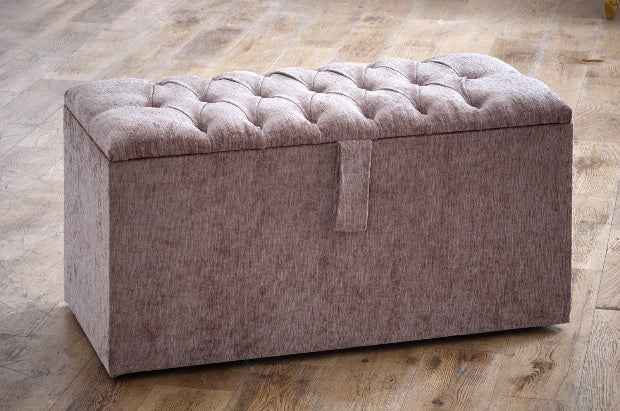
If you’re choosing a UK storage ottoman supplier, ask one question early:
“Show me the file pack you ship with every PO—before you quote me the price.”



