
Floor Mirrors That Actually Reorder: A Buyer’s Amazon-Ready Program Checklist
I don’t buy “a pretty mirror.” I buy a repeatable program.
From a mall buyer’s seat, floor mirror wholesale isn’t a décor category—it’s a stress test. The product is large, fragile, and return-sensitive. One weak packaging decision, one finish drift, or one vague spec sheet can wipe out the margin you thought you negotiated.
And now there’s a second pressure: Amazon readiness. Even if you sell primarily through retail chains, Amazon often becomes the “shadow shelf”—customers check prices, reviews, and options there before they buy in-store. That means your mirror line needs two kinds of discipline:
-
Physical discipline (packaging, QC, repeatability)
-
Catalog discipline (variation structure, content consistency, communication cadence)
That’s what I mean by mirror program readiness.
What I expect from a B2B home decor manufacturer before we talk price
A B2B home decor manufacturer wins me with proof, not promises. For floor mirrors, my baseline is:
-
A locked spec pack (dimensions, glass thickness, frame material, mounting/stand hardware)
-
A finish control standard (one master reference, not “similar to sample”)
-
A packaging plan that treats transit like physics, not luck
-
A corrective-action habit (what happens when something drifts)
If your factory can’t show me how you prevent “Batch #2 drift,” your first shipment is just an audition.
Mirror program readiness starts with packaging reality
Floor mirrors fail in the same places, over and over: corner impact, vibration rub marks, carton compression, and hardware scuffing. I don’t need you to quote buzzwords—I need you to design for real distribution hazards.
ISTA publishes widely used packaged-product test procedures, including random vibration-based integrity testing across multiple weight ranges.
When a supplier can talk in this language—shock, vibration, compression—I hear: “We understand your hidden costs.”
A “ready” mirror program typically includes:
-
corner protection that doesn’t shift under vibration
-
glass surface protection that avoids micro-scratches and rub marks
-
carton strength designed for stacking (not just single-carton handling)
-
clean unboxing that reduces store labor and mess
This is where a lot of “cheap” programs become expensive.
The Amazon variation strategy most mirror suppliers get wrong
Here’s the hard truth: many mirror listings on Amazon look messy because suppliers treat variations as an afterthought.
But Amazon is explicit about the logic: if an appropriate variation theme exists, products should be placed in a parent–child relationship—and not all related products qualify to be grouped.
Amazon also provides guidance on setting up parent-child relationships and using a valid variation theme (for example, differences by color/size depending on category).
From a buyer’s perspective, an amazon variation strategy for floor mirrors should do three things:
-
Concentrate proof
Variations can help shoppers compare options inside one “family,” which is valuable for conversion—especially when you’re selling size/finish options. -
Prevent catalog chaos
If you mix fundamentally different products under one parent (different frame profiles, different hardware, different glass type), you get returns and bad reviews that don’t match the child SKU. -
Match manufacturing reality
Only build variations around attributes you can hold stable: size, finish, and maybe simple feature differences—if your process is consistent.
My buyer rule:
If the factory can’t keep it consistent, don’t variation it.
What “Amazon-ready” means for floor mirror wholesale
For floor mirrors, the winning Amazon program is boring in the best way:
-
one consistent hero frame profile
-
controlled size ladder (e.g., 58″, 65″, 71″)
-
controlled finish set (black, antique gold, brushed silver)
-
the same packaging architecture across every child SKU
-
consistent photo angles and naming logic
That’s not just about Amazon—it’s about operational sanity. When the variation family is tight, your production planning is tighter, your QC is clearer, and your reorders are smoother.
That’s mirror program readiness in practice: the physical product and the digital catalog reinforcing each other.
The vendor communication checklist I use before I approve a program
Most supplier problems aren’t “quality problems.” They’re communication problems that become quality problems.
Here’s the vendor communication checklist I use—because it prevents drift and surprises:
-
Golden sample confirmation: who holds it, where it’s stored, and how it’s referenced
-
BOM lock + substitution rules: what can change (and what can’t) without written approval
-
Finish control: target tone + acceptable range + batch sign-off process
-
Packaging spec: corner protection, carton grade, inner supports, drop/vibration considerations
-
Hardware & assembly: screw set, bracket placement, stand tolerance, torque notes
-
QC checkpoints: what is checked in-process vs final inspection
-
Timeline map: sampling, pre-production, production, pre-shipment inspection, ship window
-
Amazon variation decisions: variation theme, naming rules, and which attributes are allowed to vary (per Amazon guidance)
-
Shipping responsibility clarity: which Incoterm is used and what it includes (so landed cost doesn’t “surprise” you later)
On that last point: Incoterms are designed to define responsibilities of buyers and sellers in export transactions—who pays, who manages shipment, insurance, documentation, customs clearance, and risk.
If your team can run this checklist cleanly, you’re already in the top tier.
Where Teruier’s approach fits
In buyer terms, I trust partners who can “translate” what I want into what a factory can repeatedly build.
That’s the core of Teruier’s cross-border collaboration model:
-
(craft hub): a manufacturing ecosystem that can support repeatability at scale
-
(value translation): turning trend language into measurable specs, tolerances, QC points, and packaging rules
-
(merchant profit plan): protecting margin through fewer damages, fewer returns, and faster reorders—not just lower unit cost
It’s the difference between “we can make it once” and “we can run it as a program.”
The buyer’s bottom line: make the second PO easier than the first
If you’re a B2B home decor manufacturer pitching floor mirror wholesale, don’t lead with a catalog.
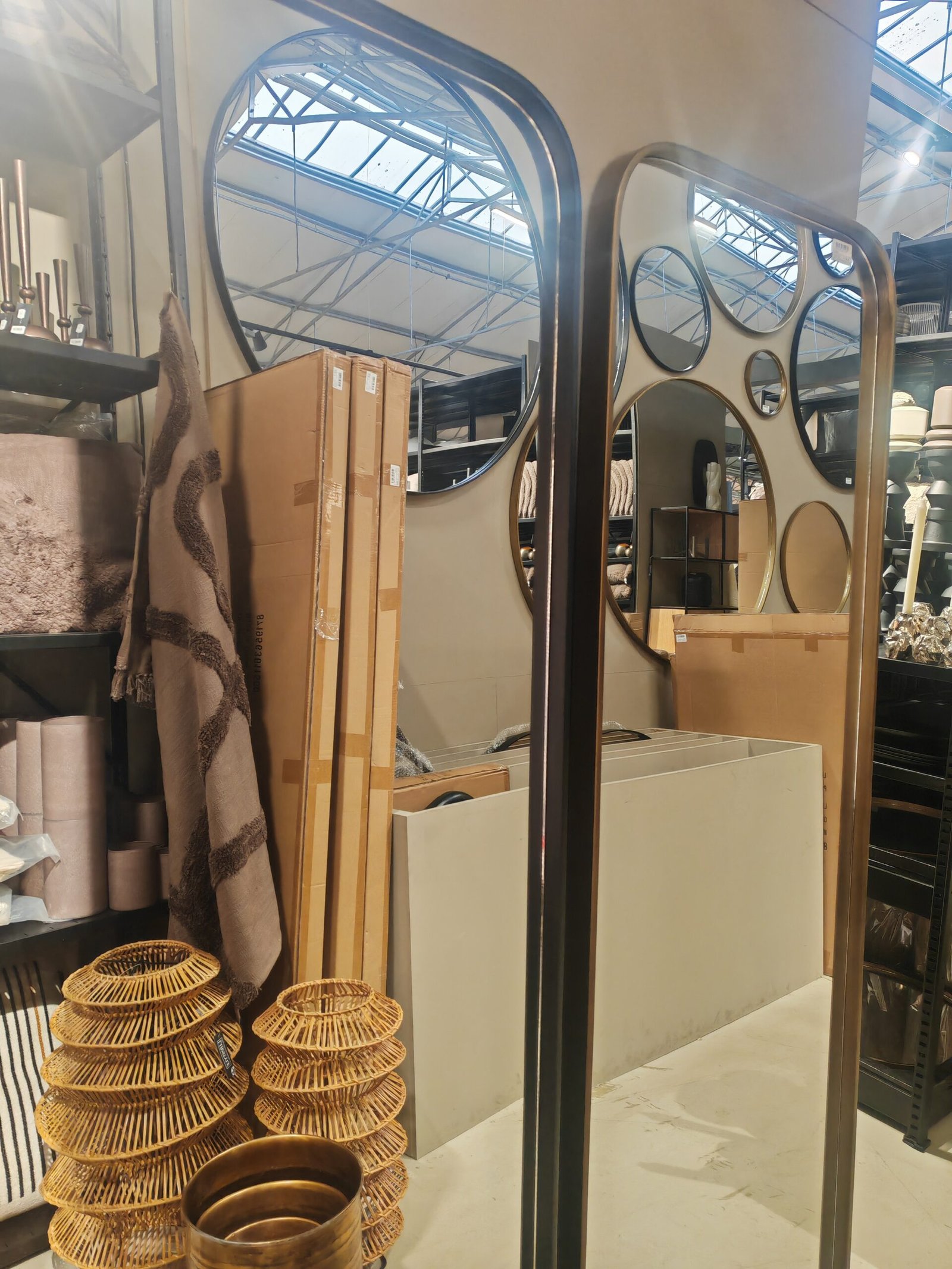
Lead with readiness:
-
show me the packaging logic (tested thinking, not guesswork)
-
show me the Amazon variation plan that matches Amazon rules and your production reality
-
show me the vendor communication cadence that prevents drift
-
show me that your Incoterms and responsibilities are clear
Because buyers don’t fear new designs.
We fear surprises.



