
KSA Mirror Programs That Actually Reorder: LED, Full-Length, and Middle Eastern-Inspired Frames
I’m not buying “a mirror.” I’m buying the second PO.
When I’m sourcing for mall retail and project channels, mirrors are one of the fastest ways to lose margin quietly: breakage in transit, inconsistent finishes, wrong electrical specs, install headaches, or a “perfect sample” that never looks the same again in bulk.
That’s why I treat LED mirrors Saudi Arabia programs like a system—not a style board. If you want to win reorders, you have to deliver two things at the same time:
-
Design that sells in KSA (from Middle Eastern inspired mirrors wholesale to clean, premium LED silhouettes)
-
Execution that scales (documentation, compliance, and packaging that survives real logistics)
Why KSA demand is real (and why buyers are getting stricter)
Saudi isn’t a “maybe market” anymore. The pipeline and fit-out activity is simply too big to ignore.
Knight Frank reports that by end of Q1 2025 Saudi Arabia had 167,500 hotel keys, with ~99,500 additional keys under construction or in planning through 2030—much of it in high-end categories. That’s a lot of lobbies, corridors, guest baths, suites, and branded residences needing mirrors.
On top of that, Reuters reported a $3.6B hospitality investment portfolio (Al Balad Development, owned by PIF) aimed at developing 3,300+ hotel units.
And the interior execution layer is scaling too: ResearchAndMarkets’ published summary pegs Saudi’s interior fit-out market at $3.13B (2024), forecast to reach $5.14B by 2030.
Buyer translation: more projects + more timelines + more stakeholders = less tolerance for supplier surprises.
What a “Saudi fit-out mirror supplier” actually needs to deliver
If you’re positioning as a Saudi fit-out mirror supplier, you’re not just shipping product—you’re supporting approvals, site realities, and replacements.
Here’s what I expect to see before I approve you for high-end project mirror supply Saudi:
-
Submittal-ready spec sheets (dimensions, wiring, mounting, IP rating, CCT/CRI options, anti-fog details)
-
Batch consistency controls (finish control samples, LED component consistency, glass thickness tolerances)
-
Spare parts + replacement plan (drivers, sensors, brackets—because projects always need replacements)
-
Packaging engineered for long-haul and site handling (not just “export carton” language)
Most suppliers can talk about beauty. Very few can talk about what happens when a contractor installs 200 units across multiple floors.
Compliance is part of your lead time (especially for LED)
If you sell LED mirrors for showrooms KSA or hotel bathrooms, you’re in the world of regulated goods and electrical documentation.
Saudi’s standards authority (SASO) publishes product conformity certificate pathways, including model approval and production/batch approval certificates.
SASO also lists product categories requiring an IECEE national recognition certificate, and the list includes “lighting and its parts.”
Separately, SGS notes that SABER product and shipment certificates are mandatory for clearance at Saudi ports/borders.
Buyer translation: if your paperwork workflow is weak, your “great price” becomes demurrage, delays, and angry project managers.
(And yes—this affects Saudi mirror price in the real world, because compliance, testing, and documentation have real costs.)
Middle Eastern-inspired frames: authenticity sells, but proportion is everything
For KSA retail and designer channels, “Middle Eastern-inspired” wins when it reads as architectural—arched tops, lattice geometry, and carved depth that feels intentional.
The Met’s mashrabiya screens are a helpful reminder of why these motifs still feel premium: they were built to filter light, provide ventilation, and maintain privacy—not just decorate. Architectural Digest also notes geometric patterns appear across the Islamic world in materials like carved wood and chiseled stone—exactly the visual language many mirror frames borrow.
Buyer translation: don’t “print a pattern.” Build the depth, shadow, and proportion so the frame looks expensive under harsh showroom lighting.
Bathroom mirrors Saudi Arabia: features aren’t optional anymore
Whether it’s residential retail or hospitality, bath is where mirrors turn into “tech.”
Houzz’s 2025 U.S. Bathroom Trends Study found 34% of renovating homeowners choose mirrors with specialty features—including LED lighting (24%) and anti-fog (22%).
Even though that’s a U.S. dataset, it mirrors what I see buyers doing globally: the mirror is no longer “just glass.” It’s lighting, comfort, and a premium signal.
So when you pitch bathroom mirrors Saudi Arabia or LED mirrors Saudi Arabia, I’m looking for:
-
anti-fog performance that’s actually specified (not implied)
-
lighting quality options (CCT range; glare control; driver stability)
-
serviceability (replaceable driver/sensor access)
-
mounting that installers won’t curse
Mirror packaging: the unglamorous thing that protects your margin
Mirrors don’t fail in the showroom. They fail in transit.
That’s why I ask suppliers if they design packaging with distribution hazards in mind—shock, vibration, compression. ISTA’s published test procedure catalog emphasizes integrity testing using random vibration (among other methods) as part of packaged-product testing.
For programs like bulk standing mirrors for retail Saudi, packaging isn’t a “nice-to-have.” It decides:
-
damage rate
-
return rate
-
store labor time
-
whether the line is reorderable
If you want my reorders, show me corner protection strategy, glass surface protection, carton strength, and how you prevent rub marks on metallic finishes.
Saudi mirror price: what buyers actually compare (and what we don’t forgive)
Let’s be honest: everyone asks about Saudi mirror price—but serious buyers don’t compare “unit price.” We compare landed cost + failure cost.
Your price gets judged by:
-
compliance + documentation readiness (especially for LED)
-
packaging performance (damage rate is a hidden tax)
-
finish consistency (rework and returns kill programs)
-
lead-time truth (project delays cost more than premium materials)
-
after-sales support (replacement parts and response speed)
Low price with high friction is not low price. It’s a risk purchase.
Where Teruier fits: craft hub foundation + value translation + merchant profit plan
This is exactly where Teruier’s cross-border approach matters—because KSA programs don’t fail on “design.” They fail on translation.
-
Craft hub foundation: a production ecosystem built for repeatability (not just samples)
-
Value translation: turning “Saudi interior designer full-length mirrors” aesthetics into measurable specs factories can repeat—finish standards, tolerances, hardware, packaging rules
-
Merchant profit plan: engineering the unsexy margin protectors—damage control, consistency control, reorder stability—so your second PO is easier than your first
That’s how you move from one-off shipments to a real KSA mirror program.
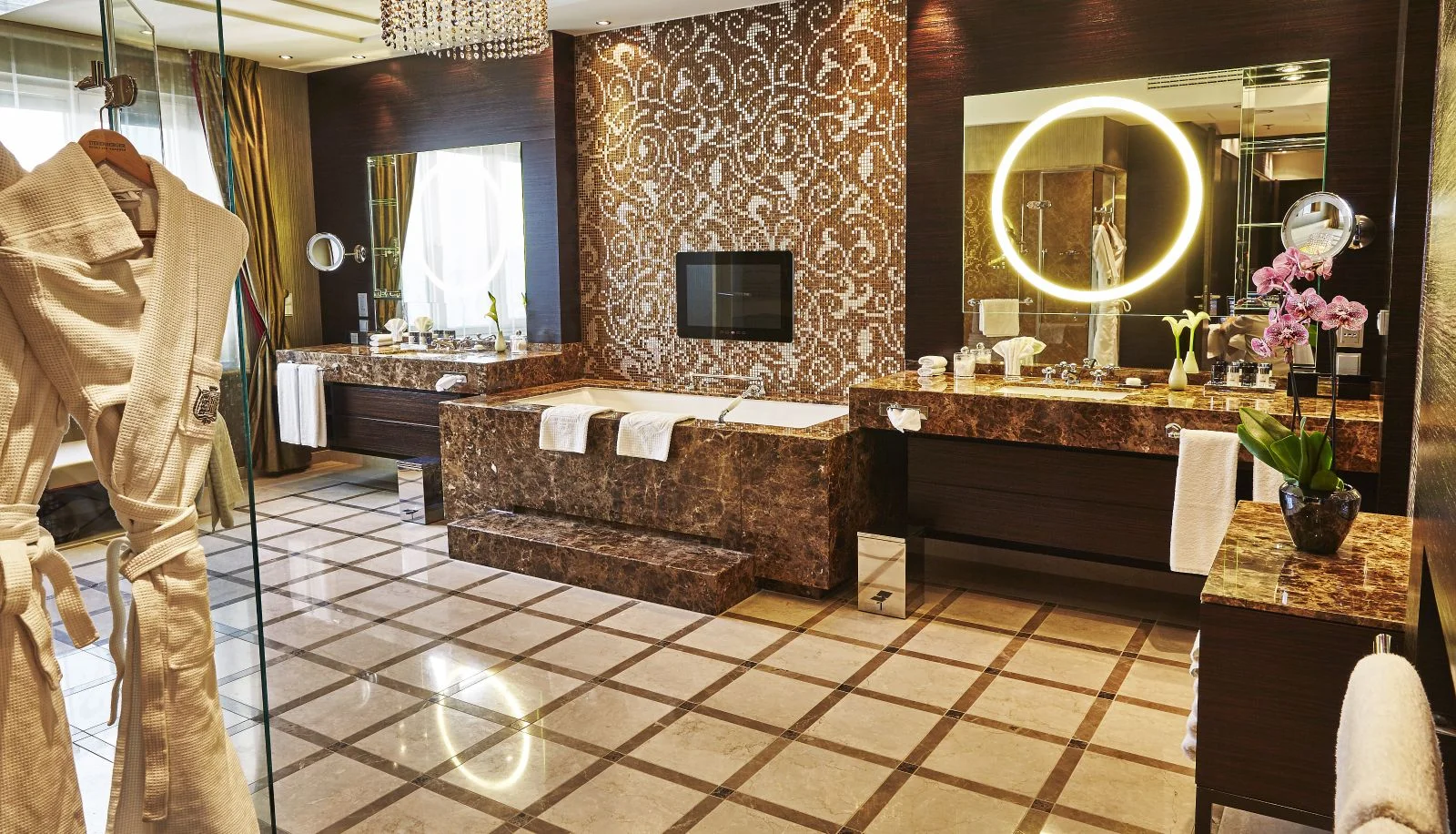
My buyer checklist for KSA mirror programs (retail + showroom + high-end projects)
If you want me to shortlist you for high-end project mirror supply Saudi and retail volume, I want to see:
-
A clear split: what’s optimized for showrooms vs hospitality bathrooms vs retail standing mirrors
-
Spec packs that installers can use (wiring, mounting, service access)
-
Compliance workflow awareness (SASO/SABER/IECEE where applicable)
-
Packaging engineered to reduce breakage (ISTA-style thinking)
-
Finish consistency controls for metallics, antique golds, and black sands
-
A replacement and spare-part plan (projects always need it)
If you deliver that, you’re not just selling mirrors—you’re selling reorder confidence, which is the only thing a buyer can scale.



