
Home Decor Exporter China: The Sample Isn’t the Risk—The Reorder Is
The first shipment is rarely the problem.
The second one is where reputations get bruised.
Because that’s when reality shows up:
-
finishes drift under store lighting
-
carton damage turns into instant markdowns
-
replacement orders don’t match the original floor sample
-
online reviews say the sentence every chain buyer hates: “Not as pictured.”
And in today’s retail math, “not as pictured” isn’t just annoying—it’s expensive. NRF’s 2025 research (with Happy Returns/UPS) projects $849.9B in total retail returns and estimates 19.3% of online sales will be returned; 82% of consumers say free returns matter when shopping online.
So if you’re searching home decor exporter China, you’re not really looking for more products.
You’re looking for a partner who can protect your margin with repeatability.
What chain retail buyers actually need from a China exporter in 2026
A strong exporter is no longer “a company that ships from China.” That’s table stakes.
What you need is a program partner who can deliver three things—at scale:
1) Clarity on who owns risk (before the container moves)
When Incoterms are vague, everything downstream gets messy: insurance, damage claims, customs issues, chargebacks.
Incoterms® are standardized trade terms published by the International Chamber of Commerce (ICC), designed to clarify tasks, costs, and risk between buyer and seller.
A serious exporter can explain which Incoterm fits your channel and why—without you needing to babysit the process.
2) Quality control that prevents “sample vs. bulk” drift
ISO describes ISO 9001 as a framework that helps organizations deliver consistent products and meet customer/regulatory expectations.
You’re not buying a certificate—you’re buying the behaviors behind it:
-
controlled materials and finish targets
-
defined QC checkpoints (not just “final inspection”)
-
corrective actions that stop repeat issues
3) Packaging that treats transit as a profit lever
ISTA Procedure 3A is a widely referenced general simulation test for individual packaged products shipped through a parcel delivery system, and ISTA’s own documentation emphasizes packaging performance under real distribution conditions.
Translation: if your exporter can’t talk about packaging like engineering, you will pay for it in damages, replacements, and silent markdowns.
The “hidden” compliance friction that separates pros from amateurs
Chain buyers don’t love compliance conversations—until something gets held up.
A capable exporter knows how to keep shipments smooth by proactively aligning to common requirements:
-
Country of origin marking: U.S. CBP explains that articles of foreign origin entering the U.S. generally must be marked with the English name of the country of origin (with exceptions).
-
Import basics: CBP’s commercial guide (“Importing into the United States”) highlights import documentation and country-of-origin marking as real enforcement points.
-
Wood/plant products: APHIS explains Lacey Act declaration requirements for imported plants and plant products—relevant when your décor includes wood, bamboo, or plant-based components.
-
Upholstered items: CPSC notes pathways for meeting TB 117-2013 requirements for upholstered furniture components.
-
Social compliance expectations: amfori BSCI’s Code of Conduct outlines supply-chain expectations based on international standards and is widely used by retailers.
You don’t need your exporter to be your legal department.
You do need them to be fluent enough to prevent avoidable surprises.
The exporter landscape: why many options look the same until PO #2
Most “home decor exporter China” options fall into familiar buckets:
1) Catalog-first exporters
They win on variety and speed.
But your program can drift—because the business is built around “newness,” not governance.
2) Trading companies (quote machines)
They can source anything.
But specs often become a “telephone game” when something goes wrong.
3) Factory-direct relationships
Great for a single category.
But cross-category consistency (mirror finish + ceramic glaze + wood undertone) can break when you scale a collection.
4) Program coordinators (the rare kind)
They don’t just “sell product”—they build systems that protect repeatability.
If you’re buying for a chain, the fourth bucket is where margin gets defended.
Where Teruier is different: value translation + reorder governance
Teruier is positioned as a cross-border coordination hub, not a catalog.
Rooted in a craft-hub supply base (where skilled artisans, materials sourcing, and process know-how work together), Teruier operates a simple idea that many exporters skip:
Value translation: turning trend intent into buildable specs that stay consistent in bulk.
In practice, that looks like:
-
Trend-to-SKU spec packs (so approvals can actually be reproduced)
-
QC checkpoints aligned to ISO-style discipline (process control, not end-of-line hope)
-
Packaging discipline with an ISTA mindset (ship it like it will be handled—because it will)
-
Reorder lock rules (what cannot change, what needs approval, how master references are retained)
That becomes a practical merchant profit plan:
-
fewer damages and replacements (packaging engineered, not improvised)
-
fewer “not as pictured” returns in a high-returns environment
-
faster replenishment confidence when a SKU surprises you with strong sell-through
A simple “chain-buyer test” you can use to qualify any China exporter
If you want to filter exporters fast, ask these six questions:
-
Which Incoterm do you recommend for our channel, and why? (risk clarity, documentation, insurance responsibilities)
-
How do you lock the approved sample into a spec pack? (finish targets, tolerances, materials, substitution rules)
-
Where are your QC checkpoints before packing? (not only final inspection; show corrective action behavior)
-
What’s your packaging standard for fragile / finish-sensitive goods? (ISTA 3A mindset, corner/face protection, immobilization)
-
How do you handle import friction points like marking and documentation? (don’t guess—show familiarity)
-
What’s your reorder governance policy? (master reference retention, lot control, substitution approvals)
If answers are vague, you’re buying uncertainty—no matter how good the sample looks.
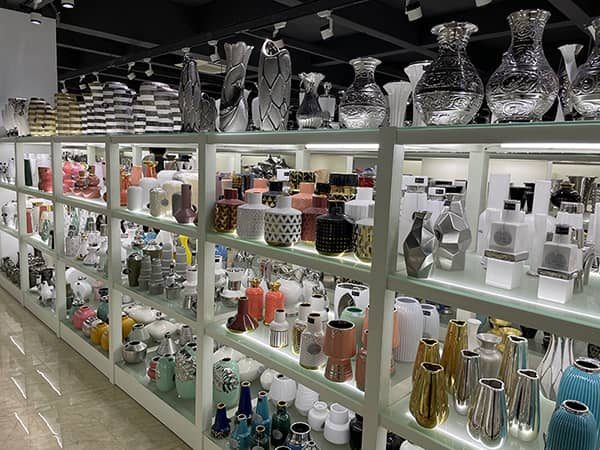
Don’t buy “China.” Buy a system.
A home decor exporter in China can ship you product.
A reorder-ready exporter can protect your margin—by keeping quality stable, packaging retail-safe, and reorders consistent.
In an era where returns are massive and customer expectations are unforgiving, the exporter that wins with chain retail isn’t the one with the biggest catalog.
It’s the one who can deliver the same outcome—again and again.



