
The Accent Chair That Sells Fast Can Still Be a Sourcing Mistake
I can spot a “floor hero” from twenty feet away.
It’s the upholstered accent chair customers walk over to without being invited. The chair they touch first. The one they sit in even when there’s a perfectly good sofa display right beside it.
And for a buyer? That moment is both exciting and terrifying.
Because an accent chair doesn’t just have to look great on day one—it has to keep looking great after weeks of customer traffic, survive parcel shipping and store transfers, meet flammability expectations, and come back on reorder the same way it won the first time.
So when I search upholstered accent chair supplier, I’m not shopping for a pretty product.
I’m shopping for a supplier who can protect my margin after the trend hits.
Why Buyers Keep Betting on Accent Chairs (Even When We’re Nervous)
Accent chairs are a reliable “yes” category because they sit right at the intersection of:
-
quick visual transformation (instant room upgrade),
-
manageable ticket price (compared to sofas),
-
easy merchandising (one chair can anchor a whole vignette).
And the broader furniture market keeps expanding, which means more brands, more assortments, and more pressure on buyers to source winners that can scale.
But that same pressure is why we get picky about suppliers. A fast-moving category punishes inconsistency.
The Buyer’s Pain Points (What We Don’t Put in the Email)
Here’s the part most supplier decks skip:
1) “The sample was perfect… the bulk wasn’t.”
The first shipment arrives and suddenly:
-
the fabric hand-feel is slightly different,
-
the color reads warmer/cooler under store lighting,
-
the cushion crown sits lower,
-
the stitching tension changes just enough to show puckering.
It’s not catastrophic. It’s worse: it’s subtly wrong, and subtle issues quietly become returns.
2) Upholstery fails in public, not in the studio
Accent chairs are high-touch. People drag sleeves across arms, sit sideways, test the backrest, grab the seat edge to stand up. Fabric that looks amazing in photos can pill, snag, or “shine” quickly.
3) Damage is a packaging problem disguised as a product problem
Most accent chair damage isn’t “manufacturing defect.” It’s corner crush, leg scuff, abrasion inside the carton, or compression marks that don’t bounce back.
4) Compliance and labeling delays can ruin a season
If labeling or flammability expectations aren’t handled correctly, your goods can get stuck at the worst possible time. The cost isn’t just money—it’s missed floor sets.
My Checklist: What I Ask Any Upholstered Accent Chair Supplier Before I Commit
1) “What fabric performance are you building to?”
If you want to speak buyer-language, don’t just say “durable.”
Bring a reference point buyers recognize. ACT (Association for Contract Textiles) publishes voluntary abrasion guidelines that many spec teams use as a baseline: for woven/knit upholstery, 15,000 Wyzenbeek double rubs is often cited for lower-traffic applications, while 30,000 double rubs / 40,000 Martindale cycles are cited for high-traffic/public environments.
I’m not demanding every retail chair be “contract furniture,” but I am looking for:
-
a clear durability story,
-
test data that aligns with the chair’s intended use,
-
and honest guidance (what it’s good for, what it’s not).
2) “Are you set up for U.S. upholstered furniture flammability expectations and labeling?”
A lot of U.S. programs reference California TB117-2013 for smolder resistance in materials used in upholstered furniture.
On top of that, the U.S. CPSC’s upholstered furniture flammability rule (16 CFR Part 1640) includes a permanent label statement: “Complies with U.S. CPSC requirements for upholstered furniture flammability.”
If a supplier can proactively handle this conversation (materials, documentation mindset, correct label language), it signals operational maturity.
3) “How are you controlling comfort consistency?”
This is where returns get expensive.
Comfort isn’t just “soft vs firm.” It’s repeatable geometry:
-
seat height and depth,
-
back angle,
-
foam density/ILD consistency,
-
support webbing/spring choice,
-
arm height relative to table vignettes.
A supplier who can lock these specs and keep them stable across production runs is the difference between a one-time buy and a program.
4) “Show me your ‘sample-to-bulk’ control points.”
I want to see how you prevent drift:
-
approved golden sample stored and referenced,
-
fabric lot control (especially for textured weaves),
-
sewing patterns and seam allowances standardized,
-
QC checkpoints at upholstery, assembly, and final pack-out.
If the answer is “our workers are experienced,” that’s not a system.
5) “What’s your packaging standard—and have you designed for real shipping hazards?”
ISTA describes its 3-Series as general simulation tests meant to reproduce damage-producing motions and forces in transport environments.
Even if you’re not running formal ISTA testing on every SKU, I want to hear an ISTA-like mindset:
-
corner protection designed for drops,
-
abrasion barriers where fabric touches carton,
-
leg/foot protection to prevent scuff-through,
-
carton strength matched to weight and handling realities.
Because if your packaging can’t survive transit, your product can’t scale.
Trend Timing: Upholstery Moves Fast (So Suppliers Must Be Faster)
Textures rise and fall quickly. Bouclé has been everywhere, and design voices are already pushing toward longer-lasting alternatives like wool blends, mohair, and textured linens as tastes evolve into 2026.
That matters to buyers because it changes what we want from an upholstered accent chair supplier:
-
not just “what’s trending,”
-
but what can be refreshed without breaking the program.
The best suppliers help buyers pivot:
-
keep the silhouette,
-
update the fabric story,
-
maintain the packaging + QC foundation,
-
preserve reorder continuity.
What “Retail-Ready” Looks Like (From a Buyer’s Side)
If you want more purchase orders—and not just a one-off test—build your offer like a retail system:
-
A tight assortment: 2–3 silhouettes that cover multiple store stories (modern, transitional, cozy texture)
-
Fabric options that are spec-able: with abrasion references buyers can use
-
Compliance clarity: TB117-2013 awareness + 16 CFR 1640 label statement readiness
-
Packaging discipline: designed for the transport realities ISTA simulates
-
Reorder logic: stable lead times, realistic MOQs, and a plan to prevent “version drift”
That’s how you become a true upholstered accent chair supplier—not just a factory with a nice catalog.
Where Teruier Fits (Buyer-Simple)
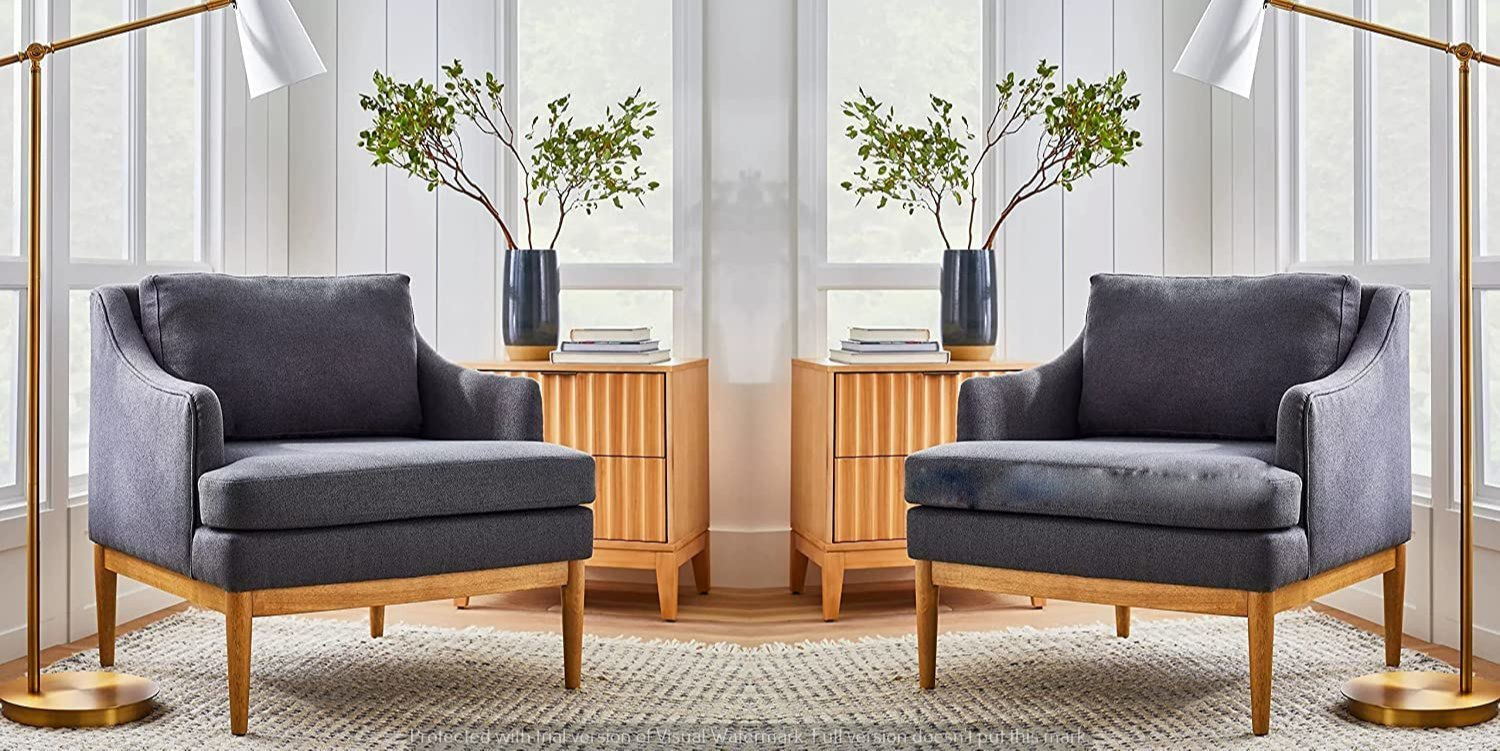
Teruier supports buyers who need an upholstered accent chair supplier that can take a chair from “showroom perfect” to “reorder safe”—with controlled specs, clear performance language, and packaging discipline built for real-world shipping.
The Bottom Line
A great accent chair wins attention.
A great supplier wins the reorder.
So if you’re pitching me your upholstered accent chair line, here’s the question I care about most:
“How do you keep the second shipment as good as the first—when the chair has already proven it can sell?”
Answer that with systems (not adjectives), and you’re not just selling seating.
You’re selling confidence.



