
The Shearling Ottoman Looks “Easy.” Until You Try to Reorder It.
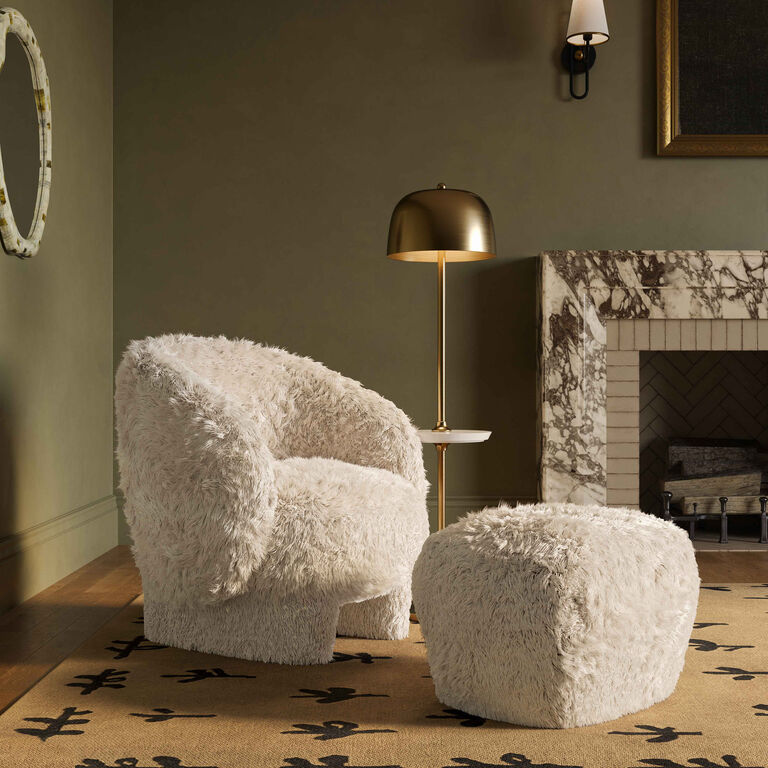
I’ll admit it: the first time I saw a shearling ottoman on a showroom floor, I thought, Finally—an effortless add-on item. It photographs like a dream, it softens a hard-lined living room set, and it’s the kind of “touch me” texture shoppers can’t resist.
Then I tried to run it as a real retail program.
That’s when the problems show up—the ones buyers don’t post on Pinterest:
-
the fabric that pills after a month of customer traffic
-
the “cream” that shifts warmer (or colder) between production lots
-
the carton that arrives fine… until the last-mile carrier drops it once
-
the reorder that comes back almost the same, which is the most dangerous kind of different
So if you’re searching shearling ottoman wholesale, here’s what I’m actually looking for as a U.S. home décor mall buyer:
Not a cute fuzzy cube. A reorderable, shippable, spec-controlled SKU.
Why Shearling Ottomans Are Having a Moment (and Why That’s Not Enough)
Design editors and designers have been calling out shearling/sheepskin as a major décor texture—especially as a “next step” after bouclé saturation (notably in early 2025 and into 2026).
And ottomans themselves remain a category buyers lean on because they’re true multitaskers—extra seat, footrest, styling anchor—without requiring a full furniture commitment.
But trend + versatility doesn’t guarantee success at wholesale.
My job is to make sure the trend survives the supply chain.
The Buyer Reality: What I’m Measured On
A shearling ottoman can be a hero item… or a quiet margin leak.
I’m accountable for:
-
returns (fabric shedding, pilling, “looks dirty” complaints)
-
damage rate (compressed corners, torn upholstery, scuffed legs)
-
in-stock + OTIF (if it hits on TikTok, can you replenish?)
-
consistency (sets/collections fail when color or texture drifts)
And yes—the market is growing and competitive. Home décor and furniture are big, fast-moving categories with increasing pressure on reliability and speed.
What I Ask a Shearling Ottoman Wholesale Supplier (Before I Fall in Love)
1) “Show me the fabric performance—don’t just call it ‘soft.’”
Shearling / sherpa textures are high-touch. That means abrasion and appearance retention matter.
If you want to speak “buyer,” bring performance references buyers recognize—like ACT’s abrasion guidance:
-
15,000 double rubs (Wyzenbeek) / 20,000 cycles (Martindale) for lower-traffic use
-
30,000 double rubs / 40,000 cycles for higher-traffic use
I’m not saying every ottoman needs contract-grade specs—but I am saying: tell me what it’s built to handle.
2) “What’s your plan for pilling and matting?”
This is the #1 silent killer for fuzzy upholstery. The sample looks plush; the floor model looks tired.
I want to hear specifics:
-
fiber content (and why)
-
brushing/finishing process
-
cleaning guidance I can actually hand to store staff
3) “Is it compliant for U.S. upholstered furniture expectations?”
Even when the ottoman is “small,” it’s still upholstered furniture in many retail contexts.
California TB117-2013 is a common reference point because it targets smolder resistance in upholstered furniture material systems.
If you already design to that standard (or can support customers who require it), say it clearly.
4) “Can your packaging survive reality?”
Ottomans look sturdy—until a corner gets crushed or a leg punches through a carton.
This is where serious suppliers talk about transit simulation. ISTA describes its 3-Series as tests designed to simulate transport hazards (drops, vibration, handling sequences).
When a vendor tells me, “We pack well,” I translate it to:
“Do you pack to a standard that reduces damage and complaints?”
5) “What makes the reorder match the first PO?”
This is the line between a one-time buy and a long-term vendor.
For shearling ottoman wholesale, reorder control usually comes down to:
-
locked dye lots / color standards
-
repeatable pile height + hand-feel targets
-
a master reference sample that production actually follows
-
consistent leg finish + hardware
If you can’t control “soft goods variance,” you’ll lose the program right when it starts winning.
The Four Shearling Ottoman Styles That Actually Move (In My Experience)
-
Small cube / stool (impulse-friendly)
Easy add-on to living room, bedroom, closet seating. -
Sweetheart / sculpted silhouette (statement texture)
The shape does half the merchandising for you—great for endcaps. -
Bench ottoman (higher ticket, higher risk)
Bigger packaging challenges; demands stronger transit protection. -
Mixed-material (shearling + wood/metal)
Feels elevated, but needs tighter QC at join points.
(Trade publications have spotlighted shearling ottoman/stool styles from major brands—proof the look is commercially viable, not just “Instagram décor.”)
If You Want Buyers to Say Yes: Give Us a “Program,” Not a Product
Here’s the mindset shift that wins wholesale accounts:
Don’t pitch one ottoman. Pitch a repeatable assortment.
A buyer-friendly shearling ottoman wholesale program includes:
-
2–3 best-selling silhouettes
-
coordinated colorways that don’t drift
-
clear carton specs + drop-test mindset
-
lead times you can hit during peak season
-
reorder MOQs that don’t punish winners
Because when a shearling ottoman hits, it doesn’t just sell—it becomes the texture cue for an entire story (mirrors, accent tables, soft lighting, neutral ceramics).
Teruier supports shearling ottoman wholesale as a reorder-ready program—built around fabric performance clarity, packaging discipline, and production consistency that holds up beyond the sample.
The Bottom Line
A shearling ottoman is supposed to feel cozy.
But for a buyer, the real comfort is this:
I can place it, ship it, and reorder it—with confidence.
If your wholesale offer can prove that (with test language buyers recognize, compliant material thinking, and ISTA-ready packaging discipline), you won’t just win a PO.
You’ll win the reset—and the replenishment.



