
Best Materials for a Jeweled Mirror: What Actually Looks Premium in the Gulf (And What Becomes a Headache)
A jeweled mirror can be the easiest “instant luxury” product in your collection—especially for Dubai, Abu Dhabi, Riyadh, Jeddah, Doha.
But the same category can also create the fastest regret:
-
stones fall off in shipping
-
surfaces scratch during cleaning
-
the shine turns cloudy
-
the piece looks “cheap bling” instead of luxury home decor
So here’s the buyer-friendly truth:
The material choice is the product.
Not the shape. Not the photo.
This guide breaks down the most common jeweled mirror materials—how they look, how they age, and what Gulf buyers actually prefer in Middle East interior design.
The “Gulf Reality” Test: Light + Cleaning + Shipping
Before we talk materials, remember the Gulf environment:
-
warm interior lighting (mirrors are seen at night)
-
frequent cleaning (sometimes daily)
-
high expectations for finish consistency
-
shipping with multiple handling steps
So the best luxury wall mirror materials are the ones that:
-
catch light beautifully,
-
don’t trap dust,
-
can survive export packaging.
Now let’s compare.
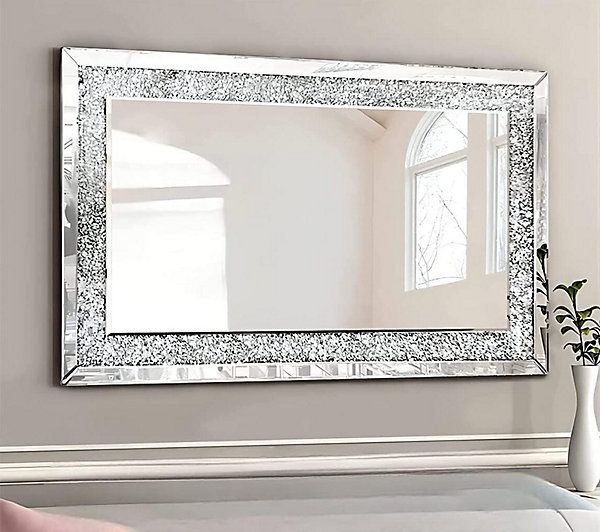
1) Crystal-Look Pieces: The “Wow Sparkle” Choice
What it looks like
High sparkle, high glamour—perfect for statement entrances.
Best for
-
entry / foyer hero pieces
-
stair landing highlights
-
boutique hospitality corners
What buyers must watch
-
the setting method (how each piece is fixed)
-
edge protection in packaging
-
cleaning access (avoid deep grooves that trap dust)
Gulf styling tip: If you use crystal, keep the rest of the frame calm. One sparkle moment is enough for luxury home decor.
2) Mother of Pearl: The “Quiet Luxury” Favorite
This one is a Gulf winner when done right.
What it looks like
Soft glow, not loud shine. It reads expensive under warm LEDs.
Best for
-
modern villas
-
majlis spaces that want elegance, not flash
-
premium bedrooms and dining areas
Why it performs well in the Gulf
Mother of pearl is one of the few jeweled materials that looks rich even in daylight and doesn’t feel “bling.”
If you want a jeweled mirror that stays tasteful in Middle East interior design—this is a top choice.
3) Glass Inlay / Mosaic: The “Clean Modern” Approach
What it looks like
Controlled shimmer. Modern, minimal, easy to integrate.
Best for
-
contemporary Dubai apartments
-
retail collections where you need consistency
-
projects that require repeatable batches
What buyers must watch
-
uniformity between pieces
-
edge finishing quality
-
scratch resistance and top coating
Glass inlay is often the easiest to scale without losing the luxury feel—great for mirror wall decor collections.
4) Resin “Gem” Details: The Budget Trap (Unless It’s Done Smart)
Resin can look good in photos, but it’s risky in real life.
What it looks like
Can imitate crystal or stone, but often looks “too perfect” or plastic if poorly made.
Best for
-
entry-level collections (only)
-
SKUs where price is the main driver
What buyers must watch
-
yellowing over time
-
scratches from wiping
-
heat and cleaning chemical sensitivity
If your positioning is luxury wall mirror, be careful with resin.
It can damage brand perception.
5) Natural Stone Pieces: Premium, But Heavy and High-Risk
Stone inlay can be beautiful—very “heritage luxury”—but it brings weight and shipping complexity.
What it looks like
Deep, natural variation. Feels expensive and artisanal.
Best for
-
one hero SKU (Best tier)
-
traditional-meets-modern villas
-
clients who want “real materials”
What buyers must watch
-
weight and mounting requirements
-
breakage risk
-
batch variation (stone is never identical)
Stone works best when used sparingly—small accents, not full coverage.
The Smart Buyer Move: Pick the Material Based on the Room
Here’s a simple way to sell it in Gulf markets:
Entry / Foyer
-
crystal-look or controlled glass inlay (high wow)
Majlis
-
mother of pearl or subtle glass inlay (quiet luxury)
Dining / Sideboard
-
mother of pearl + warm metal tones (premium at night)
Bedroom
-
soft glow materials (mother of pearl) > sparkle
This makes the jeweled mirror feel “designed for the space,” not randomly decorative.
How We Keep Jeweled Mirrors Premium and Reorder-Ready
Jeweled mirrors are a detail product. If details fail, the whole product fails.
Teruier’s approach is built around a cross-border design-to-manufacturing workflow:
-
define where sparkle goes—and where it stays quiet
-
choose materials that match Gulf lighting and lifestyle
-
lock fixing methods (so pieces don’t loosen)
-
engineer export packaging to protect edges and inlay zones
-
QC checkpoints focused on durability + clean finishing
And our base in Fuzhou gives us the craft ecosystem to execute this properly:
-
artisans for precise edge finishing
-
stable materials supply chains for consistent inlay tone
-
craft techniques to keep surfaces smooth, sealed, and cleanable
So your luxury wall mirror stays premium after shipping, cleaning, and daily use—exactly what Gulf buyers expect in luxury home decor.
Buyer Spec Checklist
If you want accurate quotes, send this:
-
Product: jeweled mirror / luxury wall mirror
-
Size: ____ × ____ cm
-
Inlay material: crystal-look / mother of pearl / glass / stone
-
Inlay coverage: edge / corners / points (choose one)
-
Frame finish: champagne gold / antique brass / warm bronze
-
Durability: secure fixing method + sealed surfaces
-
Mounting: hardware included
-
Packaging: export-grade edge + corner protection
-
Qty: sample + bulk
-
Delivery: FOB / CIF / DDP
Wrap-Up: In the Gulf, “Luxury” Is a Material Decision
A jeweled mirror becomes true luxury home decor when:
-
the material glows under warm lighting
-
it stays clean and elegant
-
it ships safely
-
it doesn’t age badly
For UAE and Saudi, the safest premium winners are:
-
mother of pearl (quiet luxury)
-
glass inlay (modern consistency)
…and crystal-look accents when you want a hero “wow.”
That’s how you build mirror wall decor that sells and stays premium in Middle East interior design.



