
Contract Manufacturing Home Decor: The Most Expensive Contract Is the One You Didn’t Write
The sample looked perfect.
The photos were clean.
The buyer meeting went great.
Then the shipment arrived—and suddenly you’re negotiating the real contract:
returns, damage claims, finish drift, remake timelines, and who pays for the “almost the same” reorder.
If you’ve ever been stuck explaining why a reorder doesn’t match the first run (or why a “small” damage rate turned into a pile of replacements), you already know this:
In home décor, contract manufacturing isn’t about making a product once. It’s about making the same product again—on schedule—without margin leakage.
That matters more than ever because returns are a profit killer at industry scale. National Retail Federation and Happy Returns projected total retail returns to reach $890B in 2024, with retailers estimating 16.9% of annual sales would be returned.
So when someone searches “contract manufacturing home decor,” they’re not really shopping a factory.
They’re shopping a system that prevents three expensive surprises:
-
“Approved sample” ≠ “approved bulk.”
-
Packaging that photographs well ≠ packaging that survives shipping.
-
A trend SKU ≠ a reorderable profit SKU.
What “good” contract manufacturing looks like when you’re the one on the hook
Let’s be honest about the real world:
You’re the person who gets pinged when the finish reads too warm under store lighting.
You’re the person who gets blamed when the glass arrives chipped.
You’re the person who has to explain why Room 112 doesn’t match Room 113.
So “quality” can’t be a vibe. It has to be a repeatable process.
That’s why serious contract manufacturers talk like this:
Quality is a system, not a promise
International Organization for Standardization describes ISO 9001 as a globally recognized quality management standard whose requirements define how to establish, implement, maintain, and continually improve a quality management system.
You don’t need a supplier to throw certificates at you.
You need them to behave like a QMS-led operation: controlled inputs, consistent checkpoints, documented corrections.
Packaging is part of product engineering
International Safe Transit Association’s procedures (including Procedure 3A) are designed to test individual packaged-products shipped through parcel systems and reflect common distribution hazards.
Translation: in home décor, packaging is margin control. If the packaging fails, your “perfect design” becomes a return statistic.
Trend doesn’t matter if you can’t reorder it
You can chase trends, but the winners are the teams who convert trends into stable, repeatable SKUs. Pinterest’s Pinterest Predicts 2026 calls out “Neo Deco”—bold geometry, fan arches, chevrons—signals that can absolutely translate into frames, mirrors, and sculptural décor.
The point isn’t “follow Pinterest.”
The point is: your factory must be able to translate trend intent into buildable specs and keep it consistent at scale.
The 3 ways contract manufacturing usually goes wrong
Most buyers/designers have tried some version of these routes:
1) Quote-broker / trading layer
Fast quotes. Endless options.
But the spec becomes a “telephone game,” and accountability gets fuzzy when drift shows up.
2) Commodity factory
Great price and capacity.
But they’re optimized for throughput, not for your undertone tolerances, your packaging survival rates, and your reorder matching rules.
3) “Custom workshop” that can’t scale
Beautiful sample craftsmanship.
Then you discover lead times, consistency, and reorders are fragile.
None of these are automatically “bad.”
They’re just not built for what the market punishes hardest: inconsistency at scale.
Where Teruier fits: value translation + “merchant profit plan”
Teruier isn’t positioned as “a factory with a catalog.” We’re positioned as a cross-border coordination hub—a value translator between what buyers/designers intend and what production can repeat.
And our root matters: we’re anchored in the craft supply base of Fuzhou’s “工艺品之乡” ecosystem—where the advantage is not one skill, but a stack: artisan labor, material sourcing, and process know-how working together.
In plain English, the Teruier model is:
trend intent → spec pack → QC checkpoints → packaging discipline → reorder governance
That becomes the “Merchant Profit Plan” in practice:
-
fewer returns and damage claims (packaging + QC discipline)
-
fewer “close enough” reorders (spec lock + tolerance rules)
-
faster scaling without quality drift (process control, not heroics)
What to demand from any contract manufacturing home decor partner
If you only remember one thing from this article, make it this:
You’re not buying production. You’re buying control.
Here are three deliverables that separate “sample makers” from true contract manufacturers:
1) A spec pack that locks the outcome
Not just dimensions—also:
-
finish undertone reference
-
material substitutions policy (what can change, what can’t)
-
master reference retention for reorders
2) QC checkpoints that happen before packing
If “QC” only happens at the end, you’ll discover problems when it’s already expensive.
3) Packaging that’s designed to survive distribution
Ask how they think about distribution hazards and packaging validation (the ISTA mindset).
Because in home décor, a broken corner isn’t just a broken corner—it’s a return, a replacement, and a timeline hit.
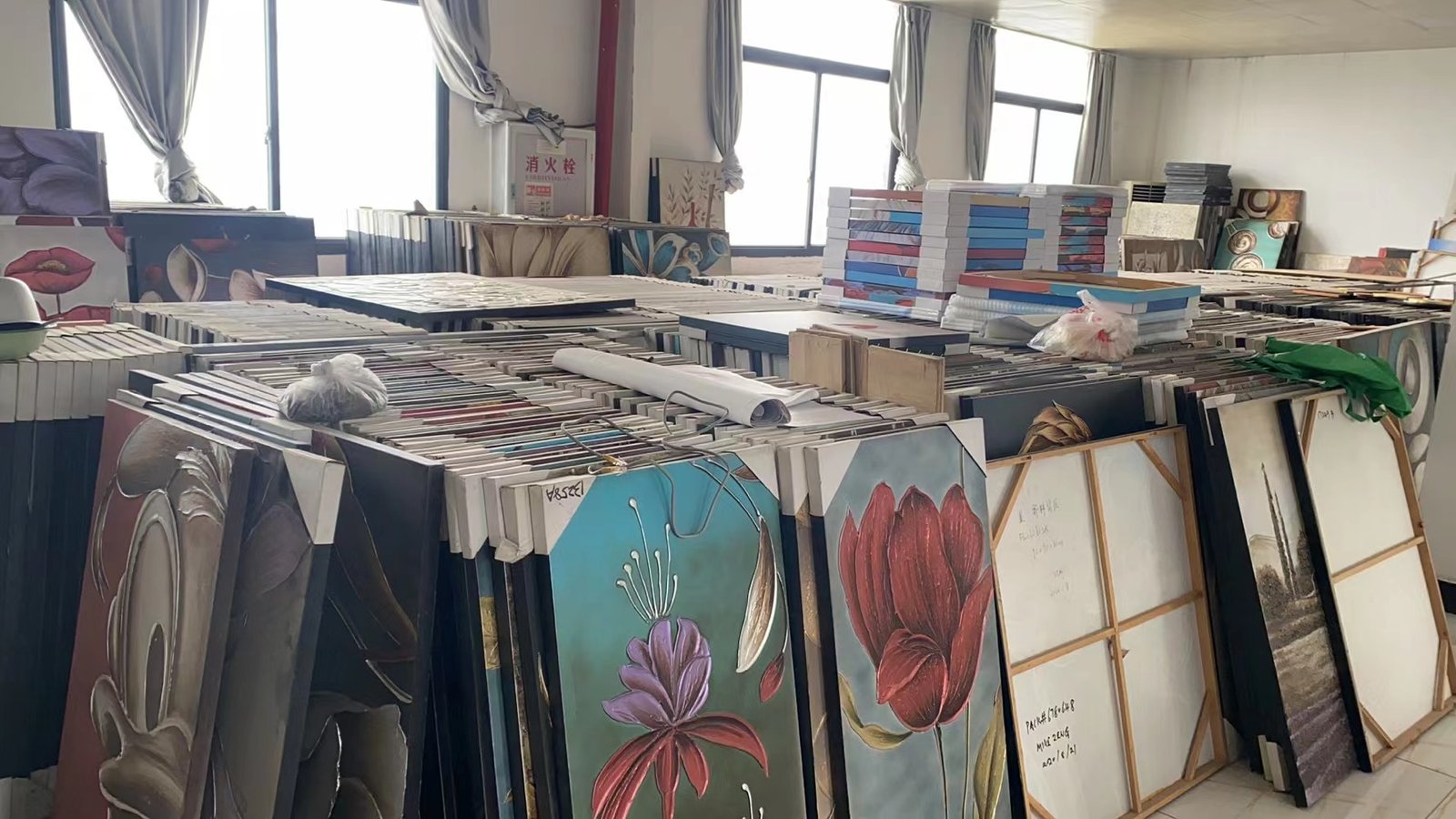
contract manufacturing that scales feels boring behind the scenes
The front-end should feel inspiring: trend-right, photogenic, retail-ready.
The back-end should feel boring: controlled specs, visible checkpoints, packaging discipline, stable reorders.
That’s the difference between “we can make it” and “we can scale it.”