
In a community home décor store, the best sellers share one trait: customers don’t need a long explanation. They touch it, they “get it,” and they can picture it at home immediately.
That’s why the square ottoman category is such a reliable floor performer—and why two specific styles keep winning across small-format retail: square shearling ottoman wholesale for high-touch conversion, and cube ottoman for retailers for easy styling and repeatable replenishment.
Here’s the one-line positioning that matters for community store owners (because it’s about a repeatable sales outcome, not a seasonal trend):
A touch-first ottoman program that converts fast on the floor and reorders clean—pairing shearling texture with cube-shaped consistency.
Why square shearling ottomans convert so well in community stores
Shearling-style texture sells with almost no signage. It photographs soft, but more importantly, it feels soft. That creates the exact behavior community stores rely on: customers stop, touch, and spend a little longer in your vignette.
When you carry square shearling ottoman wholesale, you’re not just adding a seat. You’re adding:
-
a “touch moment” that increases dwell time
-
a cozy texture that upgrades basic room sets
-
an easy add-on purchase that doesn’t require measuring a whole room
-
a giftable, apartment-friendly hero item
Because it’s square and compact, customers also understand where it fits: under a console, at the foot of a bed, next to a lounge chair, or in a kids’ room corner.
Why cube ottomans are the low-risk, high-reorder backbone
If shearling is your “hero,” the cube shape is your “backbone.”
A cube ottoman for retailers wins because it’s predictable:
-
easy to display in pairs or stacks
-
works in multiple room styles (modern, cozy, minimalist)
-
easy to explain (seat, footrest, styling block)
-
easy to replenish without changing your floor story
For community stores, consistency matters more than variety. You want the next shipment to match the first—same height, same firmness, same finish tone—so you can keep the same display and just restock.
The customer profile behind these two best sellers
A community store serves a very specific kind of shopper: someone who wants their home to feel “finished,” but doesn’t want a complex buying process.
Region (where community stores thrive)
Community stores tend to serve neighborhoods and local shoppers—where word-of-mouth and repeat visits matter more than one-time foot traffic.
Customer (who buys it)
-
apartment renters and first-home shoppers
-
young families looking for soft, flexible seating
-
style-driven buyers who want cozy texture without a full furniture purchase
-
gift buyers looking for “safe” décor that feels premium
Group tendencies (who it skews toward)
These ottomans skew toward customers who buy with their hands as much as their eyes. If it feels good and looks clean, they buy. If the texture sheds, flattens, or looks inconsistent, they return.
Price band (spending power)
Square ottomans sell best in value-to-mid tiers—where the customer wants an “upgrade feeling” without a big-ticket price.
Use scenarios (where it ends up)
Entryway seating, living room flex seating, bedroom foot piece, vanity seat, kids’ room comfort corner—plus your own in-store vignettes where shoppers copy the look.
The real margin killer: when reorders don’t match
Community stores don’t lose money because an ottoman doesn’t sell. They lose money when:
-
the second shipment looks “slightly different” on the floor
-
shearling pile changes and the hand-feel drifts
-
foam firmness varies and customers notice
-
corners crush or fabric scuffs in transit
-
returns spike because expectations weren’t met
That’s why your supplier system matters as much as the style.
Why our craft-hub foundation supports repeatable restocks
Teruier is built from a manufacturing craft hub in the Fuzhou region—an area shaped by long-standing craft culture and modern home décor production capacity. For community stores, the advantage isn’t a story; it’s stability.
That stability comes from three coordinated supply chains:
-
Artisans (people): upholstery finishing discipline, seam alignment, tactile consistency checks
-
Materials: stable access to fabrics, foam, wood structures, and packaging materials
-
Process: repeatable workflows that prevent drift after sampling
We also stay connected with US and EU designers who track trend direction, so “cozy textures” aren’t treated as a one-time trend—they’re translated into buildable, repeatable SKUs.
A simple buying checklist before you restock
Before you scale your ottoman category, confirm:
-
Can the supplier keep shearling texture pile and hand-feel consistent across batches?
-
Are foam density and structure locked for repeat runs?
-
Do reorders match in height, firmness, and finish tone?
-
Is packaging designed to prevent corner crush and surface scuffing?
-
Can you replenish quickly without changing your floor set?
If the answer is yes, you’ve found a category you can run all year—not just one season.
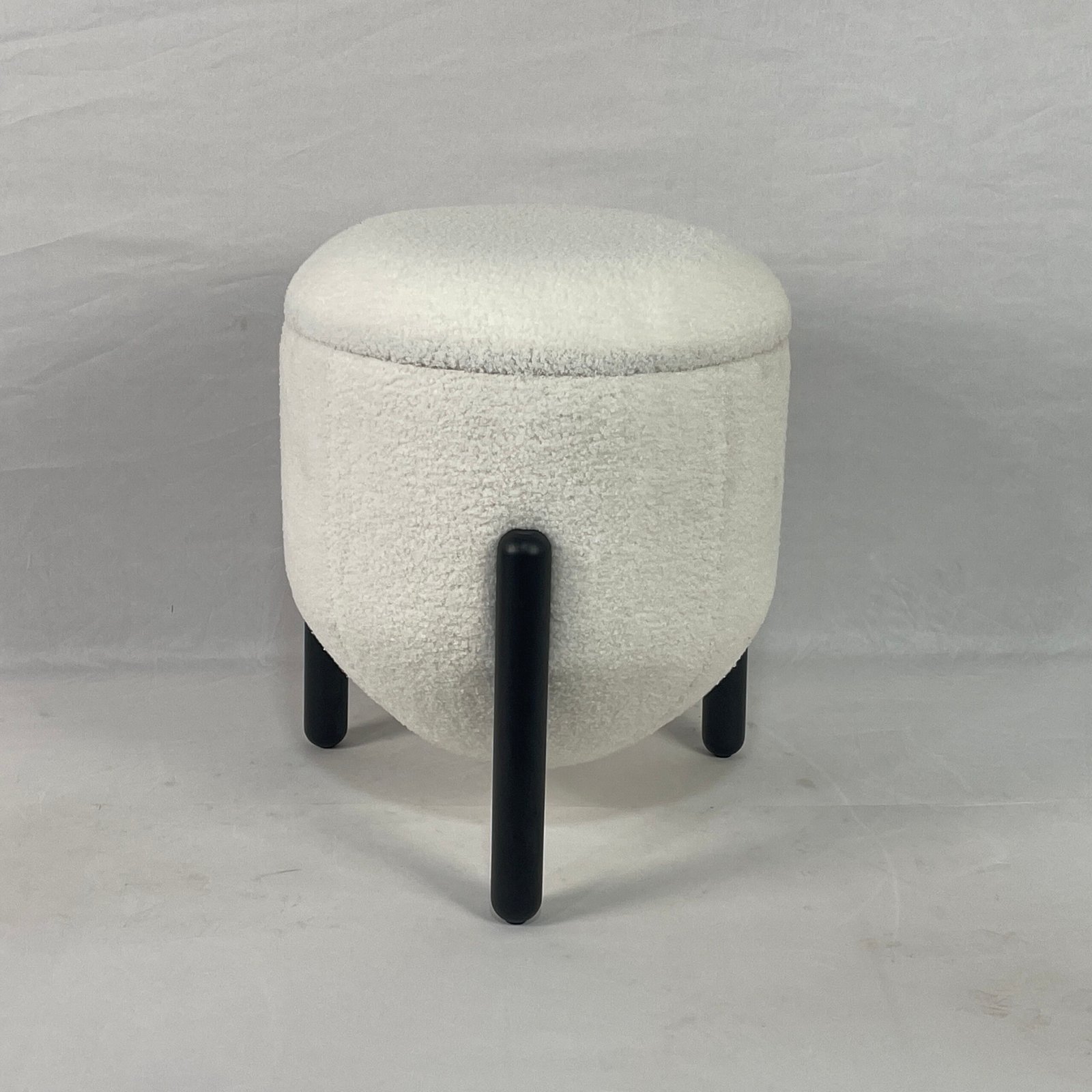
one hero, one backbone, one repeatable program
For community home décor stores, the most profitable floor sets are simple: one hero item that converts instantly, and one backbone item that reorders effortlessly.
That’s exactly what you get when you pair square shearling ottoman wholesale with a dependable cube ottoman for retailers assortment—touch-first selling, clean styling, and replenishment that doesn’t drift.



