
Hospitality buying is different from home retail. Your customer doesn’t “own” the piece—they experience it, repeatedly, at scale. That means every ottoman, every mirror, and every finish choice has to do two jobs at once: look premium on day one, and stay operational after thousands of touches.
That’s why buyers who follow hotel lobby design trends are no longer chasing décor alone. They’re building repeatable programs: textures that photograph well, seating that survives traffic, and bathroom specs that feel modern without maintenance headaches.
Here’s the one-line positioning that matters in hospitality procurement (because it describes a system, not a mood board):
A boutique hotel program that pairs lobby-ready seating with spec-stable mirrors—built for repeat projects with a Saudi-aligned supply approach.
What hotel lobby design trends are really rewarding right now
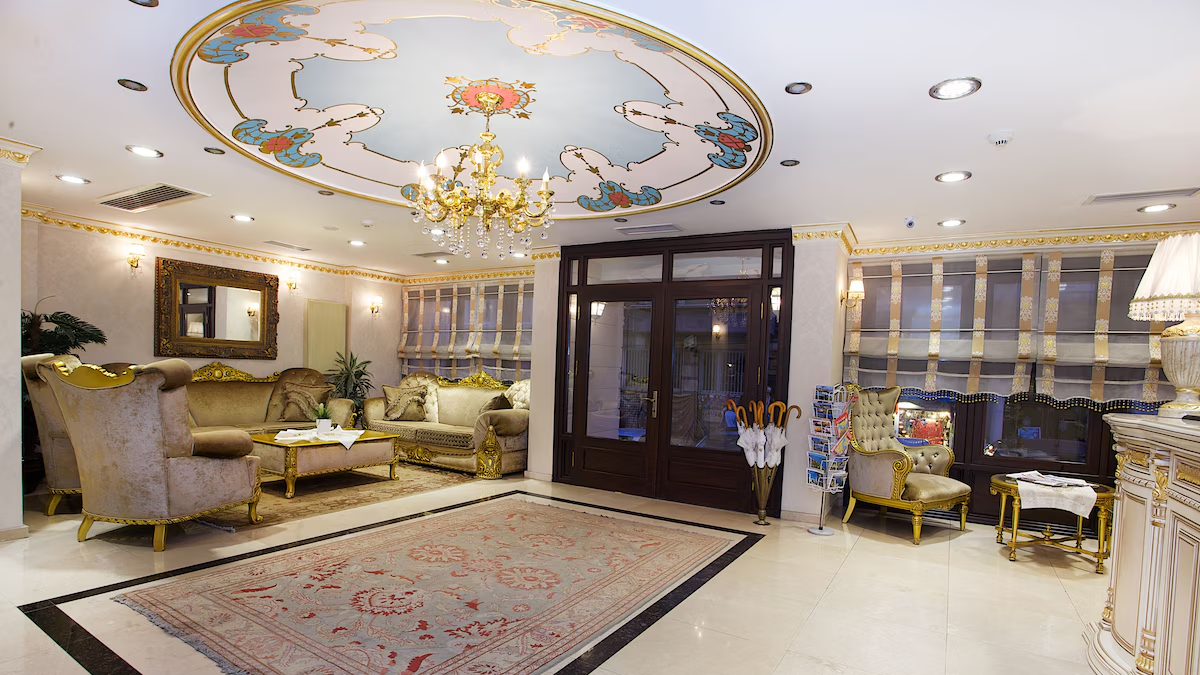
Lobby design is moving toward “quiet spectacle”—spaces that feel curated without feeling fragile. Buyers are looking for:
-
tactile materials that invite touch (bouclé, shearling-style textures, soft leathers)
-
sculptural but simple silhouettes that age well
-
layered lighting and reflective moments that make the space feel larger
-
flexible seating that can be rearranged without breaking the look
This is where a boutique hotel ottoman earns its keep. It’s compact, movable, and visually powerful. It can soften a lounge zone, complete a seating cluster, and create a “designed” feeling without adding bulky furniture.
But the ottoman only works if it holds up—especially in lobbies where guests sit briefly, move it, rest luggage on it, and treat it like a utility object.
The buyer profile behind boutique hotel programs
Even when you’re buying for hospitality, the end user profile still matters—because it changes wear patterns and expectation levels.
Region (where the project operates)
In GCC projects—especially Saudi—buyers often expect premium finishes, tighter consistency, and strong packaging discipline. Replacement cycles also matter: you need products that can be reordered to match, not just replaced “close enough.”
Customer (who uses it)
-
hotel guests who judge quality instantly
-
staff teams who need pieces that are easy to maintain
-
owners/operators who care about long-run brand consistency across properties
Group tendencies (how guests behave)
High-touch behavior is the norm: sitting for a minute, shifting pieces, leaning bags, taking photos, and moving through the lobby constantly.
Price band (investment level)
Boutique hospitality typically lives in the mid-to-premium band: it must feel elevated, but procurement still requires operational discipline and predictable replacement costs.
Use scenarios (where it lives)
Lobby lounges, waiting areas, corridor seating pockets, suite sitting corners, and “photo moment” zones—places where style is visible and wear is unavoidable.
The takeaway for buyers is simple: design is only half the spec. Durability and repeatability are the other half.
Boutique hotel ottoman: what to spec so it survives traffic
A boutique hotel ottoman should be chosen like a high-touch commercial product, not a residential accent. In practice, that means:
-
stable internal structure (frame integrity matters more than you think)
-
upholstery that resists flattening at edges
-
stitching discipline that doesn’t loosen over time
-
finishes that stay consistent under warm lobby lighting
-
packaging strong enough to arrive clean—because “damage at receiving” becomes delay on-site
When an ottoman is sourced without these standards, you don’t just get wear. You get unevenness—pieces that look slightly different across the lobby, which visually cheapens the space.
The other half of the lobby story: bathrooms that feel modern and clean
In hospitality, bathrooms are where brand promise becomes real. Guests notice the mirror, lighting, and fog behavior immediately. That’s why many GCC projects prioritize mirrors as a “performance spec,” not just a decorative choice.
A dependable hotel bathroom mirror supplier Saudi Arabia is valuable because it aligns with how projects are actually executed: clear compliance expectations, stable delivery planning, and the need for consistent replacement over time.
In practice, buyers sourcing mirrors for Saudi hospitality programs tend to prioritize:
-
stable lighting tone and diffusion (if backlit)
-
fog-resistant performance that works in real humidity
-
clean finishing and safe mounting standards
-
packaging that prevents corner damage and surface scratching
-
reorder consistency across multiple properties or phases
And just like lobby seating, the mirror spec only works if it can be repeated without drift.
Why “craft hub” manufacturing matters in hospitality repeat runs
Teruier is built from a manufacturing craft hub in the Fuzhou region—an area shaped by long-standing craft culture and modern home décor production capacity. In hospitality, the practical advantage isn’t the story; it’s the system.
A stable program depends on three coordinated supply chains:
-
Artisans (people): finishing discipline, edge and upholstery detail control
-
Materials: stable access to metals, glass, upholstery materials, and protective packaging
-
Process: repeatable workflows that prevent drift across batches and project phases
Add ongoing collaboration with US and EU designers who track trend movement, and the result is a supplier approach that can translate “what looks premium now” into “what can be delivered consistently for the next project.”
A buyer’s checklist before committing to a boutique program
If you’re aligning hotel lobby design trends with procurement reality, ask these questions before you lock a PO:
For ottomans:
-
What structural standards prevent loosening over time?
-
How do you control upholstery consistency across reorders?
-
What packaging prevents compression and scuffing in transit?
For mirrors:
-
What specs ensure consistent finish and safe mounting?
-
How is fog resistance validated?
-
Can replacements match the original shipment cleanly?
If the supplier can’t answer clearly, the risk shows up later—on site, under deadline.
trend-forward is easy—repeatable is rare
Anyone can build a lobby mood board. The real win is building a program you can roll out again—across properties, phases, and replacement cycles—without quality drift.
That’s why the strongest hospitality assortments connect the dots: a boutique hotel ottoman that holds up under traffic, a lobby concept shaped by real hotel lobby design trends, and bathroom specs anchored by a dependable hotel bathroom mirror supplier Saudi Arabia.



