
Interior designers don’t just specify mirrors—they specify outcomes. In a bathroom, that outcome is brutally practical: flattering light, clear reflection after a hot shower, and a product that still looks premium six months later.
That’s why the demand for an anti-fog bathroom mirror keeps climbing, and why more projects are shifting toward a bathroom mirror with lights as the baseline rather than the upgrade. But the real designer problem isn’t finding a feature list. It’s getting the same feature set, finish quality, and packaging discipline—again and again—across multiple projects and reorder cycles.
Here’s the positioning that matters (because it describes a system, not a slogan):
Reorder-ready bathroom mirrors that pair lighting + anti-fog performance with stable production—delivered through a wholesale manufacturing network designers can trust.
Why lighting + anti-fog has become the “new default” in bathroom specs
Bathrooms are where small performance misses become daily annoyances. Poor lighting makes the room feel cheaper. Fogging destroys usability. And inconsistent mirror finishes or LED color temperature drift can quietly ruin a carefully planned palette.
Designers are increasingly specifying:
-
reliable illumination (consistent LED tone and diffusion)
-
fog-free performance that works in real humidity
-
clean edges, stable glass quality, and packaging that prevents transit damage
That’s why “feature mirrors” are no longer niche. They’re becoming standard, especially in projects where the bathroom is a selling point—boutique hospitality, premium residential, and show-home installs.
The buyer profile behind your mirror decisions (and what your supplier should be built for)
Even if you’re an interior designer, your sourcing is influenced by who the end buyer is and where the product will live. A supplier worth keeping can recognize these “tags” without you explaining them.
Region (where projects happen)
-
North America: fast lead times, strong preference for clean modern silhouettes, consistent lighting temperature
-
Middle East: premium finish expectations, durability, and strong packaging protection
-
Europe: higher sensitivity to materials, reflection quality, and craftsmanship details
Customer (who uses it)
-
residential homeowners who care about daily usability
-
hospitality operators who care about durability and replacement speed
-
retail collaborators like a community home decor store, where showroom presentation and repeatable reorders matter equally
Group tendencies (who the space is for)
-
families: durability and easy maintenance
-
young professionals: modern lighting, minimal frames, “smart” usability
-
premium buyers: perfect finish, stable performance, and tight tolerances
Price band (spending power)
-
value: feature-first but must still feel premium
-
mid-tier: better glass, better LED consistency, better QC
-
premium: tighter tolerances, cleaner finishing, higher reliability standards
Use scenarios (where it’s installed)
-
master baths, guest baths, hotel suites, serviced apartments, sample rooms, retail vignettes for seasonal displays
Once you see these tags clearly, the sourcing requirement becomes obvious: you don’t just need a mirror—you need repeatable production and predictable delivery.
Seasonal merchandising: the mirror is now part of the “refresh calendar”
Designers and retail partners plan more like merchandisers than ever. Bathrooms have their own trend cycles—minimal black frames, warm metals, soft arch shapes, clean LED perimeter, and “hotel-feel” upgrades.
That’s where seasonal merchandising enters the picture. If you support a community home decor store with curated sets, or you’re styling model homes that refresh quarterly, the ability to reorder the same SKU (with consistent finish and LED tone) becomes a revenue and reputation lever.
The constraint isn’t creativity—it’s supply stability. A mirror that can’t be reordered cleanly becomes a one-time moment, not a scalable design language.
Why a wholesale manufacturing network beats a single factory relationship
Many suppliers can make a sample. Fewer can scale a line. The difference is whether you’re sourcing from a single production point—or from a coordinated wholesale manufacturing network that can maintain consistent standards across capacity changes.
A strong network approach gives designers what they actually need:
-
stable specs that don’t drift when volume changes
-
consistent QC checkpoints across batches
-
packaging standards that match real transit
-
lead-time flexibility without quality collapse
This is where Teruier’s foundation matters. We operate from a craft manufacturing hub in the Fuzhou region—an area shaped by long-standing craft culture and modern home décor capabilities. That “craft hub” advantage isn’t just history; it’s an organized backbone of three supply chains working together:
-
Artisans (people): finishing discipline, edge-work precision, detail control
-
Materials: stable access to glass, lighting components, hardware, packaging systems
-
Process: repeatable workflows that prevent quality drift across batches
And because we stay connected with US and EU designers—people close to consumer behavior and trend movement—we’re not just producing what’s popular. We’re translating what’s popular into buildable specs that can survive real scale.
What to verify before you commit a bathroom mirror with lights to a project
If you want fewer surprises, check for system capability—not just a catalog.
Ask your supplier:
-
Can you keep LED color temperature consistent across reorders?
-
How is anti-fog performance validated under real humidity?
-
What are your edge-finishing and glass consistency standards?
-
How is packaging engineered to prevent corner damage and surface scratching?
-
Can you support seasonal refresh cycles without spec drift?
If a supplier answers vaguely, you’re buying risk.
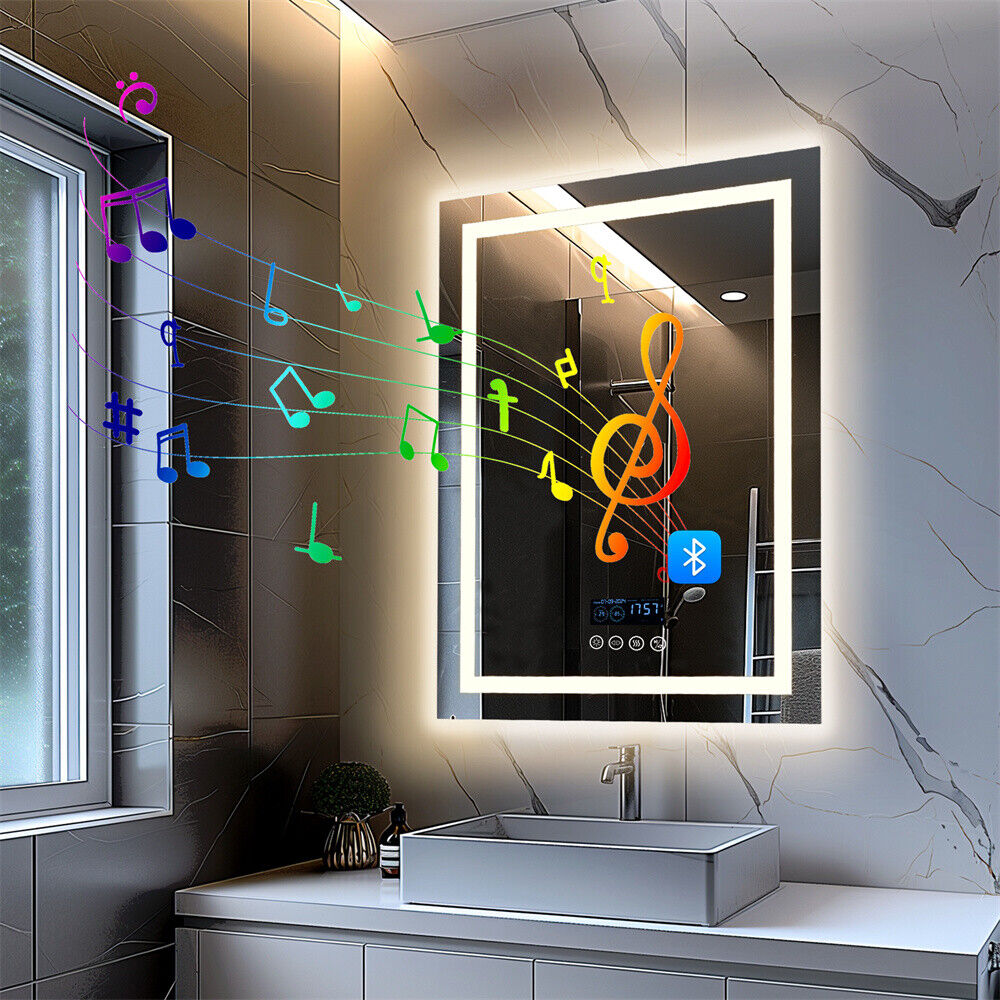
designers don’t need more options—they need repeatability
A great bathroom mirror isn’t just a product. It’s a promise that the next unit will match the first. That’s why an anti-fog bathroom mirror paired with dependable lighting is now a designer staple—and why choosing a supplier built on a reliable wholesale manufacturing network matters more than ever.
When your mirror program can scale, your design language scales—across projects, across reorders, and across seasonal shifts.
And that’s how you turn “one great install” into a repeatable standard.



