
The Ottoman Category That Actually Reorders (Not Just Samples Well)
If you’re a selection manager, buyer, or designer, you already know the ottoman trap: the sample looks perfect, the floor set looks good for a month, and then returns start coming in—fabric rubbing, corners crushed, seams drifting, or the “same” color not matching the next batch.
That’s why the best ottoman programs aren’t built on luck. They’re built on repeatability: a reliable ottoman supplier, clean merchandising logic for ottoman wholesale, and ottoman packaging that treats upholstery like a finish—not like a commodity.
Retail-ready ottomans, built to reorder.
Who you’re really selecting for (the buyer picture that shapes the assortment)
A strong ottoman range should quietly match the real shopper profile:
-
Region: U.S./EU retail floors and e-commerce, plus GCC and design-led boutique channels that follow the same texture trends
-
Customers: chain buyers, off-price teams, marketplace sellers, interior designers, and project specifiers
-
End users: apartment furnishers, families upgrading living rooms, and style-driven shoppers building “Instagram-ready” corners
-
Group tendency: soft furnishings and accent pieces often skew toward women 25–44 for purchase influence, while larger ottomans also appeal strongly to couples furnishing homes
-
Price band: good–better–best ladders; “better” usually wins when texture feels premium but performance stays low-claim
-
Use scenarios: living room extra seating, bedroom end-of-bed styling, entryway perch, vanity chair, reading nook, and occasional footrest
When your assortment matches these use cases, sell-through becomes predictable instead of seasonal luck.
Ottoman Stool: The Low-Risk Volume Driver
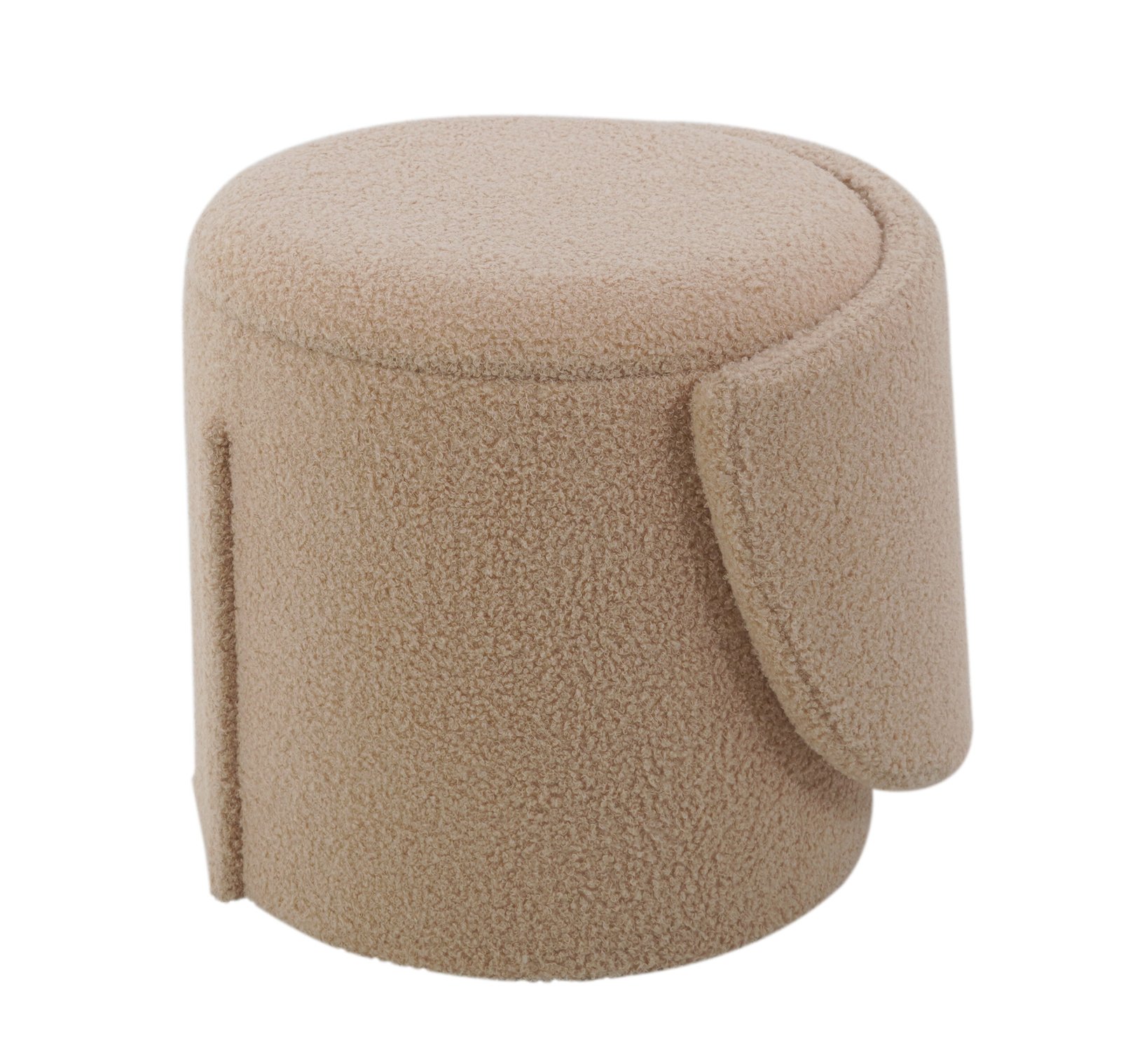
The ottoman stool is the quiet hero of the category: it fits small spaces, ships easier than benches, and works across multiple rooms.
For buyers, it’s also the easiest SKU to standardize because:
-
size is consistent
-
usage is flexible
-
price bands can ladder cleanly
-
it’s planogram-friendly for both stores and online listings
If you’re building an ottoman wholesale program, the stool is often the anchor.
Bouclé Ottoman: The Texture That Sells (and the Risk You Must Manage)
The boucle ottoman keeps winning because it looks warm, premium, and “designer” without needing additional décor.
But bouclé has two built-in risks:
-
it shows abrasion and snagging quickly if packaging is sloppy
-
it amplifies seam and panel alignment issues (because texture highlights mistakes)
So bouclé is less about “trend” and more about “process.” The supplier has to control workmanship, fabric handling, and packaging protection—or the returns will erase the margin.
The Ottoman Supplier Question Buyers Should Actually Ask
Most people ask “Can you do this style?”
A better question is: Can you do it again, the same way, six months from now?
A reliable ottoman supplier should be able to prove:
-
stable fabric sourcing (same hand-feel and color lots)
-
consistent stitching, piping, and panel alignment
-
predictable foam density and inner structure
-
repeatable QC checkpoints tied to real return reasons
-
packaging that prevents dust, rub marks, and corner crush
That’s how an ottoman supplier becomes a program partner—not just a sample maker.
Ottoman Packaging: Where Claims Are Created (or prevented)
For upholstery, ottoman packaging is not a shipping detail—it’s part of product quality.
Good packaging does three jobs:
-
Protect the fabric surface (no rub marks, no dust contamination, no plastic sticking issues)
-
Prevent corner crush and frame deformation (compression happens in real logistics)
-
Keep the shape stable (so the ottoman arrives looking “full,” not tired)
The easiest buyer win is often packaging upgrades—because fewer claims = higher realized profit.
Ottoman Wholesale: Build a Clean Assortment, Not a Random Mix
For ottoman wholesale, the best assortments usually follow a simple ladder:
-
Good: compact ottoman stool in a clean woven fabric
-
Better: bouclé ottoman with stronger structure and premium hand-feel
-
Best: statement piece (shape upgrade, leg detail, special texture) with higher margin
Keep the silhouette family consistent so customers can choose by price and texture—not get confused by totally different shapes.
This is where reorders happen: clarity + consistency.
Where Teruier fits naturally
The difference between “nice samples” and “reorderable ottomans” is coordination: fabric sourcing, workmanship discipline, QC checkpoints, and packaging engineering working as one system.
Teruier’s advantage is rooted in the Fuzhou craft hub (Hometown of handicrafts), supported by three mature supply chains—craftsmen, materials, process—and strengthened by European/American designer collaboration so the silhouettes stay trend-right while remaining production-stable.
And the local craft heritage around Fuzhou—often associated with traditions like bodiless lacquerware, oil-paper umbrellas, and horn combs—shows up in the modern work that matters: finishing discipline, detail control, and a culture of “make it consistent, not just pretty.”
Trend-to-shelf ottomans, built to reorder.
The Ottoman Program That Sells and Stays Clean in Transit
If you want an ottoman line that doesn’t turn into claims, keep the formula simple:
-
anchor the range with a strong ottoman stool
-
add a premium texture hero like the boucle ottoman
-
choose an ottoman supplier who can repeat quality, not just show samples
-
treat ottoman packaging as margin protection
-
build ottoman wholesale assortments with a clear good–better–best ladder
That’s how your ottomans sell fast—and reorder even faster.



