Islamic Geometric Mirror Design Guide: How to Choose a Mashrabiya Mirror That Feels Modern (Not Overdone)
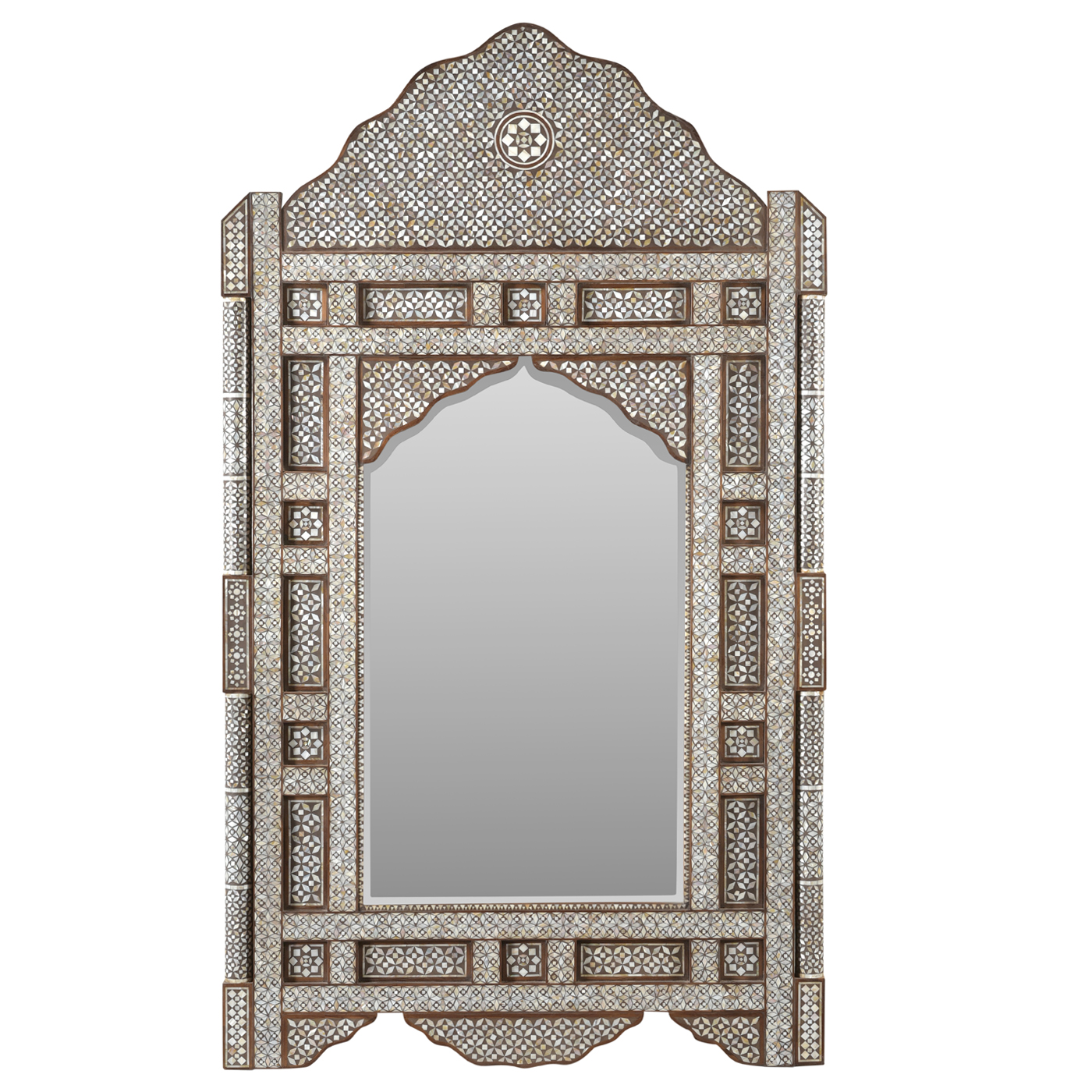
In the Gulf—Dubai, Abu Dhabi, Riyadh, Jeddah, Doha—everyone loves the identity of an Islamic geometric mirror. But at the same time, people want homes that feel clean, bright, and modern.
So the real question buyers ask isn’t “Do we use mashrabiya?”
It’s:
How do we use a mashrabiya mirror in a modern way—so it looks luxury, not heavy?
This article is a practical guide for choosing a mashrabiya mirror that fits today’s Middle East interior design—and still feels premium in luxury home decor.
1) The Modern Mashrabiya Rule: Let the Geometry Breathe
Many mashrabiya designs look amazing up close, then look “too busy” in a real room.
A modern Islamic geometric mirror should be readable from:
-
2–3 meters away (in an entry or majlis)
-
without turning into visual noise
The simple trick: pattern density
-
Light density = modern, calm, expensive
-
Heavy density = traditional, bold, sometimes overwhelming
If you’re unsure, always request two samples:
-
one “light geometry”
-
one “medium geometry”
For UAE and Saudi interiors, the “light geometry” option often wins.
2) Choose the Right Finish: Warm Metals Beat Shiny Metals
In luxury home decor, the finish decides if your geometric mirror feels premium or cheap.
Best finishes for a modern mashrabiya mirror
-
brushed bronze
-
antique brass
-
champagne gold
-
matte black with warm highlights
Avoid in most modern Gulf homes
-
very shiny bright gold
-
high-gloss finishes that show fingerprints
-
flat yellow tones that look mass-produced
In Middle East interior design, warm muted metals look richer because they work with:
-
cream/sand palettes
-
marble and travertine
-
walnut wood
-
warm lighting
3) Size Rules: Bigger Is Better—But Only With the Right Proportion
A common mistake is choosing a mirror that’s too small.
Geometric frames need space to “perform.”
For entry walls
-
mirror height should feel “architectural,” not decorative
-
tall mirrors tend to look more premium than wide mirrors
For majlis
-
use one hero piece (large) instead of many small pieces
-
keep the design calm so it doesn’t fight with textiles and lighting
For dining/sideboard
-
width should relate to the furniture below
-
geometric detail should stay readable, not crowded
A modern wall mirror should feel like part of the architecture, not like wall art.
4) The Frame Profile: Modern = Clean Edges, Not Too Many Layers
You can keep the Islamic identity without adding extra ornaments.
A modern Islamic geometric mirror usually has:
-
a clean outer frame
-
geometry detail as the hero (not extra curls)
-
crisp corner finishing
-
stable thickness so it looks engineered
If the frame has too many decorative layers, it leans traditional fast.
5) The “Luxury Test” Gulf Designers Use (Very Simple)
Before approving a mashrabiya mirror, do this:
Put it into a minimal room in your mind.
Cream wall. Soft lighting. Simple sofa. Clean floor.
If it still looks expensive—perfect.
If it looks too loud—reduce the pattern density or soften the finish.
This test is used a lot for UAE and Saudi villas because modern luxury is about calm confidence.
Why Our Mashrabiya Mirrors Stay Modern and Repeatable
A mashrabiya mirror looks simple, but it’s tricky to execute:
-
geometry must stay crisp
-
finish must be consistent across batches
-
packaging must protect detailed edges
-
the final piece must feel “clean,” not rough
Teruier’s advantage is a cross-border design workflow that turns Gulf taste into production details—pattern density control, proportions, finishes, and packaging.
And our base in Fuzhou matters. It’s a real crafts region with deep history and a strong ecosystem:
-
artisans who understand detail finishing
-
materials supply chains that keep tone stable
-
craft techniques that keep edges clean, textures controlled, and coatings durable
So your mashrabiya mirror doesn’t just look good in one sample—it stays consistent when you reorder.
Buyer RFQ Checklist (Copy-Paste Ready)
If you want accurate quotes and fewer mistakes, send this:
-
Product: Islamic geometric mirror / mashrabiya mirror
-
Size: ____ × ____ cm (or inches)
-
Pattern density: light / medium
-
Finish: brushed bronze / antique brass / champagne gold / matte black
-
Frame profile: clean edge, minimal layers
-
Glass: standard / safety option (if needed)
-
Mounting: vertical/horizontal + hardware included
-
Packaging: export-grade, corner + edge protection
-
Qty: sample + bulk
-
Delivery: FOB / CIF / DDP
Wrap-Up: Modern Mashrabiya Is About Balance
The best Islamic geometric mirror for today’s Gulf interiors is not the most complicated one.
It’s the one that:
-
lets geometry breathe
-
uses warm, muted finishes
-
respects proportion
-
feels architectural and premium in real rooms
That’s the modern mashrabiya look across UAE, Saudi, and Qatar—and it’s exactly why this style keeps winning in Middle East interior design and luxury home decor.