The quiet power move: showing the materials, not just the product
Most suppliers walk into a style review with finished pieces and a pitch.
We show up differently.
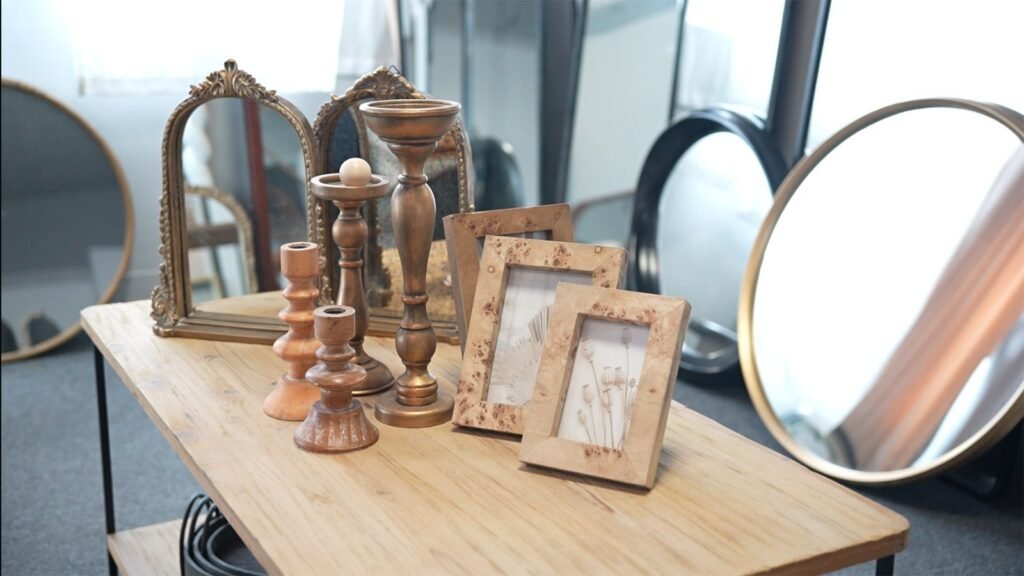
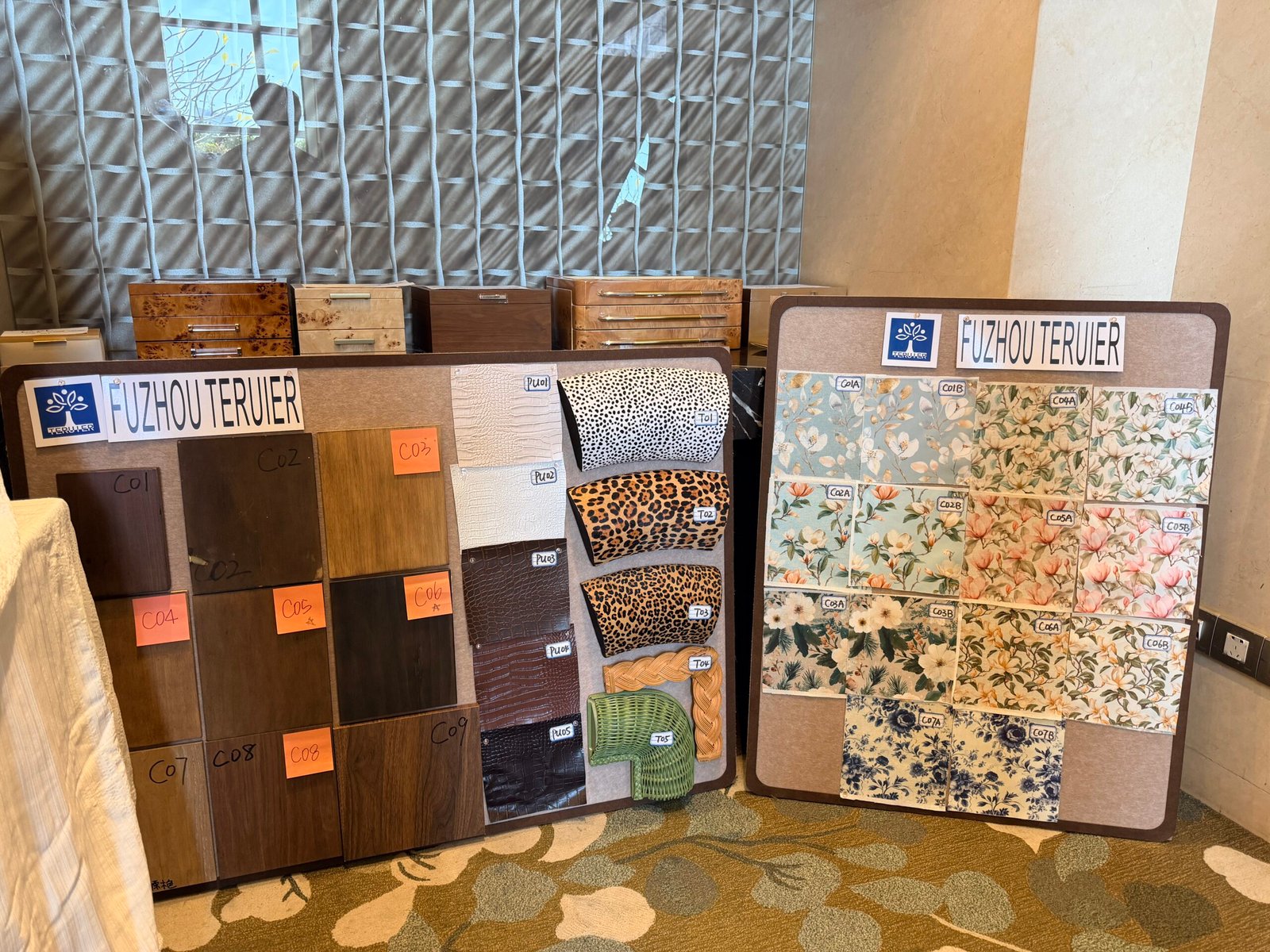
Alongside the mirrors, we bring what buyers and sourcing teams actually need to make confident decisions fast: a materials library—wood tones, textures, prints, and surface options laid out side-by-side, labeled, and ready for real comparisons.
It’s a small detail that signals something big: we’re not only a wholesale mirror supplier—we operate like a mirror manufacturer that’s ready to scale decisions into stable production.
What the material boards really say (and why buyers care)
That photo of the “FUZHOU TERUIER” boards looks simple at first glance—just swatches.
But it’s actually a snapshot of program readiness:
-
Wood/veneer directions with clear tone differences
-
Texture and grain options you can compare in one look
-
Pattern families (prints/florals) grouped for quick selection
-
Labeled codes so “this one” doesn’t turn into confusion later
For custom mirrors, this is the difference between “nice idea” and “locked decision.”
And for any wholesale mirror supplier, it’s how you prevent the most common sourcing pain: the sample looked right… but the bulk didn’t.
Capability #1: A strong materials supply chain (not a one-off sourcing trick)
Anyone can find a material once. The real test is: can you find it again, match it, and keep it stable?
A reliable materials supply chain means:
-
repeatable access to the same material families
-
stable color/texture control across batches
-
quick substitutions when a material goes tight (without changing the look)
-
documentation that keeps decisions clean
That’s what serious retail programs need from a mirror manufacturer—because retail doesn’t run on “maybe.”
Capability #2: Buyers don’t just get samples—they get side-by-side material comparisons
Finished samples can be deceptive: lighting changes, angles change, and the human brain fills in gaps.
Material boards remove the guessing.
When retail teams can compare materials side-by-side, they can:
-
choose faster
-
communicate clearer
-
reduce back-and-forth
-
and protect sample-to-bulk consistency
That’s especially important for custom mirrors, where the surface story is the product story.
A wholesale mirror supplier that brings material comparisons is basically saying:
“We’re here to make decisions easier—not harder.”
Capability #3: “Craft hometown intelligence” you can’t copy overnight
Here’s where our differentiation goes deeper than a catalog.
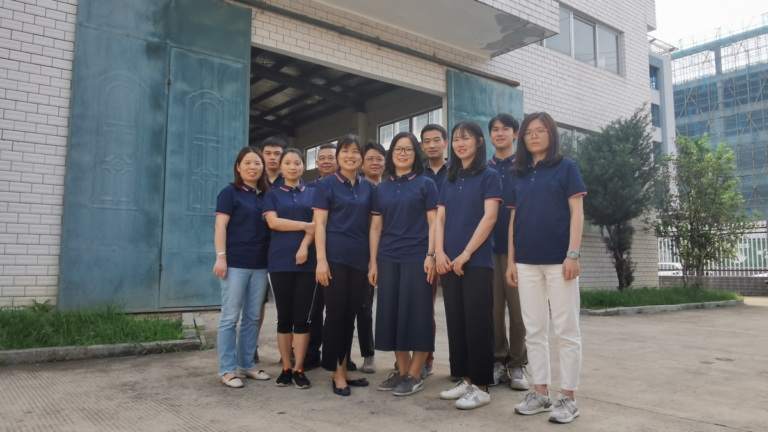
Teruier is built around a Fuzhou craft hometown—a manufacturing ecosystem shaped by generations of decorative craftsmanship. People often reference Fuzhou’s historic craft culture—like bodiless lacquerware, oil-paper umbrellas, and horn combs—not because we’re selling those items today, but because they represent a regional mindset: detail, discipline, and respect for finish.
In practical terms, that means we don’t rely on one supply chain. We operate with three layers working together:
-
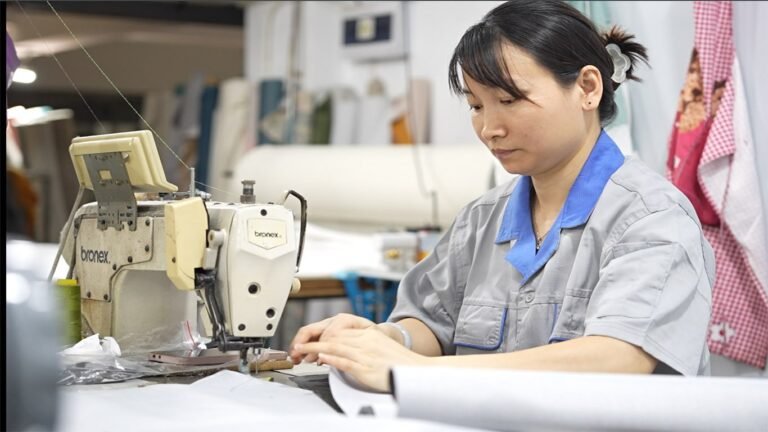
Artisan supply chain (the makers who understand detail and finish discipline)
-
Materials supply chain (stable access + repeatability)
-
Process supply chain (how finishes are applied, protected, and standardized)
This is why our materials library isn’t random swatches. It’s a structured system—built to support custom mirrors that stay consistent when production scales.
Where Western designers fit (and why it makes the materials library more valuable)
We collaborate with European and American designers to stay close to real taste shifts—what’s showing up in homes, retail floors, and design conversations.
But design direction is only half the job.
The other half is translating that direction into:
-
material choices that are repeatable
-
surfaces that can be controlled
-
and specs that protect sample-to-bulk consistency
That’s the bridge a good mirror manufacturer provides—turning “inspiration” into a stable program a wholesale mirror supplier can actually deliver.
the real product is clarity after the meeting
A style review is fast. Decisions get made in moments.
So the hidden value we try to deliver isn’t just “new looks.” It’s clarity:
-
clearer choices
-
clearer communication
-
cleaner follow-ups
-
fewer misunderstandings later
That’s why we show materials, not just finished pieces. For custom mirrors, the material decision is the decision.
And when the materials supply chain is strong, everything downstream gets calmer—costing, timing, QC, and reorders.
Wrap-up (and what’s next)
This materials library is our way of showing how we think: not as “a vendor with samples,” but as a wholesale mirror supplier backed by a real mirror manufacturer system—rooted in a Fuzhou craft hometown, supported by a disciplined materials supply chain, and guided by market-facing design insight.
Next in the series: we’ll break down how we turn these material boards into finished, reorder-ready mirrors—how we lock specs, manage finish control, and protect sample-to-bulk consistency when a style moves from “review” to “real program.”