
Middle Eastern Home Decor: A Smart “Reference Market” for Amazon Selection Managers
Let’s clear up the goal upfront:
If you’re an Amazon selection manager, “Middle Eastern home decor” doesn’t have to mean you’re launching a separate, hyper-niche line tomorrow.
Most of the time, it’s more useful as reference value—a way to read trend direction, spot design cues early, and upgrade your assortment system in the U.S. marketplace.
Think of it like this:
The Middle East is one of the best regions in the world for high-contrast interiors—bold metals, warm golds, geometric patterning, and statement pieces that look expensive fast.
That makes it a powerful trend signal source for categories like mirrors, wall decor, lighting-adjacent items, and “entryway moment” products.
So the question isn’t “How do I sell Arabic style on Amazon?”
The question is:
“What signals from Middle Eastern home decor can I translate into Amazon-ready products that U.S. shoppers will actually buy?”
1) Start With What Travels Well (and What Doesn’t)
Not every regional aesthetic travels.
What usually does travel well:
-
Warm metallics (gold, bronze, antique brass looks)
-
Geometric patterning (clean, repeatable, modern)
-
Statement silhouettes (arched mirrors, oversized rounds, bold frames)
-
“Looks premium in photos” surfaces (texture that reads on a screen)
What usually doesn’t travel well on Amazon U.S.:
-
super intricate handwork that spikes breakage/variance
-
designs that require cultural context to “get”
-
overly niche motifs that shrink your keyword demand
So as Amazon product selection, your job is to extract the “high-demand, high-compatibility” parts.
This is why you treat Middle Eastern home decor as trend reference:
you’re mining it for scalable signals, not copying it literally.
2) Translate Style into Amazon Search Language (Yes, Keywords Matter)
Here’s the thing: Amazon doesn’t rank “vibe.”
Amazon ranks what people type.
So you’re basically translating design signals into searchable value.
Middle Eastern-inspired cues often map into U.S. shopper language like:
-
“gold wall mirror”
-
“arched mirror”
-
“antique brass mirror”
-
“modern geometric mirror”
-
“entryway wall mirror”
Notice what I’m doing:
I’m not saying “Mashrabiya” or “Islamic motif” as the main label, because that can be low-volume and higher friction.
You can still use those references in A+ content or imagery themes—but your selection decision should be tied to higher-volume phrases.
And since you want keyword repetition across your content cluster, we’ll keep anchoring back to the same five:
Middle Eastern home decor, Amazon product selection, Amazon assortment strategy, mirror trend direction 2026, Amazon-ready mirror collection.
3) Use Middle East Trends to Upgrade Your Assortment Strategy (Not Just Add a SKU)
Here’s how I’d use these signals inside an Amazon assortment strategy:
Lane A: “Warm Metal Upgrade”
-
Your standard black-frame series is stable
-
Add 1–2 warm-metal options (gold/bronze) as “Better/Best”
-
Keep the same family look (don’t introduce chaos)
Lane B: “Statement Shape”
-
Add arch or oversized round as the hero click magnet
-
Support it with size variations so it’s not a one-off
Lane C: “Pattern as Texture, Not Complexity”
-
Use geometric cues as subtle texture or edge detail
-
Avoid ultra-detailed fragile overlays that raise return risk
That’s how you turn reference into system.
This is the difference between:
“Cool Middle East mirror”
vs.
“Amazon-ready mirror collection built from trend direction 2026 signals.”
4) The Execution Reality Check (This Is Where Most People Lose Money)
Middle Eastern-inspired decor often leans into:
-
metallic finishes
-
ornate edges
-
layered textures
Which looks amazing… and can be risky at scale.
So your selection brain has to ask:
-
Can this finish be consistent across batches?
-
Will it scratch easily?
-
Can packaging protect those edges?
-
Can we explain the finish so customers don’t say “not like photos”?
This is where a strong cross-border workflow matters (without using jargon):
design and trend inspiration can’t live separate from production constraints and delivery reality.
You want a process where:
design choices → production methods → QC checks → packaging standards → listing content
are aligned from day one.
This is one reason suppliers like Teruier can be useful even at the “reference” stage. They’re used to taking trend cues from overseas buyers and turning them into buildable series—with consistent finishes, stable specs, and packaging that survives cross-border shipping. That kind of connected workflow keeps you from falling in love with a design that can’t scale.
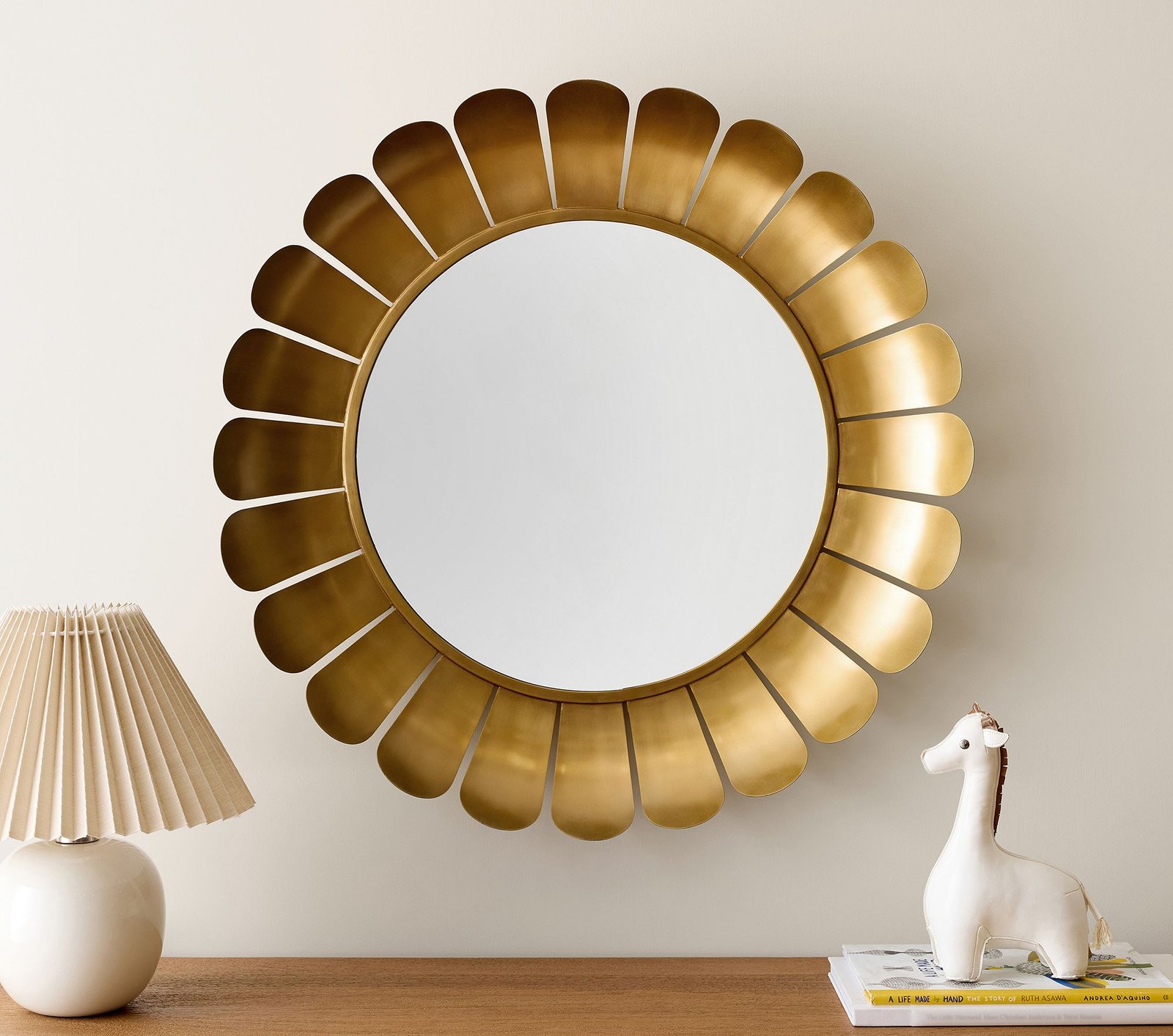
5) What to Capture as “Reference Notes” (If You’re Not Launching Yet)
If you’re treating this as reference value, don’t overcomplicate it.
Capture:
-
3–5 finish directions (gold leaf look, bronze, antique brass, matte warm metal)
-
2–3 shape directions (arched, oversized round, thin-frame rectangle)
-
2–3 “texture cues” (geometric edge detail, subtle patterning, layered rim)
-
3 execution risks (scratch, oxidation, breakage points)
-
3 listing needs (photo angles, finish explanation, scale proof)
Then bring it back to your Amazon product selection system:
Where does this fit in Good/Better/Best?
What sizes do we need to make it a real line?
What’s the “Amazon-ready mirror collection” version of this idea?
Wrap: Middle Eastern Home Decor Is a Trend Radar—Use It to Build Better Systems
If you treat Middle Eastern home decor as a trend reference market, it becomes incredibly useful.
Not because you’re copying motifs.
But because you’re extracting signals that upgrade:
-
your mirror trend direction 2026 reads,
-
your Amazon assortment strategy,
-
and the “premium look” options inside your Amazon-ready mirror collection.
And if you pair that with a supplier who can connect design inspiration to manufacturing discipline and packaging reality (instead of just selling you samples), you’ll make smarter calls—without taking unnecessary risk.



