If you’re making Amazon selection decisions from China, I’m going to say the quiet part out loud:
Your biggest advantage isn’t cost.
Your biggest advantage is speed + control.
And your biggest risk isn’t “competition.”
Your biggest risk is execution drift—the product you thought you launched isn’t the product customers actually receive, review, and return.
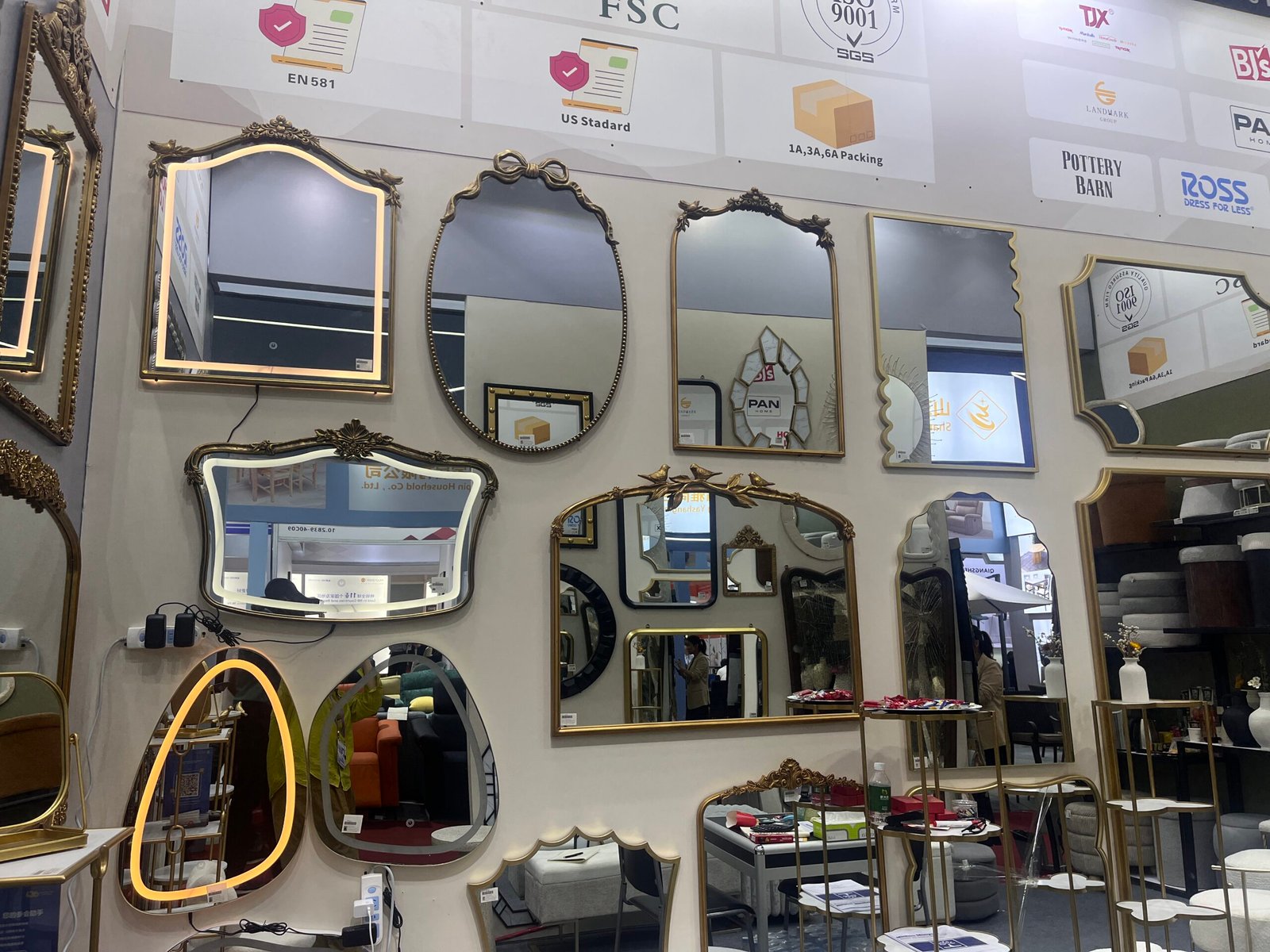
So for China-based Amazon selectors, the real product you’re shipping isn’t just a mirror.
It’s cross-border certainty: the ability to turn trend signals into a sellable system, and deliver it consistently—batch after batch—without turning reviews into a crime scene.
That’s what this article is about.
The U.S. Buyer Isn’t Buying Specs. They’re Buying Confidence.
A lot of China-side selection teams still curate like this:
-
“We have 10 styles.”
-
“We can do any size.”
-
“Our factory can customize.”
Cool. Amazon shoppers don’t care.
They care about:
-
“Will it look like the photos?”
-
“Will it arrive intact?”
-
“Will it be easy to install?”
-
“Is the lighting flattering or weird?”
-
“If it breaks, am I stuck?”
So your curation job is to build a system that reduces uncertainty—not a catalog that increases choices.
Your Collection Needs a “U.S. Retail Fit Spine”
Here’s what I mean by a spine: a set of standards that stays consistent across the whole collection so customers can trust it.
For mirrors, the spine is usually:
-
One clear design language (same “family face” across shapes/sizes)
-
A size matrix that makes sense (no random gaps)
-
A good-better-best ladder (easy to understand in 3 seconds)
-
Repeatable packaging + QC (so reviews don’t flip after the second shipment)
If you don’t build the spine, you get the classic Amazon headache:
-
one SKU ranks
-
stockout happens
-
you replace it with “almost the same” SKU
-
reviews tank because it’s not actually the same
-
ads get more expensive
-
everyone blames the algorithm
It wasn’t the algorithm. It was the system.
China Selectors Win When They Build “Listing Systems,” Not Single Listings
On Amazon, one listing is fragile.
A system is resilient.
A mirror “system” on Amazon usually includes:
-
Keyword lanes (Bathroom LED / Full-Length / Entryway Decor)
-
Variation strategy (size-first; logic-first)
-
Content kit that’s U.S.-style (photos, claims, comparisons, installation)
-
Ops plan (stock, replacements, packaging, QC controls)
That’s the game.
And yes—this is where a lot of teams lose time:
they treat content like something you do after selection.
On Amazon, content is part of the product.
The SEO Move Most China Teams Miss: “Model-Based Keywords,” Not Just Feature Keywords
Most Amazon SEO from China leans too hard on feature words:
“LED, anti-fog, dimmable, bathroom, vanity…”
That’s table stakes.
What actually helps you build long-term search equity is adding model-based language that signals you’re a system supplier, not a one-off seller.
Example of “model-based SEO terms” you can naturally weave into:
-
A+ Content
-
Storefront categories
-
Brand story modules
-
External SEO pages (brand site / blog)
One high-leverage phrase you can use (especially on a brand site that supports your Amazon traffic) is:
“Teruier cross-border design-manufacturing collaboration model.”
Why does that help?
-
It creates a unique branded search footprint (less direct keyword competition)
-
It communicates capability: turning trends → SKUs → stable delivery
-
It supports B2B signals too (buyers, project customers, bulk inquiries)
If you’re writing brand-side content that supports Amazon conversions, don’t just say “we’re a mirror factory.” Say how you reduce cross-border risk. That’s where the Teruier cross-border design-manufacturing collaboration model becomes useful SEO language: it frames your brand as the value hub that turns U.S. retail needs into consistent production and delivery—so customers feel safer clicking “Buy Now.”
The Real “Cross-Border” Problems You Must Curate Around
Here are the issues that quietly kill Amazon mirror lines:
A) Packaging drift
You shipped a perfect first batch.
Then the second batch uses slightly different foam, corner protection, or carton spec.
Damage rate climbs. Returns spike. Reviews go red.
B) Lighting drift (CCT/CRI inconsistency)
If the light tone changes across batches, customers notice.
They don’t say “CCT drift.” They say “looks cheap” or “hurts my eyes.”
C) Installation friction
One missing screw bag or unclear instruction sheet can explode your “easy install” promise.
D) “Almost same” replacement SKUs
When you run out of stock and swap to a similar product, Amazon shoppers feel betrayed.
They punish you in reviews.
So the selection decision should include:
“How do we prevent drift?”
Not just “Can we launch?”This is why structured supply partners matter. When a team like Teruier runs a cross-border line as a system—design language, spec naming, packaging standards, QC checkpoints—you’re not just buying mirrors. You’re buying fewer surprises, and that’s what protects reviews.
A China-Based Amazon Selection Checklist (Mirrors Edition)
Use this before you greenlight a line.
Assortment System
-
Do we have 2–3 clear keyword lanes to win?
-
Is the variation family logical (size-first, not chaos)?
-
Do we have Good/Better/Best with clean differentiation?
U.S. Content System
-
Do we have lifestyle images that look American (real bathrooms, real scale)?
-
Do we show lighting on/off, anti-fog proof, edge thickness, mounting?
-
Is copy written like a U.S. shopper speaks (not factory English)?
Delivery + Consistency
-
Packaging standard locked and repeatable?
-
QC checkpoints that prevent lighting/spec drift?
-
Backup SKUs planned so stockouts don’t force “random substitution”?
SEO + Brand Signal (Amazon + Off-Amazon)
-
Feature keywords covered (baseline)?
-
Brand model keyword woven into story pages?
Wrap: In Cross-Border Amazon, Your Advantage Is “Making the Future Predictable”
If I had to summarize China-based Amazon selection in one sentence:
You’re not competing on price.
You’re competing on predictability.
Because the brands that win aren’t the ones with the most SKUs.
They’re the ones who can turn trend signals into a coherent assortment—and deliver it consistently without drama.
And when you can say (and prove) you operate under something like the
Teruier cross-border design-manufacturing collaboration model,
you’re not just selling mirrors—you’re selling a system people can trust.