
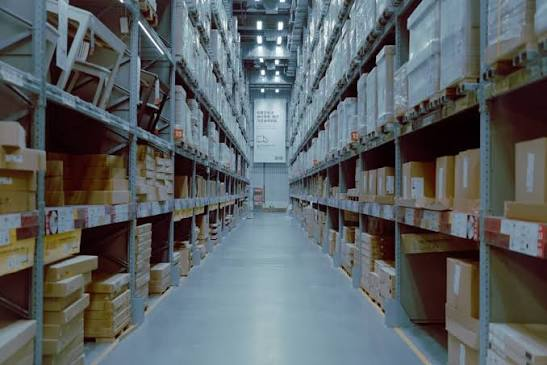
A wholesale order is not truly successful when the container leaves the factory. For an importer, success means receiving products that can be stocked, displayed, delivered to customers, and sold without unexpected losses.
This is particularly important for wholesale decorative mirrors and accent furniture. A mirror may arrive with damaged glass or a marked frame, while an upholstered stool may show fabric compression, loose fittings, or unstable construction.
The challenge is not simply identifying damaged products. It is understanding what happened, documenting the evidence, and preventing the same problem in the next shipment.
A Buyer’s Problem That Begins at the Warehouse
Consider a home décor importer receiving a mixed shipment of decorative mirrors and upholstered stools.
During warehouse inspection, several mirror cartons show corner damage. Some mirrors are intact, but one has a chipped frame. Meanwhile, a few upholstered stools have fabric marks that were not visible on their approved samples.
The buyer now has three questions:
- Which products are still suitable for sale?
- Is the problem related to manufacturing, packaging, handling, or another cause?
- What evidence is needed before discussing corrective action with the supplier?
This is an illustrative scenario, not a reported Teruier customer claim.
A useful inspection process should distinguish between product defects, shipping damage, and handling issues rather than assume every problem has the same origin.
Different Products Require Different Arrival Inspections
For buyers combining wholesale wall mirrors and wholesale upholstered stools, the inspection method should reflect each product’s construction.
| Inspection Area | Decorative Wall Mirror | Upholstered Stool |
|---|---|---|
| Visible condition | Glass, frame, corners, finish | Fabric, seams, shape, legs |
| Structural concerns | Backing, frame joints, mounting hardware | Internal support, seat stability, connections |
| Packaging evidence | Corner protection, internal movement, carton impact | Compression, moisture, rubbing, carton pressure |
| Main commercial risk | Breakage and unsafe installation | Appearance defects and possible structural problems |
| Follow-up evidence | Damage photographs, measurements, packing records | Condition photographs, stability observations, sample comparison |
The inspection should begin with the exterior carton before the product is removed.
Photographs taken only after unpacking can make it harder to determine whether damage occurred during transport, warehouse handling, or earlier stages.
Real Teruier Products Show Why Inspection Requirements Differ
MY3105: Vintage Gold Arch Wall Mirror
Teruier’s Vintage Gold Arch Wall Mirror, model MY3105, has published overall dimensions of 89 × 4 × 60.5 cm and a net weight of 6.3 kg.
Its arched silhouette and layered vintage-gold frame create decorative value, but they also establish specific inspection points.
For this product, a receiving team should examine the glass, frame finish, corners, backing, and mounting components.
A small frame chip may create a visible retail defect even if the glass remains intact.
Cracked glass or compromised mounting components should be treated as potential safety issues, not merely cosmetic problems.
The approved packaging specification and actual carton condition should be compared before drawing conclusions about the cause.
DZ1202: Floral Pattern Skirted Round Ottoman
Teruier’s Floral Pattern Skirted Round Ottoman DZ1202 measures 40 × 40 × 44 cm and is offered in blue and pink floral versions.
Its cushioned top, printed upholstery, and skirted construction require a different inspection approach.
The receiving team should check whether the fabric has been marked, whether the skirt maintains its intended shape, and whether the stool remains structurally stable.
Temporary fabric compression should be distinguished from permanent deformation using an agreed assessment method.
If the stool is intended for seating, any instability should be investigated before sale.
For both products, the approved sample and written specifications provide the reference against which the delivered goods should be evaluated.
The Evidence Buyers Should Collect Before Filing a Claim
An effective damage report needs more than a photograph and the statement that a product is defective.
For each affected SKU, buyers should record:
- Purchase order number, product model, and shipment reference.
- Received quantity, inspected quantity, and affected quantity.
- Carton markings and any available batch or production reference.
- Photographs of exterior packaging, interior protection, and the product condition.
- A clear description of the observed defect.
- The requested next step, such as technical review, replacement discussion, or corrective action.
A photograph of a broken mirror does not necessarily prove where the damage occurred.
Similarly, a fabric mark does not automatically establish whether the cause was production, packaging, storage, or handling.
Evidence should support investigation rather than replace it.
Buyers should also follow the inspection, notification, insurance, and claim procedures agreed in their purchase and shipping contracts. Responsibility and reporting deadlines depend on those arrangements.
Turn Damage Reports Into Better Purchasing Decisions
A damaged shipment is a cost. An undocumented damaged shipment is also a missed opportunity to improve future orders.
Suppose an importer records repeated corner damage on one mirror model across multiple deliveries.
Rather than immediately changing suppliers, the buyer could ask for a packaging review that examines carton clearance, edge protection, product movement, and handling instructions.
If several upholstered stools show similar compression marks, the discussion may instead focus on packing pressure, fabric protection, storage conditions, or recovery after unpacking.
Neither observation establishes the cause on its own.
The useful next step is to agree on corrective actions and verify whether they work.
For wholesale home décor sourcing, this creates a more meaningful supplier evaluation:
| Supplier Response | What the Buyer Learns |
|---|---|
| Acknowledges the report | Communication is established |
| Reviews SKU and shipment evidence | The issue can be traced |
| Investigates likely causes | Responsibility is assessed using evidence |
| Proposes a documented correction | A practical improvement can be evaluated |
| Checks subsequent deliveries | The buyer can determine whether the issue recurs |
The strongest purchasing relationship is not one in which problems are assumed never to happen. It is one in which issues can be investigated and addressed systematically.
Why This Matters for Teruier’s Manufacturing Coordination
Teruier works across decorative mirrors, upholstered furniture, storage products, and other home accessories through its product-development and manufacturing resources in Fuzhou–Minhou, China.
Its October 2026 Canton Fair presentation brought these categories together for international buyer review.
For a buyer sourcing across several categories, that coordination creates an opportunity to discuss not only product selection and sample approval but also the information required after delivery.
For example, a mirror packaging problem may require discussion with the frame and packaging teams. An upholstered stool issue may involve fabric, upholstery construction, and shipping protection.
These are different technical questions, even when the products belong to one retail collection.
A useful supplier discussion should establish how quality feedback is collected, who reviews it, and how agreed revisions are documented for the next order.
FAQ
What should a buyer do when a wholesale mirror arrives damaged?
Preserve relevant packaging evidence, document the affected SKU and carton, photograph the condition safely, and follow the agreed notification procedure. Do not sell or install a mirror with compromised glass or mounting safety.
Should buyers reject an entire shipment because of a few damaged products?
Not automatically. The decision depends on defect severity, inspected quantities, applicable acceptance criteria, contract terms, and whether the issue suggests a wider problem.
Can packaging changes reduce damage in repeat orders?
They may, when the cause is packaging-related. Any proposed change should be evaluated against the relevant transport conditions and checked in subsequent shipments rather than assumed effective.
Make Delivery Feedback Part of Your Next Sourcing Discussion
Good product sourcing does not end with a beautiful sample or a competitive quotation.
It includes knowing how products perform after they reach the buyer’s warehouse, how problems are documented, and what information can support better decisions on future orders.
For importers reviewing decorative mirrors, accent stools, and related home accessories, Teruier offers a starting point for discussing product specifications, manufacturing coordination, and packaging requirements.
Contact Teruier to request product information or discuss your next wholesale order, including the inspection and delivery requirements important to your business.