
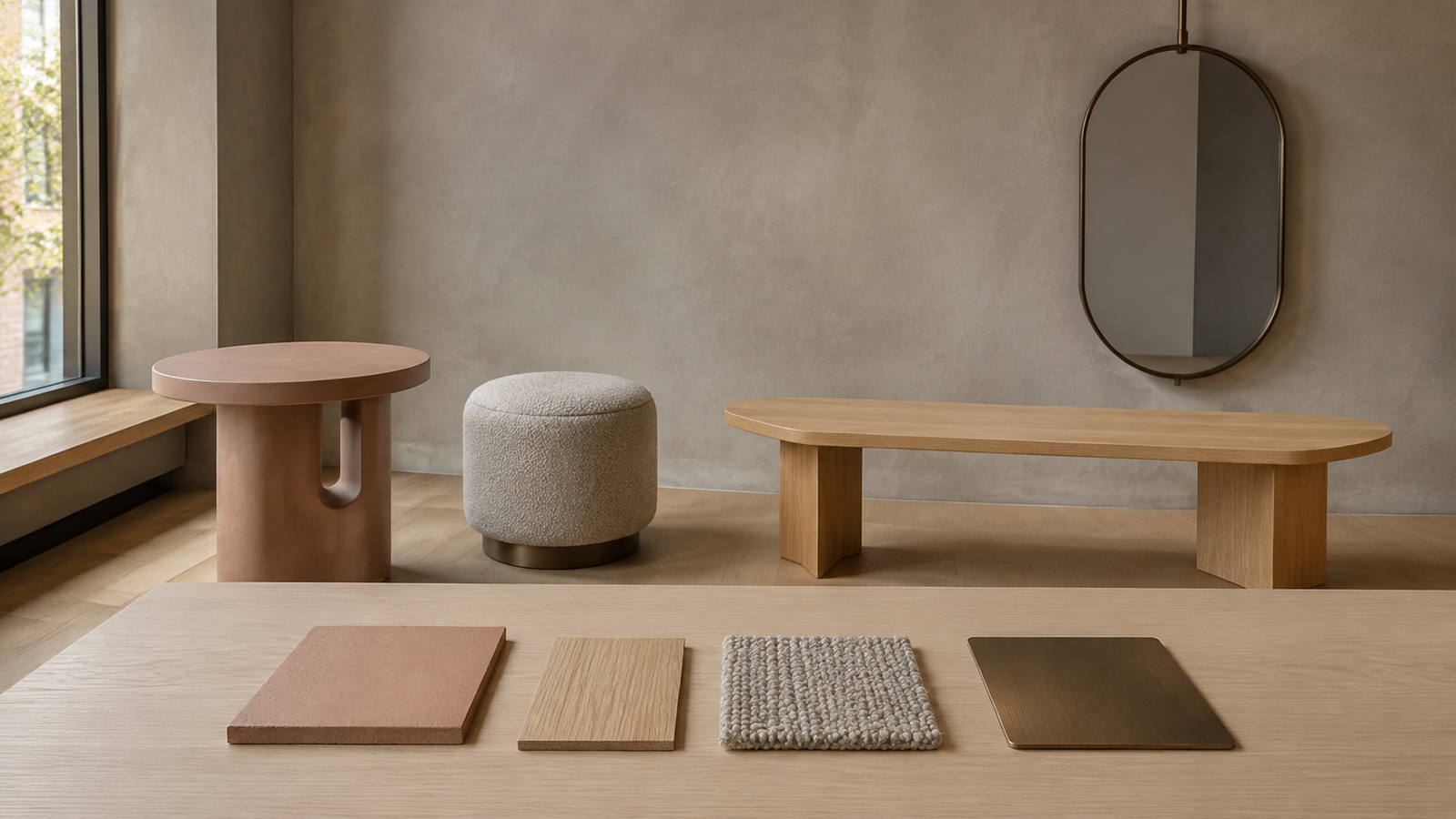
For a German buyer, trend forecasting is valuable only when it improves the next assortment. A fair display may be inspiring, but it does not yet answer the commercial questions: Which customer will buy it? At what price? In which material? And can the supplier reproduce it reliably?
Trend translation is the work between the first visual signal and an orderable SKU family.
Start With a Direction, Not a Copy
At European fairs, we often see a broad direction before we see a product brief. Material character is becoming more important: wood, fibre, glass, earth and stone are presented not simply as components, but as part of the product story. Maison&Objet’s In Materia programme made this especially clear, placing sensory material experience at the centre of its 2026 presentation. Maison&Objet: In Materia
For trend-based curation, this does not mean copying an exhibition piece. It means identifying the underlying commercial signal:
- a warmer and more tactile surface language;
- simpler forms with stronger proportions;
- craft references adapted for repeatable production;
- collections that feel coordinated rather than over-decorated.
Trend Image vs. Orderable SKU
| Fair signal | Retail-ready translation |
|---|---|
| Handmade, tactile surface | Controlled texture, approved finish sample and clear QC standard |
| Sculptural statement form | One recognisable silhouette in two practical sizes |
| Material-led display | A workable material or finish that fits target retail price |
| Curated installation | A linked product family for display, cross-selling and replenishment |
This is the difference between global trend insights and a product range that can actually be bought, displayed and reordered.
From Trend to SKU Development
A good buyer does not begin with “What is new?” The more useful question is: “Which new direction can strengthen our current assortment without creating stock risk?”
We normally translate one trend into a small product architecture:
- Core SKU: the most commercially secure version;
- Margin SKU: a stronger material, finish or larger scale;
- Visual SKU: the product that creates attention in display and online imagery;
- Supporting SKU: a smaller, related item that enables bundle sales.
For example, a mineral-texture direction can become a compact side table, a decorative tray and a small bench with aligned tones and surface treatment. The buyer receives a clear merchandising story, while the supplier works with a more controlled development brief.
####### Why Trend Merchandising Needs Discipline
A trend item may perform well in a fair setting but fail in retail if the finish is difficult to explain, the carton is inefficient or the price point is too isolated from the rest of the range.
In Germany, the better decision is often a restrained translation: enough design character to look current, but enough consistency to work across retail, e-commerce and repeat orders. This is especially important for B2B home décor sourcing, where one SKU must often perform in more than one channel.
Ambiente’s Living environment and Maison&Objet’s ongoing focus on objects, material and craft both point towards this more considered approach: buyers are curating complete interior stories, not simply adding novelty products. Ambiente and Maison&Objet
What to Confirm Before Development
Before approving a trend-led item, confirm:
- target retail price and required landed-cost level;
- final size, material and visible finish reference;
- MOQ for each finish or colour;
- carton dimensions and protection method;
- which related SKUs can share the same design language;
- repeat-order capability after the first season.
These points turn trend forecasting for product development into a practical sourcing decision.
FAQ
How many trend-led products should a buyer launch at once?
Start with a connected group of three or four SKUs. This is enough to create a story, but small enough to evaluate sell-through and reorder potential.
Should every fair trend become a product range?
No. Select trends that fit your customer, price architecture and existing collection. The best trend translation strengthens the range instead of replacing its identity.
Develop Trends With Greater Control
Trend to SKU development works best when buyers, merchandisers and suppliers share one clear brief: the design direction, target price, required quality level and intended retail role. Share your market, channel and preferred material direction, and we can help turn a trend signal into a focused, retail-ready assortment.



