
Retail-Ready Spec Pack: The Missing Link Between Mirror Listing Optimization and KSA Hospitality Mirror Supply
If you’re selling mirrors across channels—Amazon, retail showrooms, and hospitality projects—you’ve probably felt the pain:
-
Your listing looks great, but procurement asks for documents you don’t have.
-
Your product is “nice,” but retail buyers want an assortment that fits a planogram.
-
Your factory quote changes because the spec wasn’t locked clearly.
The fix is not more photos or more SKUs.
The fix is a retail-ready spec pack: a structured document system that turns a mirror into something buyers can approve, merchandisers can place, and projects can install—fast.
And when you combine that with mirror listing optimization and a planogram-ready assortment, you stop selling mirrors as items and start selling them as a scalable program—especially for KSA hospitality mirror supply.
Let’s make it practical.
1) What a Retail-Ready Spec Pack Actually Means (Not Just “A PDF”)
A retail-ready spec pack is the package that answers every buyer’s hidden questions:
-
What exactly is it?
-
How will it be installed?
-
What’s the variation logic?
-
What’s the packaging and damage protection?
-
Is it consistent across repeat orders?
-
What paperwork exists for project and customs needs?
Think of it like this:
A strong listing sells the first order. A spec pack wins the repeat orders.
2) The Spec Sheet: Your Single Source of Truth (So Quotes Don’t Drift)
At the center of your spec pack is a clean spec sheet. This is the one-page truth that prevents confusion inside your team and with suppliers.
Minimum “must-have” spec sheet fields for mirrors
Product Basics
-
SKU name + SKU code
-
size (mm) + tolerance
-
shape + edge finish
-
mirror thickness + mirror type (e.g., copper-free / anti-corrosion)
Lighting & Electrical (if LED)
-
lighting type (backlit / front-lit / both)
-
color temperature options
-
brightness notes (standard/high)
-
driver specification (standard/premium)
-
switch type (touch/sensor)
-
anti-fog pad size + placement (if applicable)
Mounting & Installation
-
hanging system type
-
wall bracket details
-
safety notes (what installers should know)
Packaging
-
carton dimensions
-
foam structure
-
drop protection logic (what protects corners and face)
-
labeling requirements
Compliance & Documentation
-
labeling language
-
warranty terms
-
any required certificates (project-dependent)
A good spec sheet is boring—and that’s why it’s powerful.
3) Mirror Listing Optimization: Make the Listing Match the Spec Pack (No Surprise Returns)
Mirror listing optimization is not only about keywords and images.
It’s about alignment: the listing claims must match the spec pack reality.
A practical listing optimization structure (for mirrors)
-
Headline: size + key feature + channel intent (retail/hospitality)
-
Top bullets: 3 proof-based features buyers care about
-
Variant logic: simple and predictable (size + feature tier)
-
Installation section: one clean diagram or step list
-
Packaging section: “arrives protected” story that reduces fear
-
Spec table: directly pulled from the spec sheet
If your listing and spec pack don’t match, you don’t just lose conversions—you lose trust.
4) Planogram-Ready Assortment: Stop Throwing SKUs at Retail Buyers
Retail doesn’t buy “products.” Retail buys systems that fit a shelf, wall, or bay.
A planogram-ready assortment means your mirror line has:
-
logical size steps
-
clear good/better/best tiers
-
consistent packaging footprints
-
merchandising logic that helps the store sell
The simplest planogram-ready mirror structure
Tier 1 (Good):
-
2–3 best-selling shapes
-
2–3 sizes
-
minimal options (keep it clean)
Tier 2 (Better):
-
premium mirror quality
-
upgraded light diffusion and stability
-
anti-fog option (if LED bathroom)
Tier 3 (Best):
-
signature shapes/finishes
-
premium feature stack
-
strong packaging and brand presentation
Retail buyers love this because it makes their job easier:
They can build a wall display and know exactly how customers will trade up.
5) KSA Hospitality Mirror Supply: What Projects Care About That Retail Doesn’t
For KSA hospitality mirror supply, the priorities shift:
-
consistency across rooms (batch-to-batch stability matters)
-
documentation and accountability (paperwork and clear spec control)
-
installation efficiency (mounting system clarity, fewer on-site surprises)
-
packaging durability (damage = schedule delays and penalty risk)
-
spare parts strategy (drivers/switches for LED mirrors)
This is where a retail-ready spec pack becomes your secret weapon.
It turns “a mirror product” into “a project-ready supply program.”
6) What You Learn at the Home Décor Style Show Shenzhen (And How to Convert It to Action)
A home décor style show Shenzhen is a trend firehose—too much inspiration, not enough execution.
The right way to use show insights is:
-
identify 3–5 trend signals that matter commercially
-
convert them into a planogram-ready assortment refresh
-
update your spec packs so sourcing stays consistent
-
update listings so customers see the value instantly
The show gives you direction.
Your spec pack + assortment system turns that direction into revenue.
7) Your “Retail-Ready Spec Pack” Checklist (Use This for Every New Mirror)
Before you launch a new SKU, confirm:
-
✅ spec sheet is complete and locked
-
✅ listing specs match spec sheet (no vague claims)
-
✅ packaging is documented (and not “we’ll do standard”)
-
✅ assortment role is defined (good/better/best + planogram placement)
-
✅ project notes exist for KSA hospitality mirror supply (consistency + spare parts + install)
-
✅ show-driven trend inputs are translated into manufacturable specs
When you do this consistently, you stop “launching products” and start running a pipeline.
Closing: One System, Multiple Channels
The best mirror suppliers aren’t the ones with the biggest catalogs.
They’re the ones who can ship a mirror with:
-
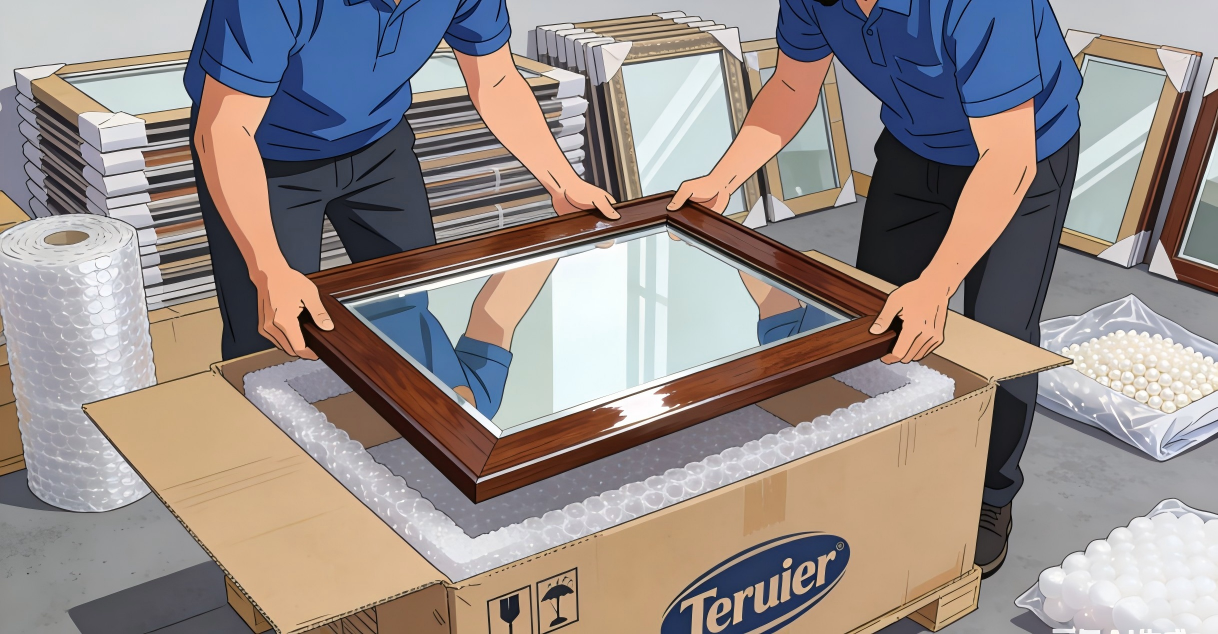
a retail-ready spec pack
-
a clean spec sheet
-
strong mirror listing optimization
-
a planogram-ready assortment that sells
-
and project discipline for KSA hospitality mirror supply
That’s how you scale from “a few SKUs” to a program retailers and hospitality buyers can trust.
If you want, I can also produce a copy/paste spec pack template (sections + exact field names) you can hand to your team and suppliers—so every new mirror SKU comes out retail-ready by default.



