An upholstery fabric can pass an abrasion test and still disappoint customers. What are buyers really measuring when they compare fabric performance?
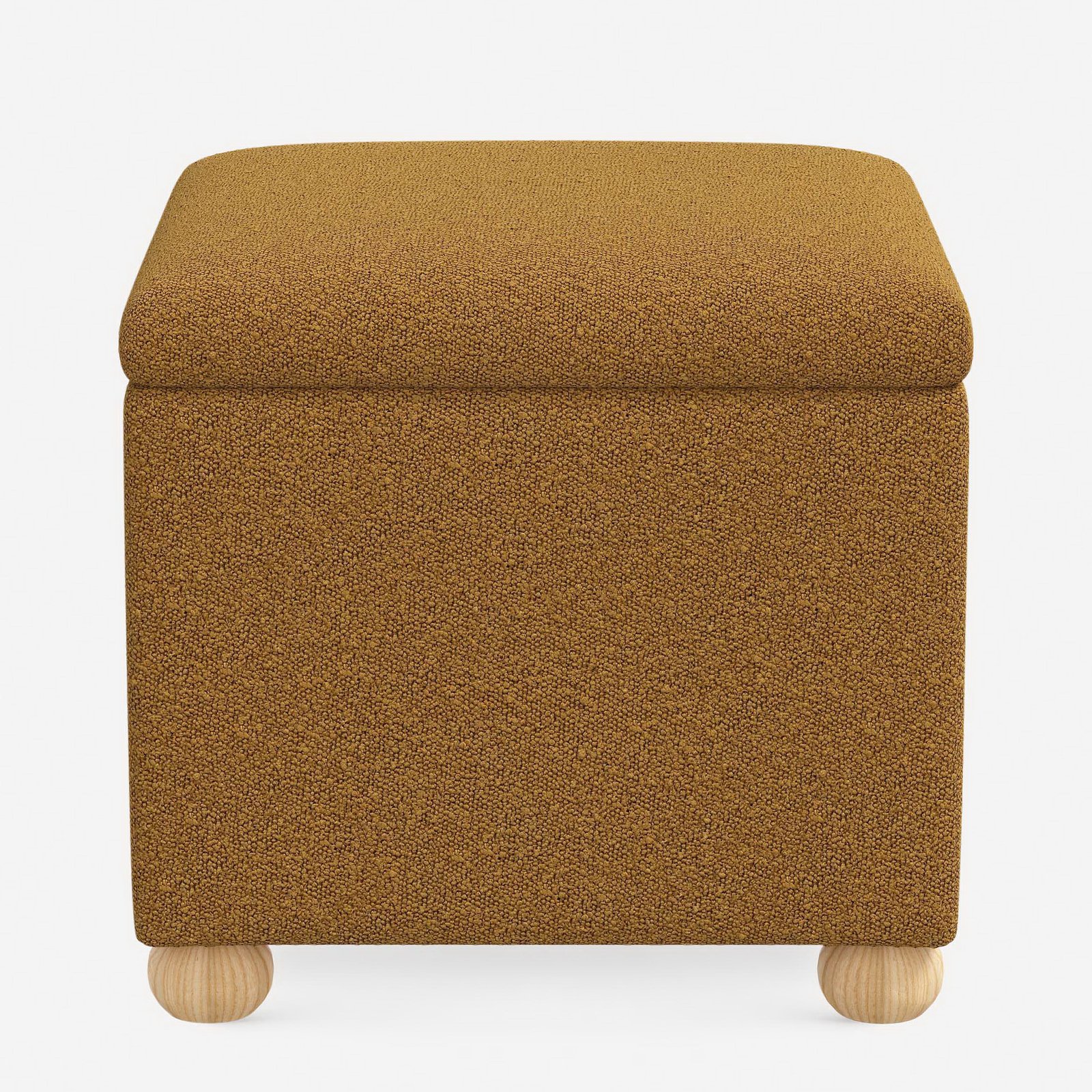
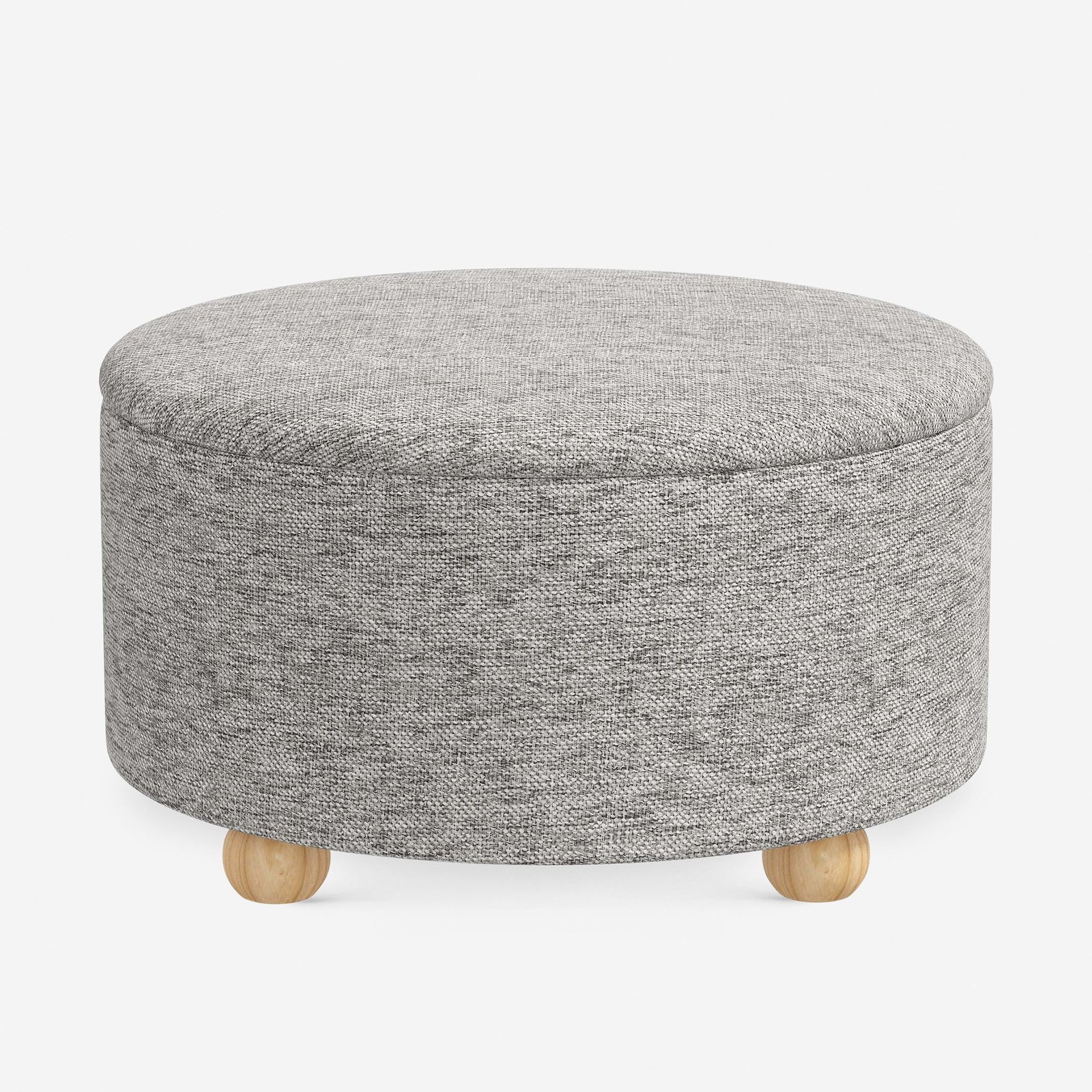
Imagine two upholstered ottomans.
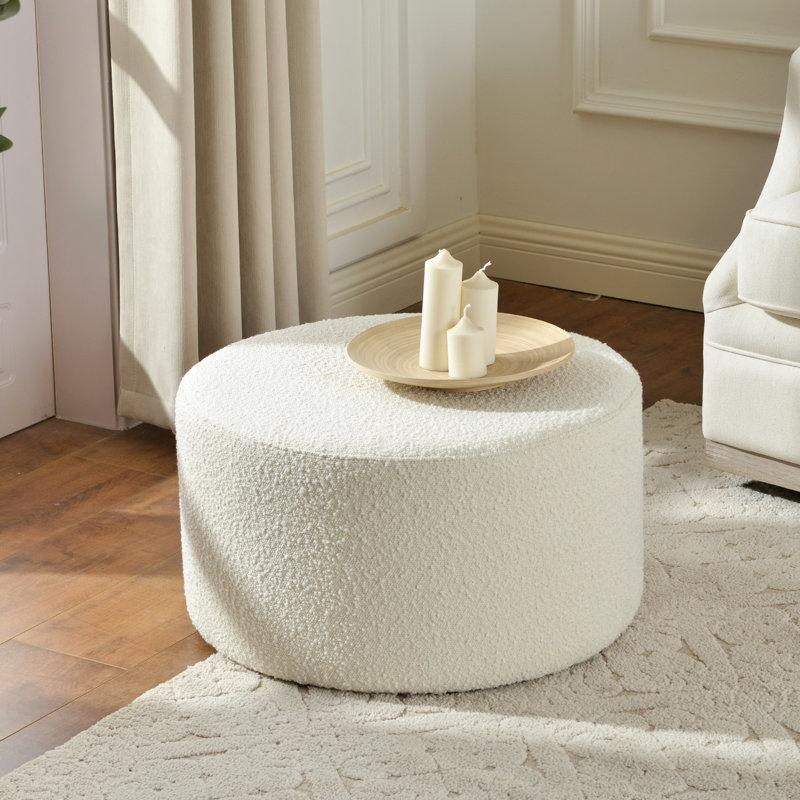
Both are covered in beautiful cream bouclé fabric. Both have similar shapes and dimensions. Both look equally attractive in a product catalogue.
But their fabric test reports are very different.
One has a high Martindale abrasion result. The other has a lower result.
Which one should a wholesale buyer choose?
The obvious answer seems to be the first.
But there is a problem with that decision.
A fabric can withstand repeated rubbing and still develop pills, lose its original texture, snag on sharp objects or become difficult to clean.
A high Martindale number does not automatically mean better upholstery.
For home décor retailers, this distinction matters. A fabric that looks excellent in a sample may behave differently after months of everyday use.
The real question is not simply how many rubs a fabric can withstand.
It is whether the fabric is suitable for the product, customer and intended environment.
1. What Does Martindale Actually Measure?
The Martindale test is commonly used to evaluate the abrasion resistance of upholstery fabrics.
In simplified terms, a fabric specimen is subjected to repeated rubbing under specified test conditions. The result indicates how it performs against abrasion.
This is useful information.
For an upholstered ottoman, repeated contact from sitting, moving and everyday handling can gradually affect the fabric surface.
However, abrasion is only one aspect of textile performance.
It does not independently tell buyers:
- Whether the fabric will develop pills.
- Whether its loops will snag.
- Whether the colour will fade in light.
- Whether the dye will transfer through rubbing.
- Whether the fabric will be easy to clean.
- Whether seams will remain stable.
- Whether the fabric will retain its original appearance.
This is where buyers need to look beyond the headline number.
A fabric specification should be understood as a collection of performance characteristics, not a single score.
2. Why Bouclé Makes This Problem More Obvious
Bouclé has become a familiar choice for upholstered furniture because of its distinctive looped texture.
Its soft, dimensional appearance works particularly well with rounded ottomans, accent stools and compact occasional furniture.
But the loops that create its visual appeal also introduce specific considerations.
A loose loop may catch on a zipper, jewellery or pet claws.
Repeated contact can change the appearance of the surface.
Some constructions may show pilling or flattening more visibly than others.
This does not mean bouclé is unsuitable for everyday furniture.
It means buyers should evaluate the actual construction rather than assuming that all bouclé fabrics perform alike.
Consider two fabrics with similar colours and similar Martindale results.
One has tightly constructed, relatively small loops.
The other has larger, looser loops.
Their abrasion results alone may not reveal how differently they behave when exposed to snagging or repeated handling.
The visual similarity of two fabrics does not guarantee equivalent performance.
3. Five Different Tests Answer Five Different Questions
For a professional buyer, the most useful approach is to separate the main performance characteristics.
1. Abrasion Resistance — Martindale
Relevant standard: ISO 12947 series.
Question: How does the fabric withstand repeated rubbing under the specified test conditions?
Useful for evaluating surface wear, but it does not establish resistance to every form of damage.
2. Pilling Resistance — ISO 12945 Series
Question: How does the fabric surface respond to the formation of pills or fuzz during repeated use?
This is particularly relevant to soft and textured upholstery.
3. Colour Fastness to Light — ISO 105-B02
Question: How well does the fabric resist colour change under the specified artificial light exposure?
This matters when furniture is positioned near windows or in brightly lit interiors.
4. Colour Fastness to Rubbing — ISO 105-X12
Question: Does colour transfer when the fabric is rubbed under the test conditions?
Both dry and wet rubbing results may be relevant.
5. Seam Slippage — ISO 13936 Series
Question: How does the fabric behave around stitched seams under an applied load?
This is important for upholstered products where fabric tension and seam construction affect the finished appearance.
These tests measure different properties.
Passing one does not automatically mean passing the others.
Buyers should also distinguish between fabric-level testing and the performance of the finished upholstered product.
A good fabric cannot compensate for poor stitching, inadequate foam support or an unstable internal frame.
4. A Fabric Can Be Durable and Still Be Wrong for the Product
This is an important distinction for product development.
Imagine three applications.
A Decorative Accent Ottoman
The product may be used occasionally and primarily serves as a decorative element.
Texture, colour and visual character may carry significant commercial weight.
An Everyday Living Room Ottoman
The product may experience frequent contact, movement and repeated use.
Abrasion, pilling, cleaning requirements and surface recovery become more important.
A Hospitality or Commercial Seating Product
The product may experience more intensive use and may be subject to additional project-specific performance and fire requirements.
The appropriate fabric specification must reflect the intended application and destination market.
There is no single Martindale number that automatically makes a fabric suitable for every product and every environment.
A buyer should first define how the ottoman will be used, then establish the appropriate material requirements.
5. The Hidden Problem With Light-Coloured Bouclé
Cream, ivory and oatmeal bouclé are popular because they create a soft, understated appearance.
They also work well with natural wood, stone finishes and neutral interiors.
But light colours can reveal certain problems more easily.
Dirt and surface marks may be more visible.
Colour transfer from darker clothing can affect appearance.
Some cleaning methods may leave visible differences in texture or colour.
Even when two fabrics use the same construction, different colourways may behave differently under particular conditions.
This is why approving one cream fabric swatch should not automatically approve every colour in the range.
Buyers should consider:
- Actual fibre composition.
- Colour consistency.
- Light fastness.
- Dry and wet rubbing fastness.
- Cleaning instructions.
- Sample appearance under different lighting.
- Production-batch colour variation.
A good-looking fabric should also be realistic for the customer to maintain.
6. Why a Fabric Swatch Is Not Enough
A small fabric swatch is useful for assessing colour, texture and hand feel.
But it cannot show everything about the finished product.
The way fabric behaves can change when it is stretched over foam, wrapped around a curved frame or stitched along a seam.
For example, a bouclé fabric may look uniform when laid flat but show tension differences when applied to a rounded ottoman.
A thick textured fabric may require different seam allowances and upholstery techniques from a smooth woven material.
A pale fabric may also look different when combined with a particular foam colour or internal lining.
This is why buyers should evaluate both the fabric sample and the finished upholstered sample.
Teruier’s Wholesale Upholstered Ottomans: Texture, Color and Retail Assortment Ideas discusses the relationship between upholstery texture, product positioning and physical sample evaluation.
For buyers, the next step is to move from selecting a fabric to approving a complete product.
7. How to Read a Fabric Test Report Without Being Misled
A professional fabric test report should provide more than an attractive headline result.
Before accepting a report, buyers should check the following:
| Item | What to verify |
|---|---|
| Fabric identification | Exact fabric reference and composition |
| Colourway | Whether the tested colour matches the proposed product |
| Test standard | Applicable ISO or other specified method |
| Test result | Actual reported result and rating |
| Test conditions | Relevant load, cycles and procedure |
| Test laboratory | Whether the report can be traced to its source |
| Report date | Whether the document relates to the current material |
| Intended application | Whether the result is suitable for the planned use |
One particularly important issue is sample identity.
A supplier may provide a test report for a similar-looking fabric rather than the exact material being proposed.
That is not sufficient evidence of equivalent performance.
The buyer should establish a connection between the test report, approved fabric reference and finished product.
For repeat orders, the same material reference and agreed acceptance criteria should remain part of the purchasing specification.
8. What Should Buyers Ask Their Ottoman Supplier?
Instead of asking only, “How many Martindale rubs does this fabric have?”, buyers can ask more useful questions.
About the Fabric
What is the fibre composition?
Is the bouclé construction tight-looped or more open?
What is the fabric weight and thickness?
Is the fabric suitable for the intended use?
About Performance
Is there an abrasion test report?
Has pilling resistance been evaluated?
Are light fastness and rubbing fastness results available?
Are there specific cleaning instructions?
About the Finished Product
Does the finished sample use the same fabric as the proposed bulk order?
Are seams, corners and curved surfaces properly finished?
Does the upholstery maintain an even appearance?
About Repeat Orders
Can the same fabric reference be maintained?
How are colour variations controlled?
What happens if the approved fabric becomes unavailable?
These questions help buyers evaluate a supplier’s ability to deliver a consistent product rather than simply provide an attractive sample.
9. Building an Ottoman Collection Requires More Than One Fabric Strategy
A retail assortment does not need every ottoman to use the same upholstery.
In fact, using one fabric type across an entire collection can limit its commercial potential.
A more flexible approach is to create several material directions.
Soft Texture
Bouclé and loop-textured fabrics provide a tactile, contemporary appearance.
Structured Texture
Tighter woven fabrics can offer a more tailored look and may be easier to coordinate across different furniture shapes.
Decorative Patterns
Checks, stripes and other patterns can introduce visual personality and help a product stand out.
Smooth Upholstery
Velvet and other smoother surfaces can create a different visual effect and support more formal or decorative positioning.
Each material needs to be evaluated according to its construction and intended use.
The goal is not to find one fabric that does everything.
It is to select the right fabric for each product.
Explore Teruier’s Ottoman & Pouf Collection to see different upholstery directions, shapes and functional applications.
For a broader product development perspective, From Trend Signal to Retail-Ready Ottoman: A Soft Furnishings Development Record explains how material choices and product specifications can be translated into a retail-ready design.
Frequently Asked Questions
Does a higher Martindale rating always mean better upholstery?
No. Martindale measures abrasion resistance under specified conditions. It does not independently measure pilling, snagging, colour fastness, cleaning performance or seam stability.
Is bouclé suitable for everyday ottomans?
It can be, depending on the fibre composition, loop construction, performance results and intended use. Buyers should assess the actual fabric rather than treating bouclé as one uniform material category.
What is the difference between abrasion resistance and pilling resistance?
Abrasion resistance concerns how a fabric withstands repeated rubbing. Pilling resistance concerns the formation of small fibre balls or pills on the surface. They are separate properties.
Should buyers request fabric test reports before ordering?
For wholesale programmes, especially those involving repeated production or higher-use applications, relevant test reports are useful. Buyers should confirm that the tested fabric is the same as the approved material.
Can light-coloured bouclé be used in retail furniture collections?
Yes. However, buyers should consider visible staining, colour transfer, cleaning requirements and the target customer’s intended use.
What should be approved before bulk production?
The exact fabric reference, colourway, finished product sample, dimensions, internal construction, stitching details, packaging and agreed performance requirements should be documented.
Final Thought: Stop Buying Numbers. Start Buying the Right Material.
Martindale is useful.
But it is only one part of the decision.
A fabric with an impressive abrasion result may still be unsuitable for a particular product or customer.
A lower-rated fabric may be perfectly appropriate for an occasional decorative stool, depending on its other characteristics and the intended application.
The best purchasing decision comes from understanding the complete material specification, not chasing the largest number on a test report.
Good upholstery is not simply fabric that survives rubbing. It is fabric that performs appropriately, looks right and remains suitable for the way people actually use the furniture.
Teruier works with international furniture retailers, importers, brands and project buyers on upholstered ottomans, accent stools, soft furnishings, material selection and coordinated product development.
Contact Teruier to discuss upholstery options, fabric samples, product specifications and wholesale development.