
Good-Better-Best Ceramics (The Assortment That Reorders)
If you sell ceramics long enough, you learn a quiet truth:
Single SKUs don’t scale. Lines scale.
A one-off “hero vase” might spike for a month. But if the rest of your range doesn’t support it—price-wise, style-wise, shipping-wise—you’ll end up discounting, not replenishing.
So in this third Pick to Sell article, we’ll build a ceramics range the European way: practical, margin-aware, and designed for repeat purchase.
Why Good-Better-Best is the easiest way to grow ceramics
Good-Better-Best is not a fancy retail theory. It’s a simple set of decisions:
-
Good = the entry option that converts quickly
-
Better = the “most chosen” option that carries the margin
-
Best = the statement option that lifts brand perception and AOV
For ceramic décor, it solves three common seller problems at once:
-
Too many random SKUs, no structure
-
Too much price-pressure at the bottom
-
Too little reason for customers to buy more than one item
In Europe especially—across home décor shops, gift stores, concept stores, and multi-channel sellers—range structure is what keeps your assortment tidy and profitable.
Start with a “style family”, not a product
Before tiers, pick the style family you’re building around. Ceramics works best when the range feels coherent.
High-velocity families that translate well across European tastes:
-
Neutral matte & organic texture (stone, sand, bone tones)
-
Minimal contemporary (clean silhouettes, calm colour)
-
Heritage-inspired (aged finishes, craft textures, warm neutrals)
-
Reactive glaze accents (controlled variation, premium feel)
This is where Teruier’s collaboration model matters in practice: we bridge market signals (what sells in different channels) with design + manufacturing execution (how to make it consistently), using a craft-hub supply base that can actually repeat what you approved.
Build the range: one hero, two supports, one add-on engine
Here’s a clean structure that works for ceramics:
1) Hero item (the “why you stop scrolling” piece)
Pick one SKU to lead the family—usually a vase, sculptural bowl, or statement planter.
Hero rules:
-
Strong silhouette (recognisable from 2 metres away)
-
Photographs well (matte texture + shadow detail)
-
Doesn’t destroy shipping cost (avoid extreme height unless margin supports it)
2) Support items (the “I’ll add one more” pieces)
These are smaller and safer to ship: bud vases, candle holders, small bowls, mini planters.
Support rules:
-
Easy price points
-
Easy gifting
-
Easy to display in multiples
3) Add-on engine (the “sets that raise basket size”)
Ceramics sells together when you design it that way:
-
Set of 2–3 bud vases
-
Trio of pinch bowls
-
Pair of candle holders (two heights)
-
“Shelf styling kit” (small vase + bowl + candle holder)
Sets are not just marketing. They’re your margin stabiliser because they spread packaging and shipping cost across multiple units.
The Good-Better-Best tiers (ceramics-specific, seller-ready)
GOOD — “fast conversion”
What it is: simple matte finish, smaller size, standard shape
Examples: bud vase, small bowl, mini planter
Why it sells: low decision friction, giftable, easy to ship
Seller advantage: stable replenishment, fewer QC surprises
Execution tip: keep colour and finish very controlled. “Good” must be consistent.
BETTER — “best seller + best margin”
What it is: improved texture, upgraded silhouette, or a curated set
Examples: ribbed vase, textured bowl, 2-pack set, mixed-height candle holder set
Why it sells: feels designed, not generic
Seller advantage: higher margin, better reviews, higher AOV
Execution tip: define texture and glaze tolerance clearly (see Pick to Sell #2). Better is where factories start improvising if you don’t lock specs.
BEST — “statement + brand lift”
What it is: premium finish (controlled reactive glaze), complex form, artisan detail
Examples: sculptural vase, oversized centrepiece bowl, reactive glaze feature piece
Why it sells: customers buy emotion; this is the emotional anchor
Seller advantage: premium positioning, collection credibility
Execution tip: reactive glaze is powerful but risky. “Best” needs a strict pre-production sample approval and a defined acceptable variation range.
A note on craft, and why the “craft-hub” story is useful (not fluffy)
Fuzhou’s craft history matters because it built a culture of finishing discipline. Traditional crafts like bodiless lacquerware, oil-paper umbrellas, and horn combs weren’t mass production shortcuts—they were patience industries.
That attitude carries into modern categories.
And in a true craft hub, you’re not relying on one factory’s mood. You’re tapping into three mature supply chains:
-
Craftspeople who understand detail and surface quality
-
Materials that can be sourced with stability (clay bodies, glazes, packaging inputs)
-
Process knowledge—how to standardise without killing the handmade feel
This is exactly the kind of foundation you want when you’re building a ceramic line meant to reorder.
Pricing ladder: don’t guess—design it
A Good-Better-Best range should create a clean ladder:
-
Good = your entry price point
-
Better = +20–40% perceived value uplift
-
Best = premium anchor (often +60–120% over Good)
In Europe, especially, customers respond well when the range “makes sense” at a glance. Confusing price jumps kill conversion.
Seller move: design your ladder first, then validate whether the factory can execute each tier at the right landed cost.
Packaging & QC: tiers change what “acceptable” means
The higher the tier, the tighter the tolerance.
-
Good: strict consistency (avoid complaint reviews)
-
Better: controlled craftsmanship (texture and finish must match reference)
-
Best: pre-production sample gate + defined acceptable variation
this is where our cross-border model is practical. We don’t just approve a pretty sample—we build the repeatable spec + QC checkpoints + packaging logic so your “Best” doesn’t become a returns problem.
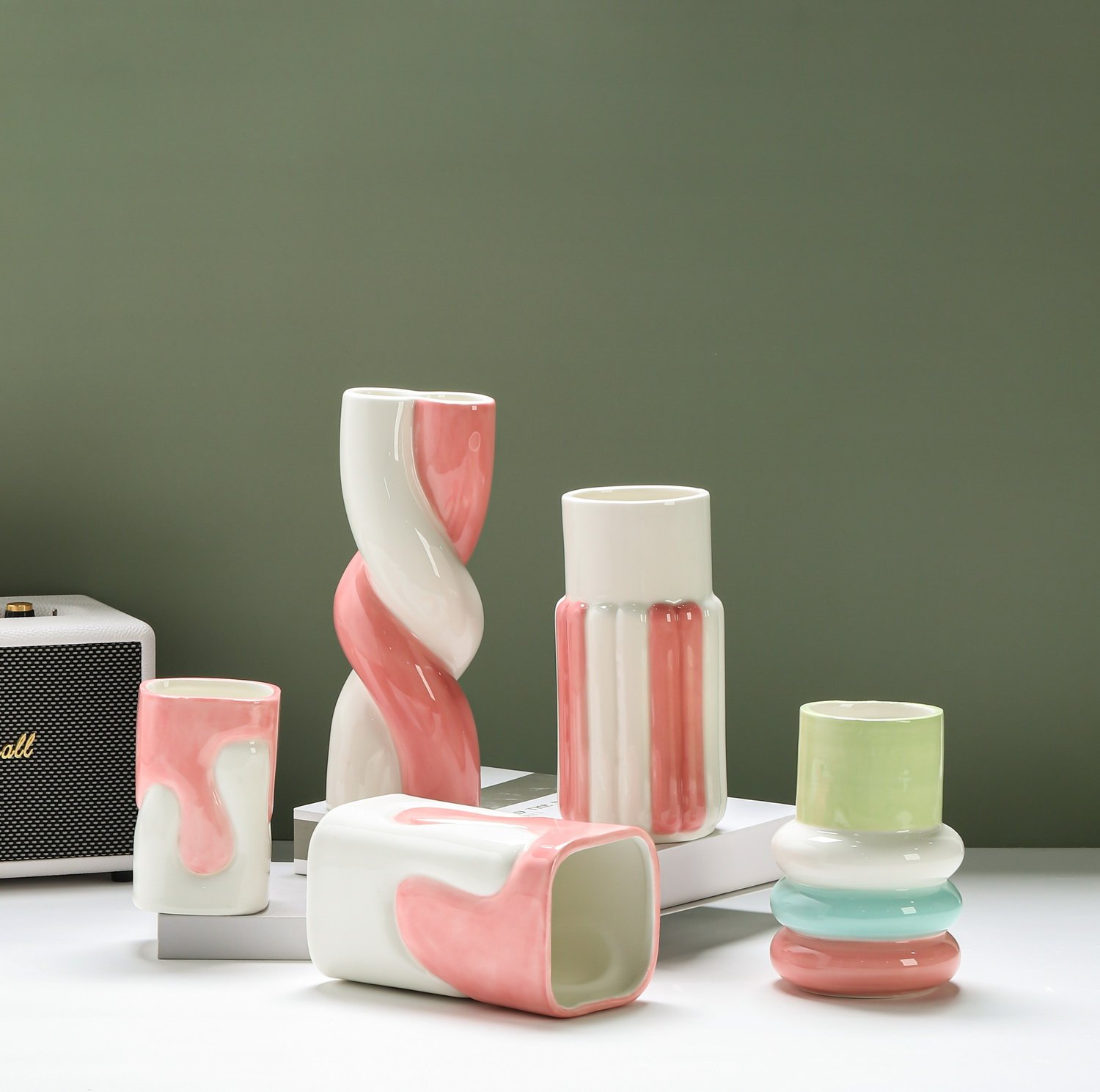
Wrap-up: the goal isn’t more SKUs—it’s a line that sells together
A ceramics assortment that reorders is not accidental.
It’s built by:
-
picking a style family,
-
structuring Good-Better-Best,
-
designing sets to lift basket size,
-
and executing through a supply system that can repeat.
That’s the real advantage of working from a craft-hub foundation with a design



