For U.S. home décor retailers, wholesale decorative storage boxes offer something that basic organizers often cannot: a combination of useful storage and visible design character.
A small decorative box may complete a tabletop display, while a larger vintage-style trunk can become a focal point in a bedroom or living room collection. The challenge for retail buyers is choosing the right size, construction, finish, and product mix for the intended customer.
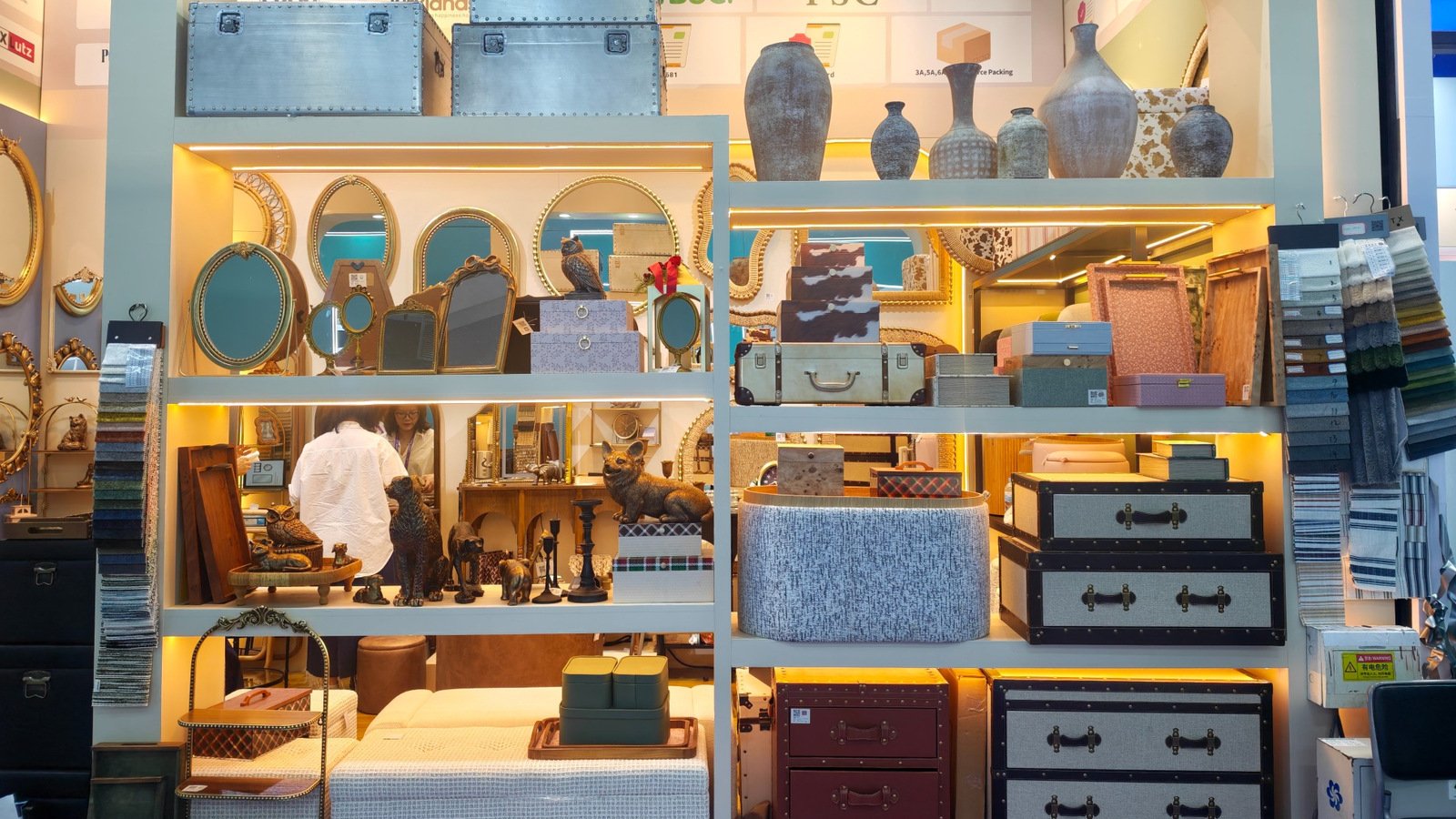
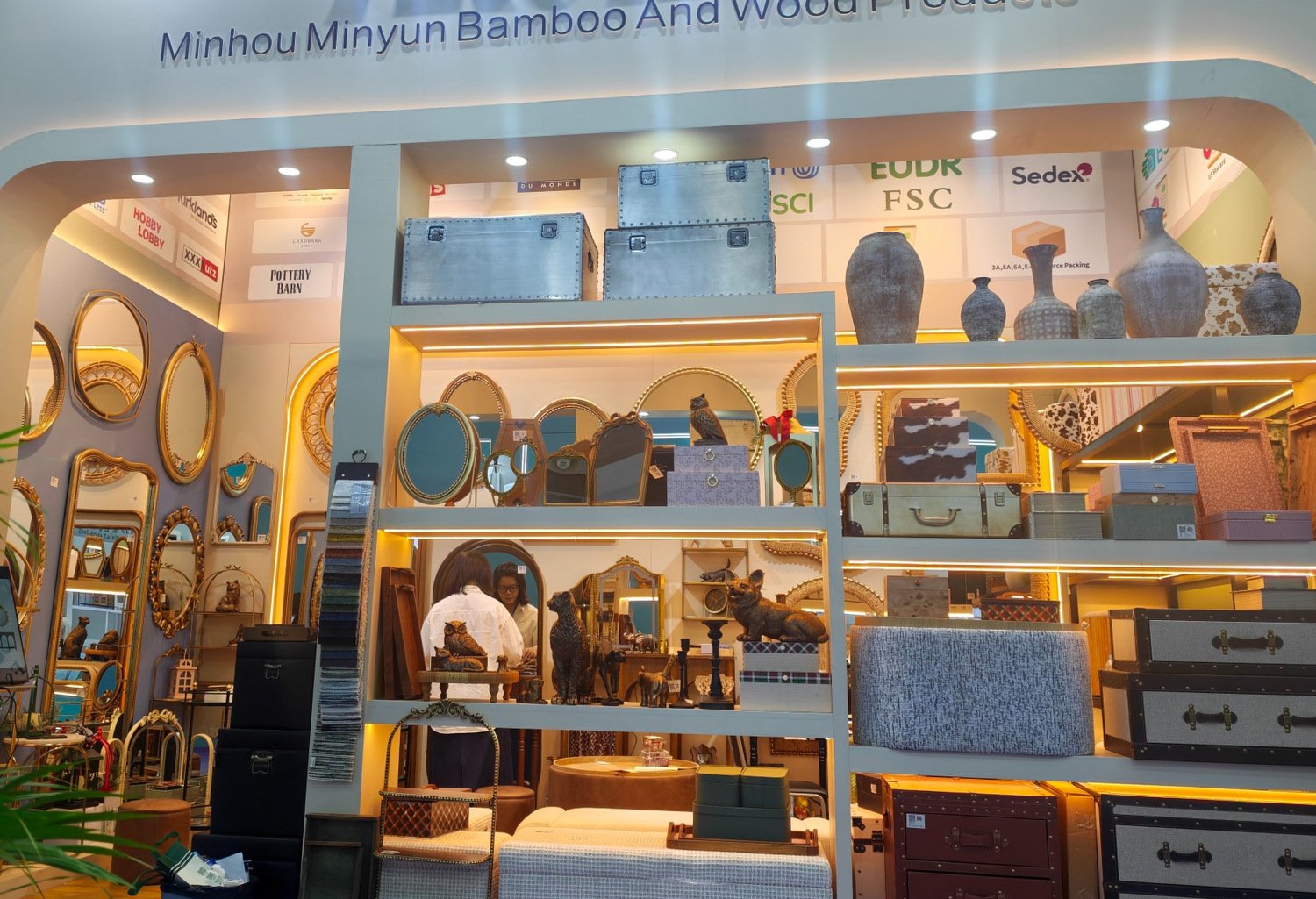
At the 2026 Autumn Canton Fair, Teruier displayed decorative trunks, patterned boxes, textured storage pieces, and compact storage furniture alongside mirrors and other home accessories. The arrangement shows how storage can be presented as part of a coordinated home décor collection rather than as a separate utility category.
Decorative Storage Is More Than an Organization Category
Basic storage products usually compete on capacity, convenience, and price. Decorative storage adds other buying considerations: color, surface texture, hardware, proportions, and how the product looks when left visible in a room.
In its 2026 wholesale decorative box buying guide, Faire identifies gift shops and home stores among the important buyers of decorative boxes, including keepsake designs and decorative containers.
For Teruier’s retail buyers, this suggests two different assortment opportunities.
Smaller boxes can be considered for tabletop styling, gifting, and personal-item storage. Larger trunks and chests may suit room displays or enclosed household storage, depending on their construction.
Neither category should be purchased on appearance alone.
Small Decorative Boxes: Designed for Shelves and Giftable Displays
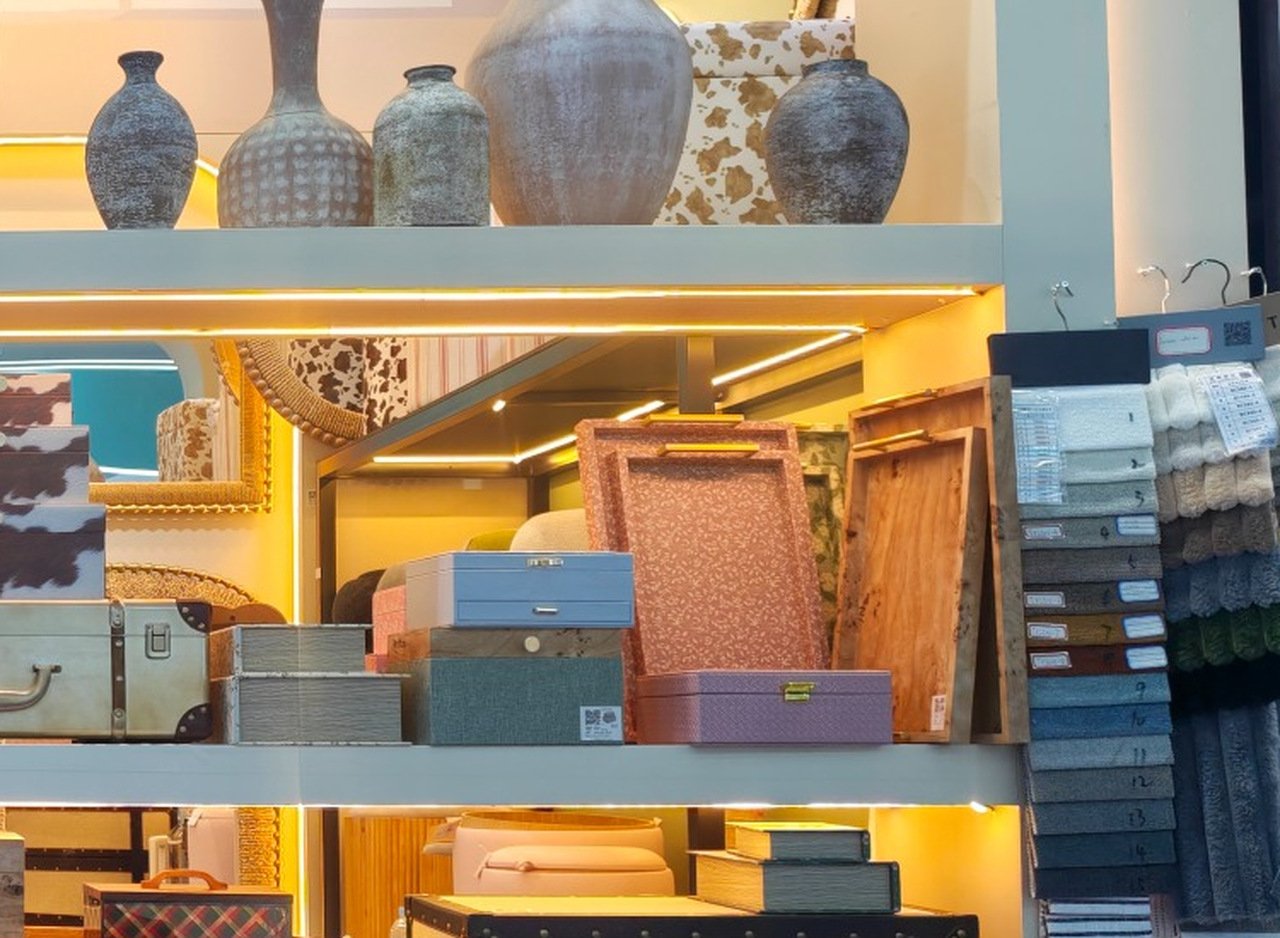
At Teruier’s Canton Fair booth, patterned rectangular boxes, compact cases, and coordinated colors were displayed together.
For a home décor buyer, these designs can complement mirrors, trays, vases, and other tabletop accessories.
A useful small-box assortment should consider:
- Dimensions: Does the box fit a standard retail shelf or display table?
- Opening design: Is the lid removable, hinged, or otherwise secured?
- Interior: Is there usable space for the intended belongings?
- Finish: Can printed or textured surfaces withstand normal handling?
- Packaging: Does the product require corner, surface, or hardware protection?
A decorative exterior alone does not establish the quality of the interior. Buyers should inspect both.
Decorative Trunks: Larger Formats With Stronger Visual Presence
Vintage-inspired storage trunks can add a different design character to a home furnishings assortment.
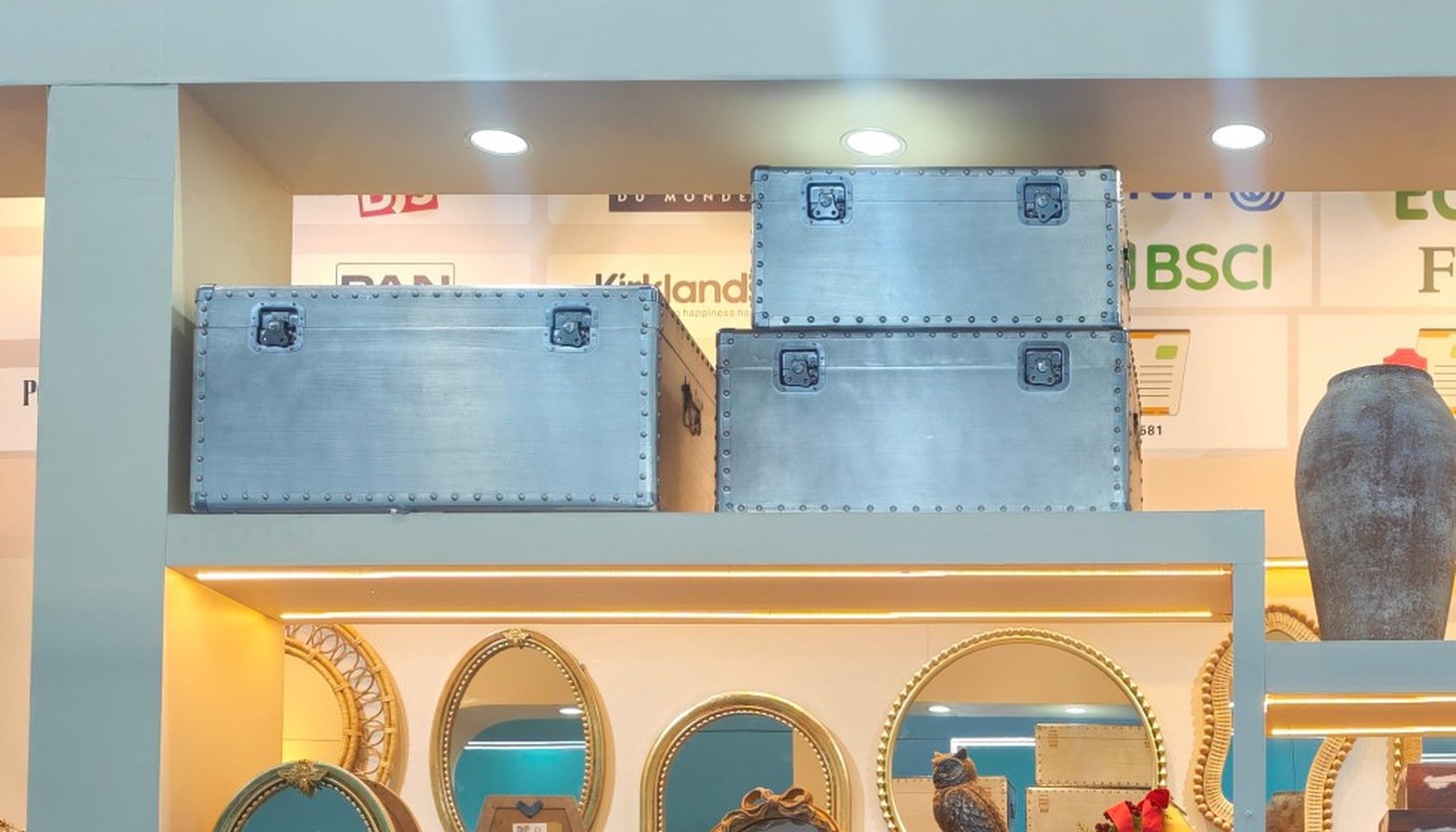
Teruier’s exhibition included metallic-looking trunks with corner hardware, latches, and handle detailing. Other pieces used darker finishes and decorative textures.
For a separate product reference, Teruier’s TDS27-07 Cognac Studded Storage Trunk is specified at 78 × 42 × 36 cm (30.7 × 16.5 × 14.2 inches).
Its design includes a cognac-colored leather-look exterior, decorative nailhead details, and antique-style clasps. The final covering material, load capacity, and hardware specifications should be confirmed before ordering.
A crucial distinction: a decorative storage trunk is not automatically approved for use as a bench or load-bearing furniture.
That application requires separate structural evaluation.
One Box or a Coordinated Set?
Single decorative boxes and multi-size trunk sets solve different merchandising problems.
| Buying Factor | Single Decorative Box | Coordinated Trunk Set |
|---|---|---|
| Primary role | Individual accent or storage item | Multi-size home décor collection |
| Display space | Usually more compact | Requires coordinated display planning |
| Color strategy | One selected finish | Multiple matching or complementary finishes |
| Buyer review | Individual size and function | Dimensions, proportions and consistency across sizes |
| Packaging | Single-item protection | Confirm individual or set packaging |
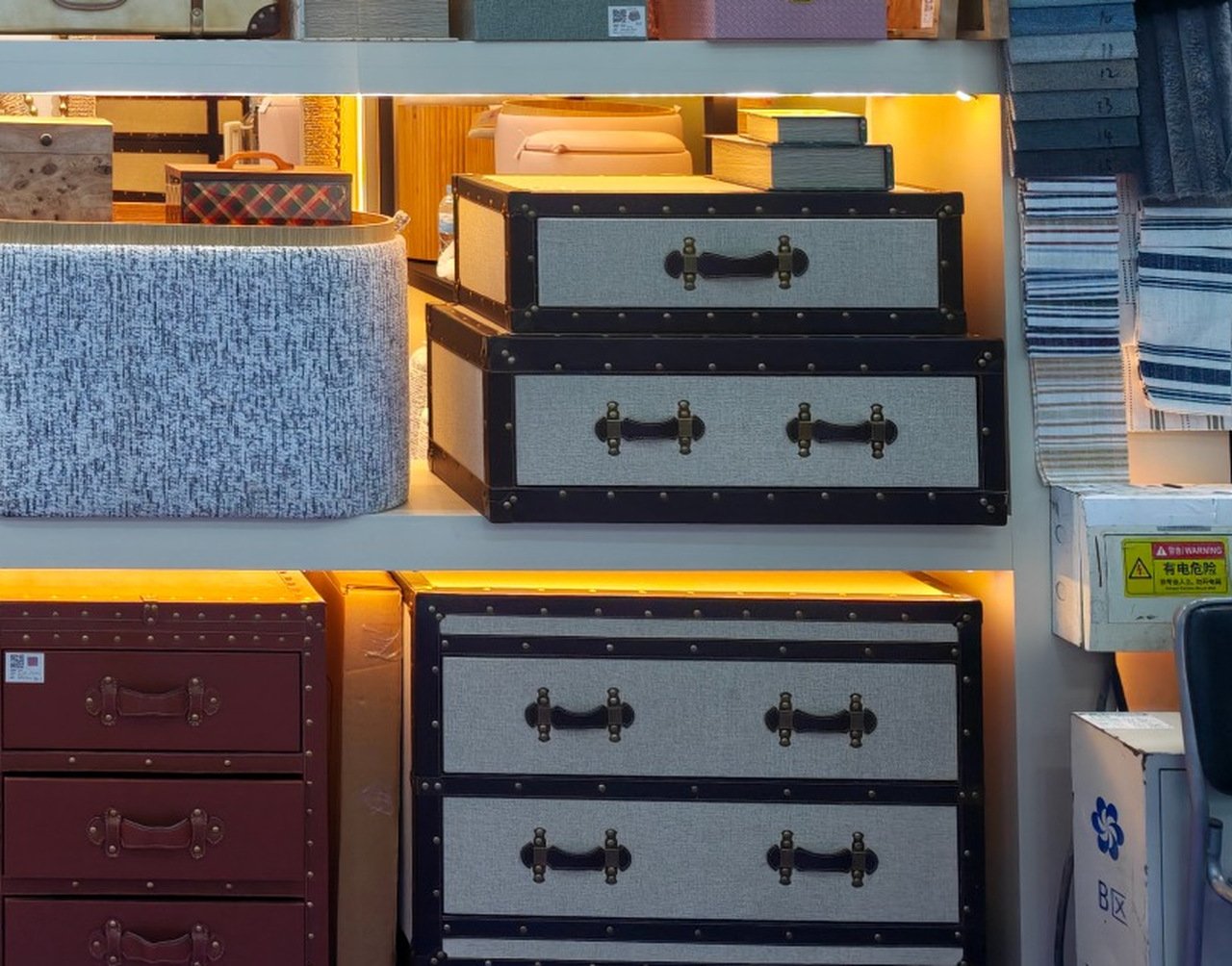
Teruier’s TDS27-08 Pastel Three-Piece Nesting Trunk Set provides an example of a coordinated product concept.
The published sizes are:
- Small, blush pink: 40 × 24 × 18 cm
- Medium, warm white: 58 × 34 × 25 cm
- Large, powder blue: 76 × 44 × 32 cm
The three sizes create options for different display settings and storage needs.
Buyers should confirm whether the final products physically nest together, whether they can be ordered individually, and how the set will be packed and shipped. A coordinated appearance does not automatically establish these commercial details.
What Should Buyers Check Before Approving Storage Samples?
Storage products contain functional details that are easy to overlook in catalog photography.
Lids and hinges: Open and close the product repeatedly during sample review. Check alignment, attachment, and the intended use of the hardware.
Handles and clasps: Confirm whether each component is decorative or functional. A side handle should not be assumed to support the full loaded weight without verification.
Usable storage space: Request internal dimensions, not just the exterior measurements. Wall thickness, lining, and structural supports can reduce usable capacity.
Surface and interior finish: Inspect corners, trim, inside surfaces, stitching or covering materials, and potential contact points.
Packaging: Larger trunks can occupy substantial shipping volume. Buyers should compare carton dimensions, unit protection, and possible surface or hardware damage before calculating landed cost.
Teruier exhibition booth combining decorative storage, mirrors, accent furniture and tabletop accessoriesFor reference, Teruier’s TDS27-01 Powder Blue Open Storage Trunk is listed at 76 × 38 × 30 cm, with a hinged opening design and decorative hardware.
These published overall dimensions are useful for initial planning, but final material and packaging specifications still require confirmation.
How Teruier Approaches Decorative Storage Development
Teruier’s role is to connect the visual direction of a home décor collection with product definition, sampling, and manufacturing coordination.
For example, a buyer may like the appearance of an antique-style trunk but need a smaller version for an apartment-focused retail assortment.
That change affects more than dimensions. Hardware placement, usable storage space, frame proportions, material consumption, and protective packaging may all require review.
The right development question is not simply, “Can this design be made smaller?”
It is, “Will the revised product still look balanced, function properly, and fit the buyer’s commercial requirements?”
Teruier works with design and manufacturing resources in the Fuzhou–Minhou home décor supply network to support these product-development discussions.
Buyers can explore more formats in the Teruier Storage Collection.
FAQ
What is the difference between a decorative storage box and a storage trunk?
A decorative box is generally a smaller container intended for accessories, keepsakes, or tabletop display. A storage trunk is typically a larger enclosed piece that may store household items and contribute to the room’s decorative character.
Are decorative storage trunks suitable for seating?
Not automatically. Seating use requires confirmation of load capacity, construction, and applicable performance requirements.
Can decorative boxes and trunks be customized for private-label retail?
Buyers can discuss dimensions, colors, materials, linings, hardware, and packaging. Feasibility, MOQ, pricing, tooling, and sample requirements depend on the final specification.
Explore Wholesale Decorative Storage With Teruier
For U.S. home décor retailers, decorative storage works best when each product has a clear role: a giftable accessory, a compact organizer, a coordinated set, or a larger statement storage piece.
Teruier supports buyers with product selection, design development discussions, samples, and wholesale sourcing coordination.
Contact Teruier to request decorative storage product specifications, discuss custom finishes, or submit an RFQ for your next retail collection.