
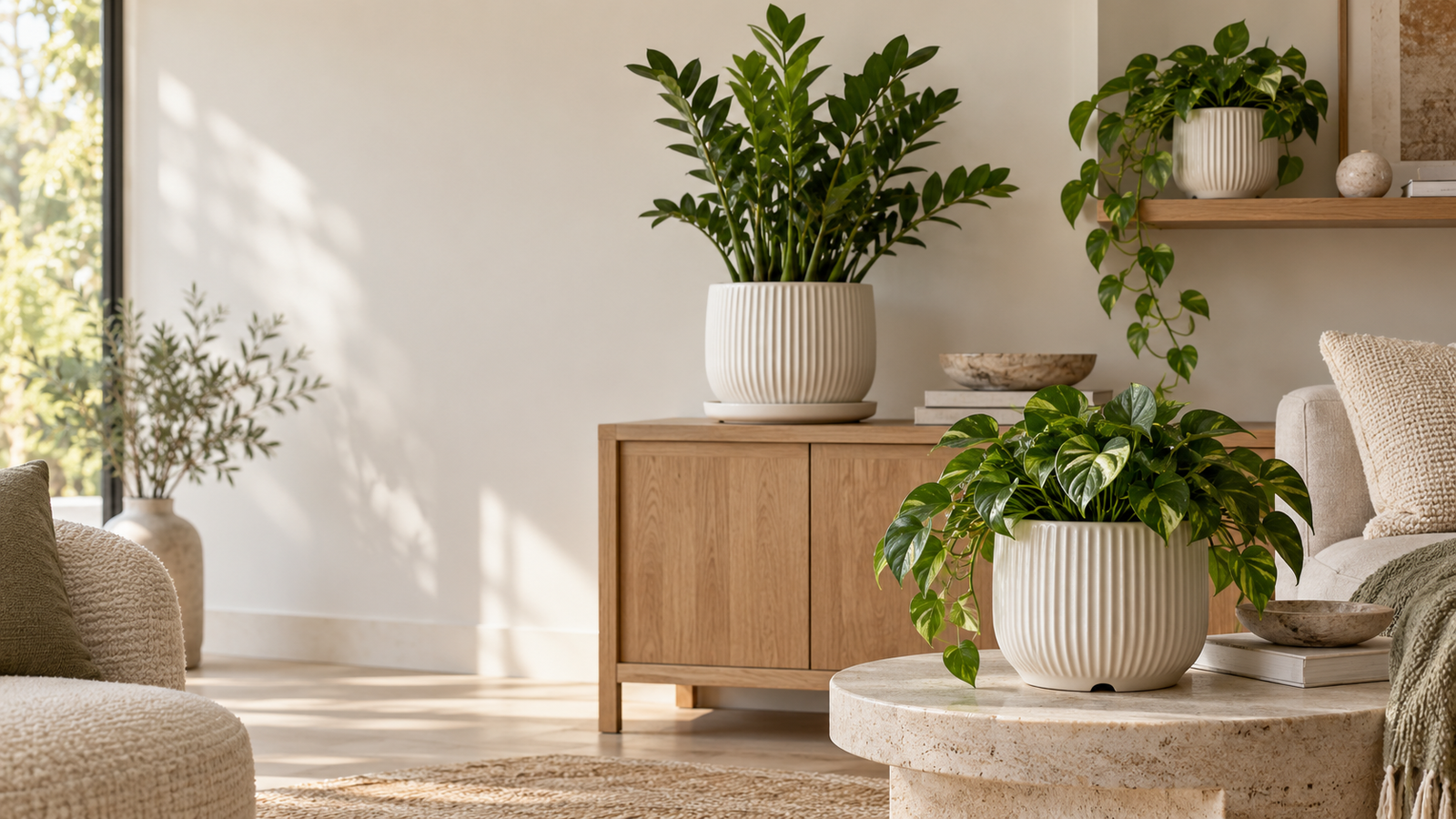
For home décor buyers, a ceramic planter can look simple on a showroom shelf. But once it enters a retail assortment, the questions become more specific: Is it a decorative vase, a true plant pot, or both? Does it need a drainage hole? Is a saucer required? Can the carton protect the ribbed surface? And can several sizes be packed in a case pack that works for both stores and online replenishment?
These decisions shape the commercial value of wholesale ceramic plant pots more than a new color alone.
Market Signal: Texture Is Staying, but Function Is Being Examined More Closely
At recent North American home and gift markets, buyers have continued to favor tactile ceramic surfaces—soft ribs, hand-finished texture, earthy glaze variation, and shapes that feel easy to group across shelves and tables.
The opportunity is not simply to offer another ribbed ceramic vase. Buyers increasingly need a product family that can work across several moments: a plant shop display, a garden-inspired home décor collection, a gift assortment, or a small online order.
That creates a useful sourcing question: should every vessel have the same functional structure?
A Development Case: One Ribbed Shape, Two Retail Uses
In a recent planter development brief, the original concept was a three-size family of warm off-white ribbed ceramic vessels. The look worked well as a coordinated tabletop group, but the first sample had one limitation: every size included a drainage hole.
For plant-focused retailers, that was the right choice. A drainage hole helps reduce standing water and gives consumers more confidence when using live plants.
For home décor stores and gift channels, however, the same opening created a problem. Some buyers wanted to use the piece as a decorative vase, a cachepot for nursery pots, or a holder for dried stems. They did not want customers placing it directly on a wood table or shelf without an additional tray.
The solution was not to make two unrelated collections. Teruier kept the same ribbed silhouette, color direction, and graduated sizing, then developed two clear options:
- Drainage-hole versions for live-plant and garden-oriented programs
- No-hole versions for decorative, gift, and indoor cachepot use
This allowed the buyer to build one recognizable collection while choosing the functional format by channel.
What Changed During Product Development
The Drainage Hole Needed a Better Foot Structure
A hole placed directly on a flat ceramic base can create instability during firing, glazing, and retail use. The development team adjusted the foot ring so the drainage opening sat within a protected underside area rather than becoming a visually awkward feature.
This also improved the product’s standing stability and made it easier to inspect whether the opening was clean, centered, and free from glaze blockage.
The Ribbing Needed to Be More Production-Friendly
Deep ribs can create attractive shadows, but they can also make wall thickness and drying behavior less consistent. In the revised sample, the lower rib transition was softened and the clay thickness was made more even around the base.
The result was a cleaner fired shape, more stable standing performance, and a surface that still delivered the tactile look buyers wanted.
This is where a custom ceramics manufacturer adds value: not by changing the original idea casually, but by identifying which details protect the design once it moves into repeated production.
Ceramic Quality Control Should Reflect the Selling Channel
For a ribbed planter, ceramic quality control should go beyond checking glaze color. Buyers should review:
- Drainage-hole position and openness
- Base stability and wobble
- Rib definition and surface consistency
- Rim smoothness and glaze coverage
- Color variation across a case pack
- Carton dividers and protection against rib-to-rib abrasion
- Whether saucers, plugs, or care instructions are included
For an ecommerce-oriented program, a small silicone plug can be useful when the buyer wants one drainage-hole planter to serve both decorative and planting uses. For store programs, buyers may prefer separate hole and no-hole SKUs because the function is clearer at shelf level.
Case Pack Logic: Keep the Family Easy to Buy
A planter assortment works best when its case pack follows the buyer’s replenishment logic.
A small planter may move faster as a six-piece case. A larger statement planter may be more appropriate in a two- or four-piece case. Mixed-size packs can support visual merchandising, but they are not always ideal for retailers that need SKU-level inventory control.
For a practical ceramic plant pots drainage hole options case pack plan, buyers should clarify:
- Whether sizes are packed separately or mixed
- Which sizes include drainage holes
- Whether saucers or plugs are packed separately
- Carton dimensions and nesting efficiency
- Breakage-risk areas during container loading
- Which SKUs are intended for store display, gift retail, or online fulfillment
A well-planned wholesale ceramic program is easier to reorder because buyers do not need to re-solve these questions after the first shipment.
Buyer Summary
- Drainage holes should match the intended retail use, not be treated as a default feature.
- One ribbed ceramic family can support plant, décor, and gift channels with controlled structural options.
- Foot-ring design, rib depth, and wall thickness affect both appearance and production consistency.
- Case packs should reflect how each size will be displayed, replenished, and shipped.
- Clear functional options can help buyers sell one collection through more than one channel.
FAQ
Should all ceramic plant pots have drainage holes?
No. Drainage holes are important for direct planting, but no-hole versions are often more suitable for decorative use, dried stems, gift retail, or use as cachepots with nursery pots.
Can a ribbed ceramic vase also be sold as a planter?
Yes, if its intended use is clearly defined. A no-hole ribbed vessel can work as a decorative vase or cachepot, while a drainage-hole version is better suited to direct planting.
What should buyers check before ordering ceramic plant pots in bulk?
Buyers should confirm drainage-hole options, base stability, glaze consistency, size tolerances, carton protection, case-pack structure, and the intended retail channel before bulk production begins.
CTA
A ceramic planter collection becomes more useful when design, function, and packing work together. Teruier helps buyers develop retail-ready ceramic programs with practical drainage options, controlled finishes, clear case packs, and production-ready quality requirements. Contact our team to discuss your next ceramic sourcing brief.



