The uncomfortable truth about beautiful dining chairs — and why comfort should be a retail selling point, not an afterthought.
There is a familiar situation in many homes.
Dinner is ready. The table looks beautiful. The lighting is warm, the food is excellent, and everyone is enjoying the conversation.
Then, about forty minutes later, someone starts shifting in their chair.
Another person leans forward. Someone gets up to stretch. Eventually, the conversation moves to the sofa.
The dinner was wonderful.
The chairs were not.
Here is a question for furniture buyers:
Why do we spend so much time choosing the perfect dining table, but sometimes treat the chairs as little more than decorative accessories?
A dining chair may look impressive in a showroom photograph. But if people do not want to sit in it for more than half an hour, has it really done its job?
1. The Dining Room Is No Longer Just for Dinner
The traditional dining room had a relatively simple purpose.
People sat down, ate a meal and left.
Today, the same table may be used for much more.
Children do homework. Adults work on laptops. Friends stay for long weekend lunches. Families play board games. A quick breakfast can turn into an hour of conversation.
Design coverage from Veranda in June 2026 highlighted this shift, describing dining rooms as gathering spaces that increasingly need to balance comfort with decorative character.
This changes the role of the dining chair.
It is no longer simply a seat used during meals.
It is furniture that may be used for several different activities throughout the day.
A chair that looks beautiful but becomes uncomfortable after a short period may not suit the way modern households use their dining spaces.
2. Are We Designing Dining Chairs for Instagram?
This is where the debate becomes interesting.
Some of the most visually striking dining chairs have:
- Extremely slim seats.
- Hard, unpadded surfaces.
- Narrow backrests.
- Dramatic angles.
- Minimal support.
These features can create a clean architectural silhouette.
They can also create an uncomfortable sitting experience, depending on the chair’s proportions and construction.
There is nothing wrong with a sculptural dining chair. In fact, statement seating can be an excellent way to give a dining room character.
But appearance should not be the only design consideration.
Imagine two products.
Chair A: A beautiful minimalist chair with a thin wooden seat and a striking frame.
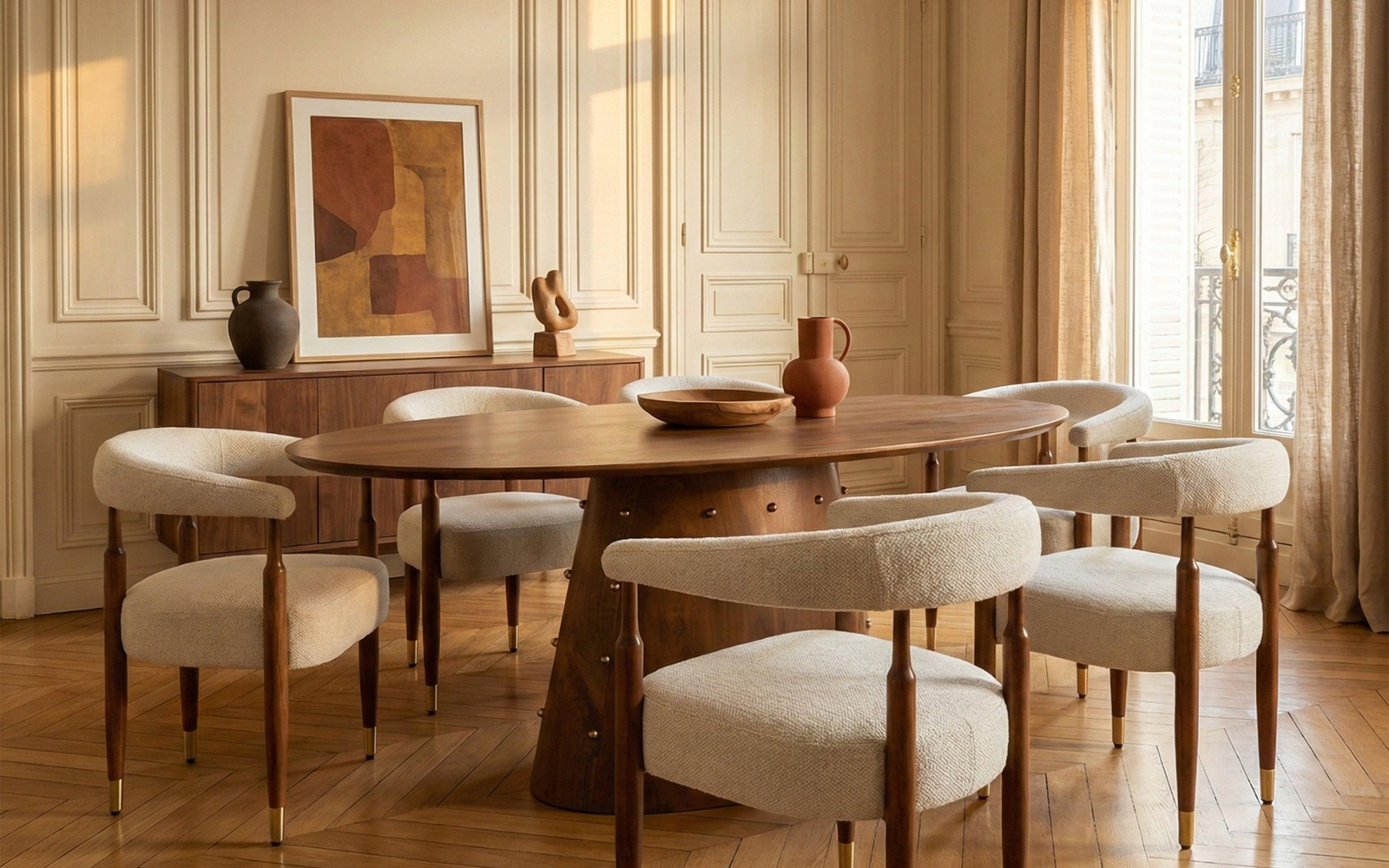
Chair B: A softly upholstered chair with a supportive backrest, appropriate seat depth and a carefully considered sitting position.
Chair A may photograph better.
Chair B may be the one customers choose to use every day.
Of course, a good upholstered chair can also be visually striking. The choice is not necessarily between beauty and comfort.
The real challenge is achieving both.
3. Why Upholstered Dining Chairs Are Getting More Attention
The renewed interest in comfortable dining spaces has created an opportunity for upholstered seating.
Upholstery introduces softness, texture and warmth into a room.
It can also make a dining area feel more connected to the living room, particularly in open-plan homes.
Consider several material directions.
Bouclé and textured weaves
These fabrics introduce tactile character and a relaxed appearance. They can work particularly well in contemporary and Scandinavian-inspired interiors.
However, buyers should consider cleaning requirements, snagging risks and the suitability of the fabric for frequent use.
Velvet and chenille
These materials create a richer appearance and can make a dining chair feel more like a piece of occasional lounge furniture.
Their performance depends on fibre composition, pile construction, colour and maintenance requirements.
Performance fabrics
For busy family homes, fabric performance may matter more than the appearance of a particular weave.
Buyers should review cleaning instructions, abrasion performance, colourfastness and suitability for the intended use.
Leather and leather-look materials
These offer a different balance of appearance and maintenance. Genuine leather, coated materials and synthetic alternatives should be specified accurately rather than grouped together under vague descriptions.
The material should suit the customer, not simply the latest colour trend.
4. But Is Upholstery Always the Better Choice?
Not necessarily.
A fully upholstered dining chair can be comfortable, but it may also introduce additional maintenance requirements.
Food spills, pets, children and frequent use all influence how well a chair performs in a household.
A fabric that looks beautiful in a showroom may not be ideal for a busy family kitchen.
A dark velvet chair may feel luxurious but require more careful cleaning.
A pale bouclé chair may create a softer interior, but its surface texture may be less forgiving of everyday stains.
A wooden or metal dining chair may be easier to wipe clean, although its seating comfort depends on its design.
The buyer’s task is to understand the intended household and retail channel.
For a premium lifestyle retailer, visual texture and comfort may justify a higher price.
For a family-oriented furniture chain, maintenance and durability may be equally important.
There is no universally best dining chair.
There is only a chair that is appropriate—or inappropriate—for a particular customer.
5. The Most Important Details Are Often Hidden
A dining chair can look comfortable without actually providing good support.
Buyers should look beyond the upholstery.
Seat height
The seat must work with the intended dining table height.
A chair that is too high or too low can make an otherwise beautiful dining arrangement uncomfortable.
Seat depth
Seat depth influences how the user sits and how well the backrest supports them.
An excessively deep seat may be difficult for smaller users, while a shallow seat may not provide sufficient support for others.
Backrest angle
A backrest that is too upright may feel rigid during longer meals.
An overly reclined backrest may make eating and working at the table less practical.
Cushion construction
Foam density, thickness and resilience influence how a seat feels initially and how it performs over time.
A very soft cushion may feel comfortable in a showroom but lose its shape after repeated use.
Frame stability
The chair should remain stable under normal use, with secure joints, appropriate structural support and no unwanted movement.
These details are less visible than fabric colour or decorative stitching.
But they often determine whether customers enjoy using the product.
6. The Matching Dining Set May Be Losing Its Monopoly
There is another interesting change in dining-room styling.
More designers are combining different seating types around the same table.
For example:
- Four upholstered side chairs with two wooden armchairs at the ends.
- A dining bench along one side with upholstered chairs opposite.
- Different chair silhouettes coordinated through a common material or colour.
- A pair of statement chairs mixed with simpler everyday seating.
This approach gives the dining room a more personal appearance.
It also allows consumers to combine comfort, practicality and visual character.
For retailers, it creates an opportunity to sell individual chairs and complementary seating rather than relying exclusively on complete matching sets.
However, mismatched seating needs some coordination.
Seat heights, table clearances, colours and overall proportions still need to work together.
A collection should offer freedom without looking accidental.
7. What Wholesale Buyers Should Really Compare
When sourcing wholesale upholstered chairs, comparing the unit price alone is a mistake.
Two chairs may look similar but differ considerably in construction, material performance and long-term usability.
A practical comparison should include:
| Evaluation | What buyers should check |
|---|---|
| Comfort | Seat dimensions, back support and cushion resilience |
| Upholstery | Fabric composition, texture and cleaning requirements |
| Structure | Frame material, joints and stability |
| Appearance | Proportions, colour and finishing |
| Durability | Relevant performance tests and intended use |
| Packaging | Protection of fabric, legs and frame components |
| Commercial fit | Retail price, target customer and reorder potential |
For retailers, a slightly more expensive chair may be a better purchase if it offers a stronger customer experience and fewer quality problems.
But higher cost does not automatically mean higher quality.
The product needs to justify its position through verifiable specifications and performance.
8. A Different Way to Build a Dining Chair Collection
Instead of offering ten chairs that look almost identical, buyers could build a collection around three clear roles.
The Everyday Chair
A practical design with a comfortable seat, easy-care upholstery or a suitable wipe-clean surface.
It should work for everyday family dining.
The Statement Chair
A distinctive silhouette, interesting fabric or sculptural frame.
Its purpose is to give the dining room visual identity.
The Host Chair
A more generously upholstered design, potentially with arms, intended for longer meals and more relaxed entertaining.
These roles do not need to be completely separate products.
A well-developed chair family can share frame details, materials or colours while offering different levels of comfort and visual expression.
This makes the assortment easier to merchandise and gives customers more meaningful choices.
9. What This Means for Teruier
Teruier works with international buyers across upholstered chairs, accent furniture and home décor.
The development of a dining chair should begin with its intended use rather than simply its appearance.
Is it designed for a family dining room, a contemporary restaurant, a boutique hotel or a lifestyle retail collection?
The answer affects seat proportions, upholstery selection, frame construction, cleaning requirements and packaging.
Teruier’s product development approach connects design direction with material selection, specifications, sample evaluation and manufacturing coordination.
For buyers considering wholesale upholstered chairs, the important discussion is not simply which fabric looks best.
It is how the chair will feel, function and perform in its intended environment.
Explore Teruier’s Chair Collection or read our guide to contract upholstered chairs for European buyers.
Frequently Asked Questions
Are upholstered dining chairs better than wooden chairs?
Neither is universally better. Upholstered chairs can offer additional softness and comfort, while wooden chairs may be easier to clean and maintain. The best choice depends on the household, design and intended use.
What makes a dining chair comfortable?
Seat height, seat depth, backrest shape, cushion construction and frame stability all contribute. Comfort should be evaluated through physical testing rather than appearance alone.
Are upholstered dining chairs suitable for families with children?
They can be, provided the upholstery is selected for the intended use. Buyers should review cleaning instructions, stain resistance claims and fabric durability.
Should retailers sell matching dining chair sets or individual chairs?
Both have a place. Matching sets simplify purchasing, while individual chairs and mixed seating give consumers more flexibility and styling options.
What should buyers check when sourcing wholesale upholstered chairs?
Important considerations include dimensions, frame construction, fabric composition, cushion specifications, stability, applicable performance requirements, packaging and reorder consistency.
Final Thought: The Best Dining Chair Is the One People Want to Stay In
A dining room should invite people to sit down.
It should encourage conversations that continue after the plates have been cleared. It should be comfortable enough for a long Sunday lunch, a family celebration or an ordinary evening that unexpectedly turns into a memorable one.
A beautiful dining chair is valuable.
A beautiful dining chair that people genuinely enjoy using is much more valuable.
Perhaps the next dining chair trend should not be about another fashionable silhouette. Perhaps it should simply be about making people want to stay at the table.
Teruier works with international retailers, furniture brands, importers and project buyers on upholstered chairs, accent furniture and coordinated home furnishings.
Contact Teruier to discuss product specifications, material options, sample development and wholesale sourcing.